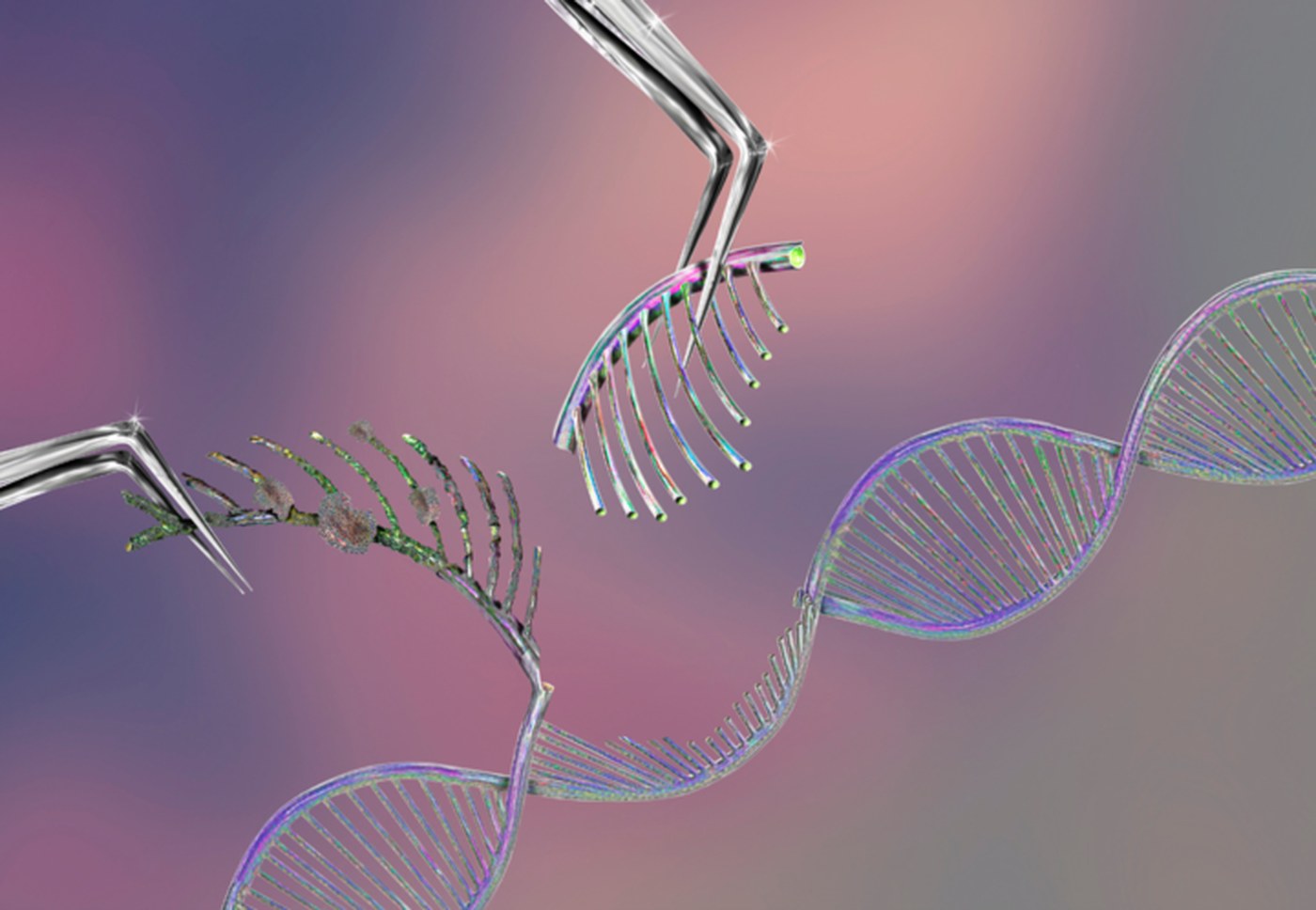
Imagine your DNA is a document of three billion letters, and that in a single one of them there's a typo that gives you a lifelong disease. For decades, just finding that typo was hard; fixing it was flat-out impossible. And then CRISPR showed up and put a pair of precision scissors in scientists' hands.
The name is a mouthful of English initials, so hold on to what really matters. CRISPR is a tool for editing genes, for going to an exact spot on the DNA and cutting it, switching it off or swapping it for the correct version. What sounded like science fiction not long ago now happens in labs all over the world, and it has already started curing flesh-and-blood people.
A trick bacteria invented long before we did
The lovely part is that we didn't invent it, we copied it from bacteria. When a virus attacks a bacterium, it stores a scrap of the invader's DNA like a mugshot, the way you'd jot down a thief's face to recognize him next time. If the virus dares come back, the bacterium pulls out that mugshot, locates the intruder and cuts it to pieces. That defense system is CRISPR in its purest form.
In the early 2010s, a group of researchers realized that this bacterial mechanism could be reprogrammed to cut any piece of DNA we wanted, not just a virus's. That's where the revolution began, and in 2020 Emmanuelle Charpentier and Jennifer Doudna won the Nobel Prize in Chemistry for opening that door.
How it works, with a GPS and a pair of scissors
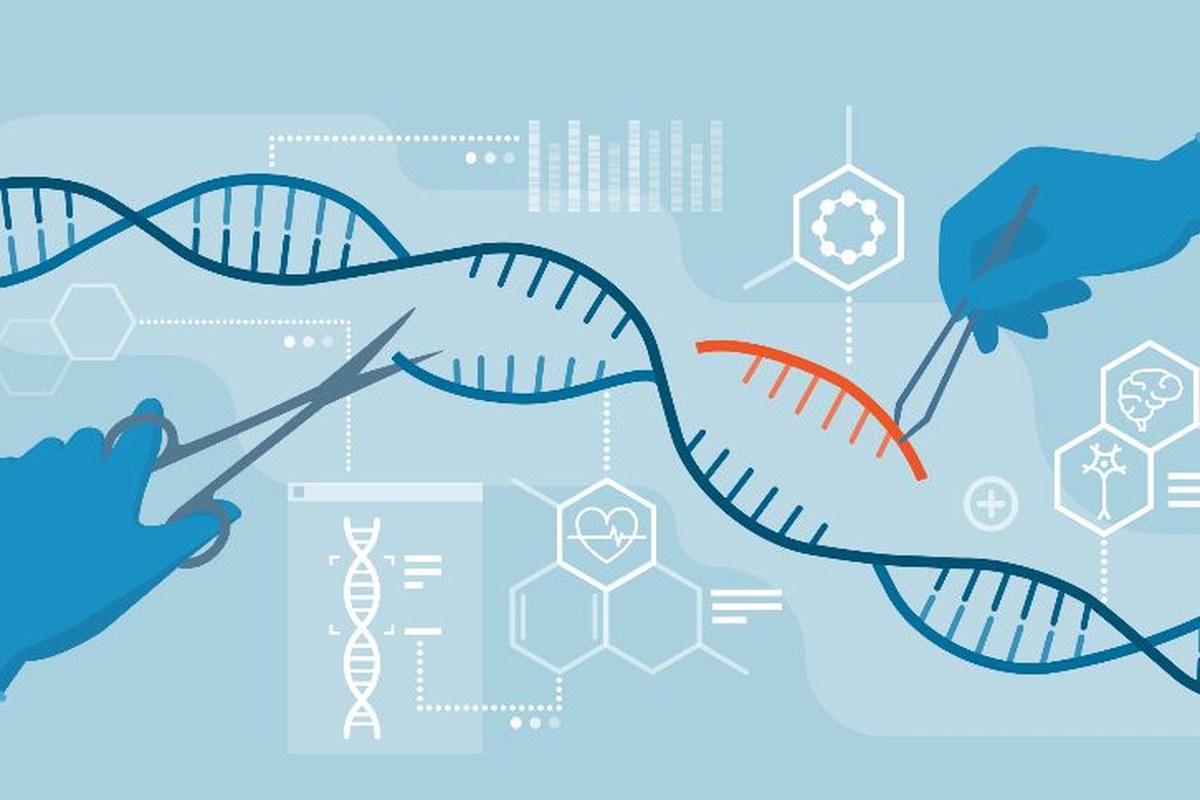
Under the hood, CRISPR is two pieces working as a pair. The first is a guide RNA, which acts like a GPS with a written address. You feed it the sequence of letters you want to find and the guide patrols the genome until it hits the exact spot that matches. The second is a protein called Cas9, which plays the scissors. When the guide finds the site, Cas9 cuts both strands of DNA right there, without touching the rest.
And what do you do with that cut? It depends on what you're after. You can leave the gene disabled to switch it off, or slip a corrected version into the gap so the cell uses it as it repairs itself. It's roughly like finding a word in a word processor, deleting it and typing the right one, except here the document is your entire genome. That surgeon's precision is what changed everything.
From theory to actually curing people
And it hasn't stayed on the whiteboard. In late 2023 Casgevy was approved, the first CRISPR-based therapy for clinical use, aimed at sickle cell anemia and a severe form of thalassemia, two brutal blood diseases. The play is to edit the patient's own cells so they go back to making healthy hemoglobin. For the first time, a genetic edit with these scissors went from lab promise to approved treatment.
Expectations are huge, from cancer to inherited diseases that have no cure today. It's the same ground as ideas like the Yamanaka factors, which rejuvenate cells, or epigenetics, which decides which genes get read without touching a single letter. CRISPR plays in a different league, because it does rewrite the text, letter by letter.
Where the red line sits
That said, so much power is frightening, and rightly so. In 2018, a Chinese scientist, He Jiankui, used CRISPR on embryos and brought two babies with edited genomes into the world. The scientific community condemned him almost unanimously and he ended up in prison. His sin was crossing a line almost everyone considers red, touching the DNA that gets inherited, the kind that will pass to the children and to their children's children.
Editing a sick person's cells to cure them is one thing; redesigning a human being before birth is another entirely, with an ethical debate that's nowhere near settled. And the technique isn't perfect either, because sometimes the scissors cut where they shouldn't, a flaw labs keep polishing year after year.
Throughout history, biology was something that happened to us, a hand of cards you were dealt at birth and played for the rest of your life. CRISPR is the first time we can, literally, change some of those cards. The question is no longer whether we can, because we can. It's how far we want to go.
The conversation starts here
Sign in with a supporter account to comment. Sign in
Nobody has commented yet. Want to go first?