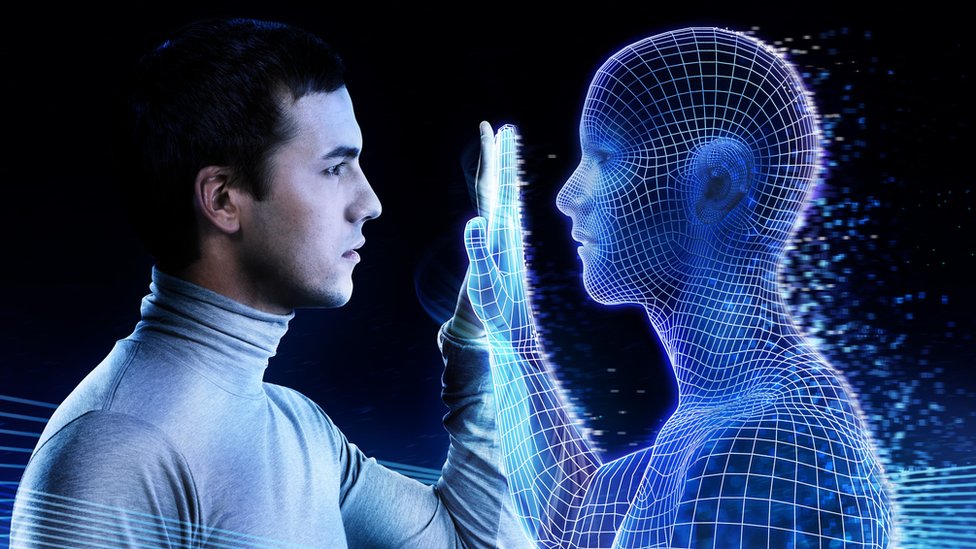
Imagine your oncologist is choosing between two treatments. Both could slow the tumour and both carry side effects, but there is only one way to learn which works better: pick one and watch what happens. A human digital twin offers another option, trying both first on a computer copy of that tumour.
That copy does not think or hold a digital version of your personality. It is a mathematical model fed with medical images, blood tests, clinical history, genetics and sensor data. Its job is to answer one specific question: if we do this, what is likely to happen to you?
It is not a snapshot of your body, because it has to change with you
A reconstruction of your heart built from a scan is a digital model. To become a twin it needs something more: it must update when the original changes. If a new arrhythmia appears, blood pressure shifts or a tumour responds to the first radiotherapy session, that information flows back into the copy and changes its forecasts. The patient feeds the model, and the model helps guide what happens next to the patient.
The aim is not to copy every atom in the body, but the part that matters for one decision. Adjusting radiotherapy may require the tumour and nearby tissue; choosing a cardiac device may call for the heart and blood flow. The narrower the question, the more useful the copy can become.
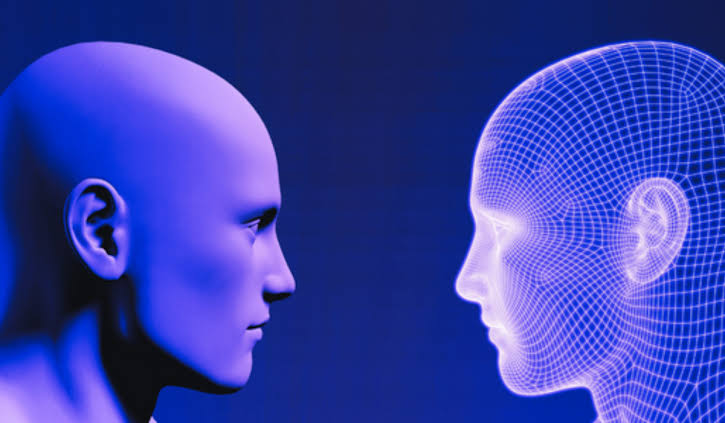
Medical research defines these systems through precisely that mixture of personal data, population data and continuous updates. A review in npj Digital Medicine describes a virtual patient representation on which changes can be simulated to estimate what would happen to the physical patient. It does not work like a chatbot. Think of it as a testing ground medicine has never had before.
A full-body twin does not exist yet
This is where the science fiction has to stop. Nobody has built a complete replica that knows how your brain, immune system, liver and every other organ will respond together. The human body contains too many moving parts, and we still do not understand many of the relationships between them. Researchers are learning to build partial twins instead, with cardiology and oncology currently the most advanced fields, according to an overview in Nature Computational Science.
Cancer researchers already combine MRI and other images taken during treatment to update tumour models and estimate how they will respond to radiotherapy. A 2025 study did this with head-and-neck cancer patients, recalibrating the simulation as tumour volume changed. Then came TumorTwin in 2026, an open framework for testing how a virtual tumour might grow and respond to different interventions. Its demonstration used simulated gliomas, so this remains a research tool, not a virtual doctor choosing chemotherapy on its own.
Europe wants to connect those pieces. The European Virtual Human Twins Initiative brings together projects, supercomputing and AI, with €80 million in research and another €5 million for an intensive-care data infrastructure. The goal is to build models hospitals can validate and reuse.
A convincing copy can still be wrong about you
The easiest risk to understand is the same one that makes any medical prediction dangerous: looking precise without being right. If a twin was trained on patients unlike you, misses a previous condition or receives bad measurements from a sensor, it can recommend the wrong option with impressive confidence. A beautiful simulation is worthless until it proves itself beyond the screen.
That is why the software must be verified, tested against real patients and honest about the uncertainty attached to each result. A 2025 paper devoted to this problem considers all three essential before digital twins guide clinical decisions. We will also have to decide who controls one of the most intimate data collections imaginable.
Medicine would stop treating you as the average patient
The genuinely big promise is not owning a futuristic double. It is retiring some of medicine's dependence on averages. Many treatments today are chosen because they worked best for a group of people who resemble you. A digital twin aims to ask whether they will work for you, with your heart, your tumour, your genes and everything that has happened since the last appointment.
That connects directly with the biotechnology revolution we follow at INSERT FUTURE. AI is already speeding up the design of proteins and drugs, while stem cells are beginning to become real treatments. The next bottleneck will be deciding which therapy suits each body and when to give it. A well-built twin could test doses, combinations and timing without spending years or asking the patient to endure every attempt.
And yes, it could eventually matter for longevity too. If we ever want to learn whether an intervention slows several ageing processes at once, we will need something capable of following many body systems and anticipating the consequences of changing one of them. That does not make us immortal or automatically put us at longevity escape velocity. It does move us towards medicine that can rehearse far more before taking a single real-world risk.
I do not want an avatar to live on my behalf. I want my doctor to rehearse a decision a thousand times before making it once in my body.
The conversation starts here
Sign in with a supporter account to comment. Sign in
Nobody has commented yet. Want to go first?