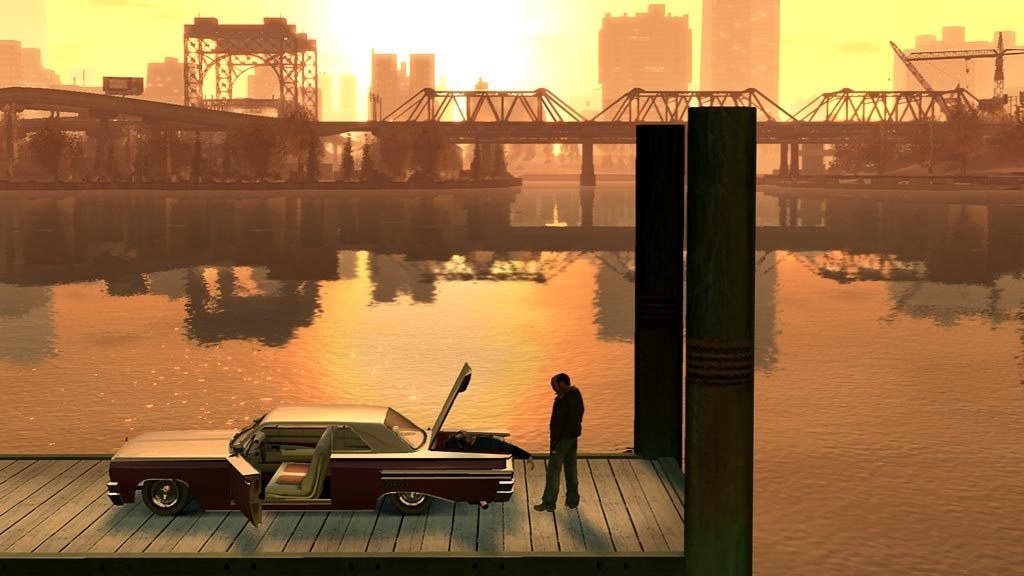

Grand Theft Auto IV hit stores on April 29, 2008, on PlayStation 3 and Xbox 360, and sold about 3.6 million copies on day one for roughly $310 million. Take-Two, Rockstar's parent company, said no movie, album or game had ever opened bigger, as GameSpot reported at the time.
That record capped a rough year. The game had slipped more than six months, and since February Electronic Arts had been trying to buy Take-Two over the objections of its board. Through all of it, Rockstar North, the Edinburgh studio behind GTA, was moving to new consoles, a new engine and the series' most serious lead yet, Niko Bellic.
Why GTA IV went back to Liberty City
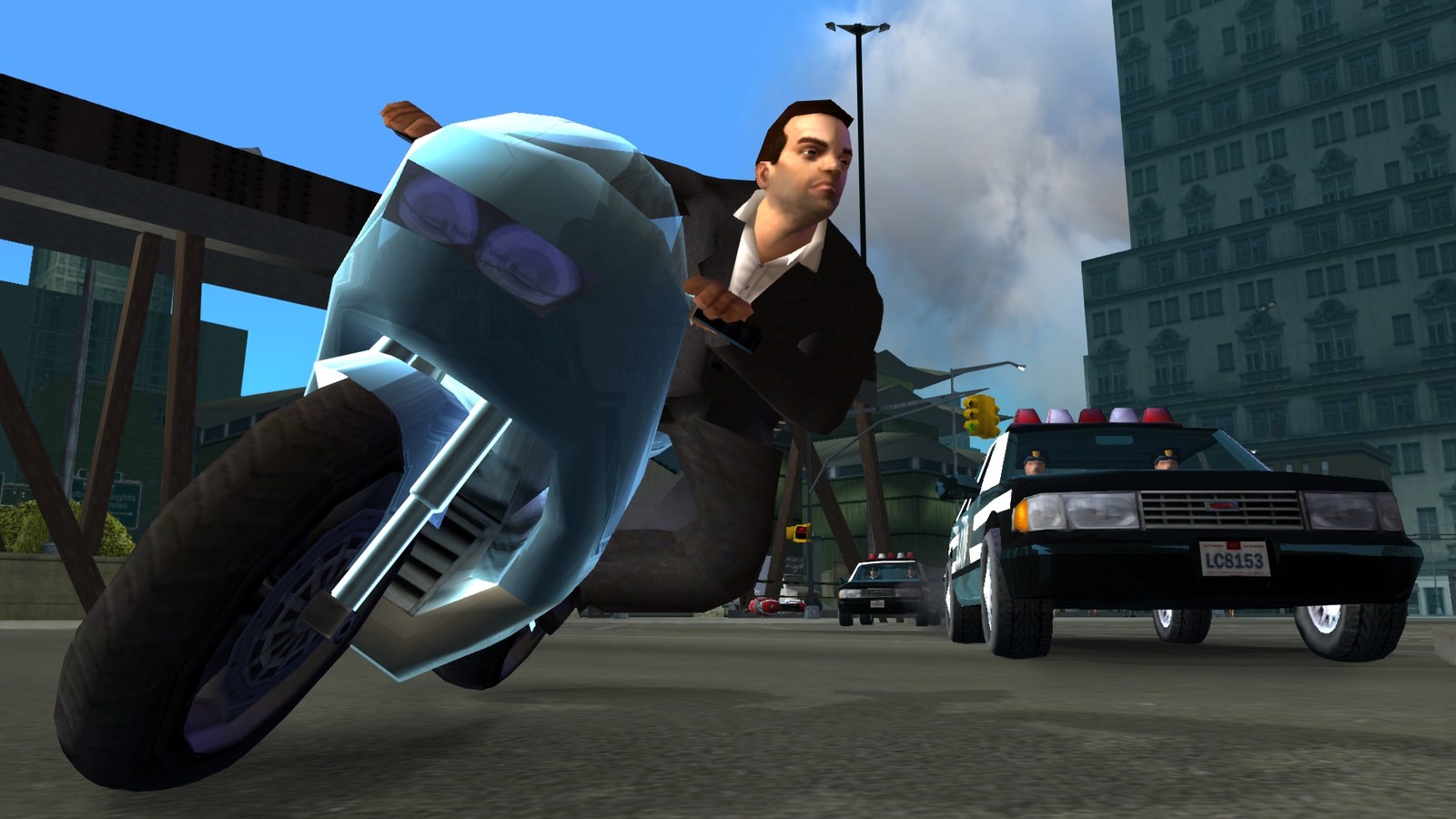
Liberty City wasn't new. It was the setting of GTA III and of Liberty City Stories on PSP, covered in our previous chapter, but that version only loosely resembled New York. Rockstar's head writer and creative VP, Dan Houser, told the UK's Official Xbox Magazine in 2007 that the studio had always wanted to do New York properly, GamesRadar+ reported. On GTA III, he said, the technical problems were so overwhelming that realism couldn't come first.
This time, Rockstar kept a full-time team of researchers and photographers in its New York office, fielding requests from artists in Scotland about what a particular building looked like or how traffic moved through a neighborhood. The team also made two research trips and came back with thousands of photos, according to German magazine PC Games, which also cites Houser telling Vulture that they shot time-lapse photography from rooftops to study the light and used census data to decide which communities lived where.
An exact replica was never the plan. Rockstar North art director Aaron Garbut told Eurogamer the team was after an impression of New York rather than an elaborate reproduction, as Spanish site VidaExtra relayed, because copying real places block for block made for hollow spaces.
Under the hood, everything was new. GTA IV was the first GTA built on RAGE, Rockstar's in-house engine, the core software that draws the city and works out how everything in it moves. On top of that sat Euphoria, a system from British company NaturalMotion that simulates muscles and balance, so a pedestrian who gets shoved tries to stay upright instead of playing the same canned fall. Why Rockstar had to build its own engine in the first place is the subject of our chapter on RAGE and Angel Studios.
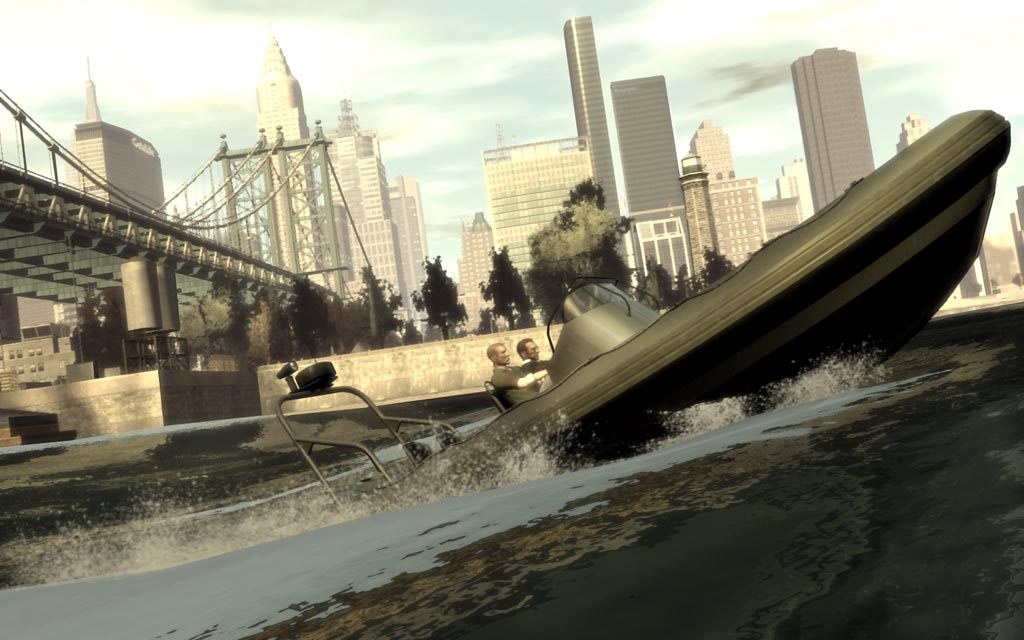
Who Niko Bellic is, and who voiced him
Niko Bellic, an Eastern European war veteran, steps off a boat in Liberty City because his cousin Roman has told him all about the money, women and cars waiting in America. What he finds is a grim apartment, a taxi company barely hanging on and a Roman who owes money to loan sharks. Niko has another reason to be there, too. He's looking for the man who betrayed his unit during the war.
Houser wrote that story at a low point. On Lex Fridman's podcast, as PC Gamer reported in 2025, he said he was living in New York at the time, unsure whether he wanted to stay in the US, while the Hot Coffee scandal had the studio worried Rockstar might be shut down. He put it bluntly: he was single and miserable. He spent many months riding along with police and talking to people around the city, because he wanted to capture an immigrant's experience.
In the same conversation, as summarized by GTA BOOM, Houser said he filled months of notes and then wrote a 30-page story draft over one weekend in a cabin upstate. He wanted Niko to die at the end and argued it out with the writing team, but concluded you couldn't do it.
Niko was voiced by Michael Hollick, a New York actor with a background in soap operas and musicals. Hollick told The New York Times he earned just over $100,000 for about 15 months of work at the standard Screen Actors Guild day rate, with no royalties or residuals, Shacknews reported. "I don't blame Rockstar," he said, pointing instead to union contracts that didn't cover video games.
Why GTA IV was delayed to 2008
When Rockstar and Microsoft announced the Xbox 360 version in May 2006, GTA IV was due on October 16, 2007, in North America, according to Microsoft. On August 2, 2007, Take-Two pushed it to the second quarter of its 2008 fiscal year, which ran from February through April. Chairman Strauss Zelnick said certain parts of development had taken longer than expected, and the company told investors the problems were "almost strictly technological," Engadget reported.
The delay hit Take-Two hard, because GTA was what its year depended on. The company cut its full-year revenue forecast to between $950 million and $1 billion, down from as much as $1.25 billion, projected a loss, and watched its stock drop 12.5% on the day of the announcement, NBC News reported.
EA's hostile bid for Take-Two
Electronic Arts was Take-Two's biggest rival among publishers, the companies that fund games, manufacture them and sell them. On February 24, 2008, it went public with an all-cash offer of $26 a share, about $2 billion, a 64% premium over Take-Two's February 15 closing price.
EA explained its hurry in a release filed with regulators. GTA IV was set for April 29 with development essentially done, and closing quickly would let EA put its distribution network behind the game's post-launch sales. Take-Two's board turned the offer down unanimously. In a filing with the Securities and Exchange Commission, Zelnick called it opportunistically timed to capture the value of the upcoming launch, and the board urged shareholders not to sell.
EA then took its offer straight to shareholders as a tender offer, without the board's support, which is what makes a takeover hostile. Take-Two promised to review its options after the April 29 launch, and EA let the offer lapse in August following a lengthy Federal Trade Commission review. On September 15, 2008, EA said it would not make a proposal and had ended talks, Game Developer reported. Take-Two stayed independent, and Rockstar with it.
How much GTA IV sold at launch
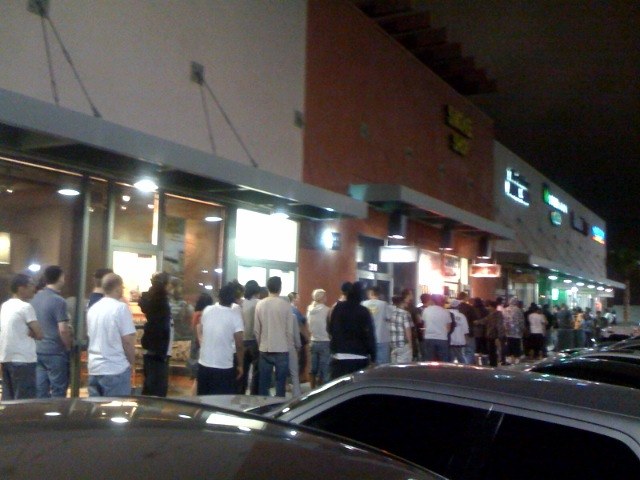
Midnight launch lines formed outside US stores on April 29, including the Las Vegas GameStop in the photo. In its first week, the game sold about 6 million copies for close to $500 million, according to Take-Two. Its first day alone nearly doubled the $170 million that Halo 3, Microsoft's big release the year before, made on its opening day. Zelnick called it the biggest launch in the history of interactive entertainment.
On May 13, Guinness World Records awarded it two titles, highest-grossing video game in 24 hours and highest revenue generated by an entertainment product in 24 hours, Neowin reported.
Critics were just as enthusiastic. GTA IV still holds a 98 out of 100 on Metacritic. Leslie Benzies, the game's producer and president of Rockstar North, ventured a guess to The Times that it cost around $100 million and involved about 1,000 people, Engadget reported. It was his own estimate rather than an audited figure, but Guinness still logged it as the biggest known budget for a video game, Kotaku noted.
The Lost and Damned, The Ballad of Gay Tony and the PC version
Part of Liberty City was sold only on Xbox 360. In June 2007, Take-Two told investors that Microsoft would pay it $50 million, in two $25 million installments, for two exclusive episodes delivered over Xbox Live, the console's online service, Game Developer reported. They were new stories, sold separately and set on the same map.
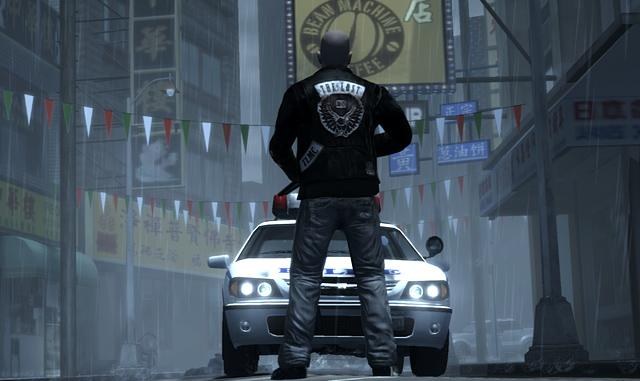
The Lost and Damned came out on February 17, 2009, for 1,600 Microsoft Points, or about $20, and Microsoft called it its most successful game add-on ever, Computerwoche reported. It follows Johnny Klebitz, a veteran member of The Lost biker gang. The Ballad of Gay Tony followed in October, starring Luis Lopez, right-hand man to nightclub owner Tony Prince, along with a $40 disc, Episodes from Liberty City, that bundled both stories and didn't require the original game. The exclusivity ended in spring 2010, when the disc reached PS3 and PC, as its Steam listing shows.
The PC version of the main game had already arrived on December 2, 2008, ported by Rockstar Toronto. It ran on Games for Windows Live, Microsoft's online service for PC, Worthplaying reported. In March 2020, Rockstar replaced that service, dropped multiplayer and relaunched the game with both episodes as the Complete Edition, the version still on Steam today, which we cover in our piece on GTA IV and the trilogy on Steam.
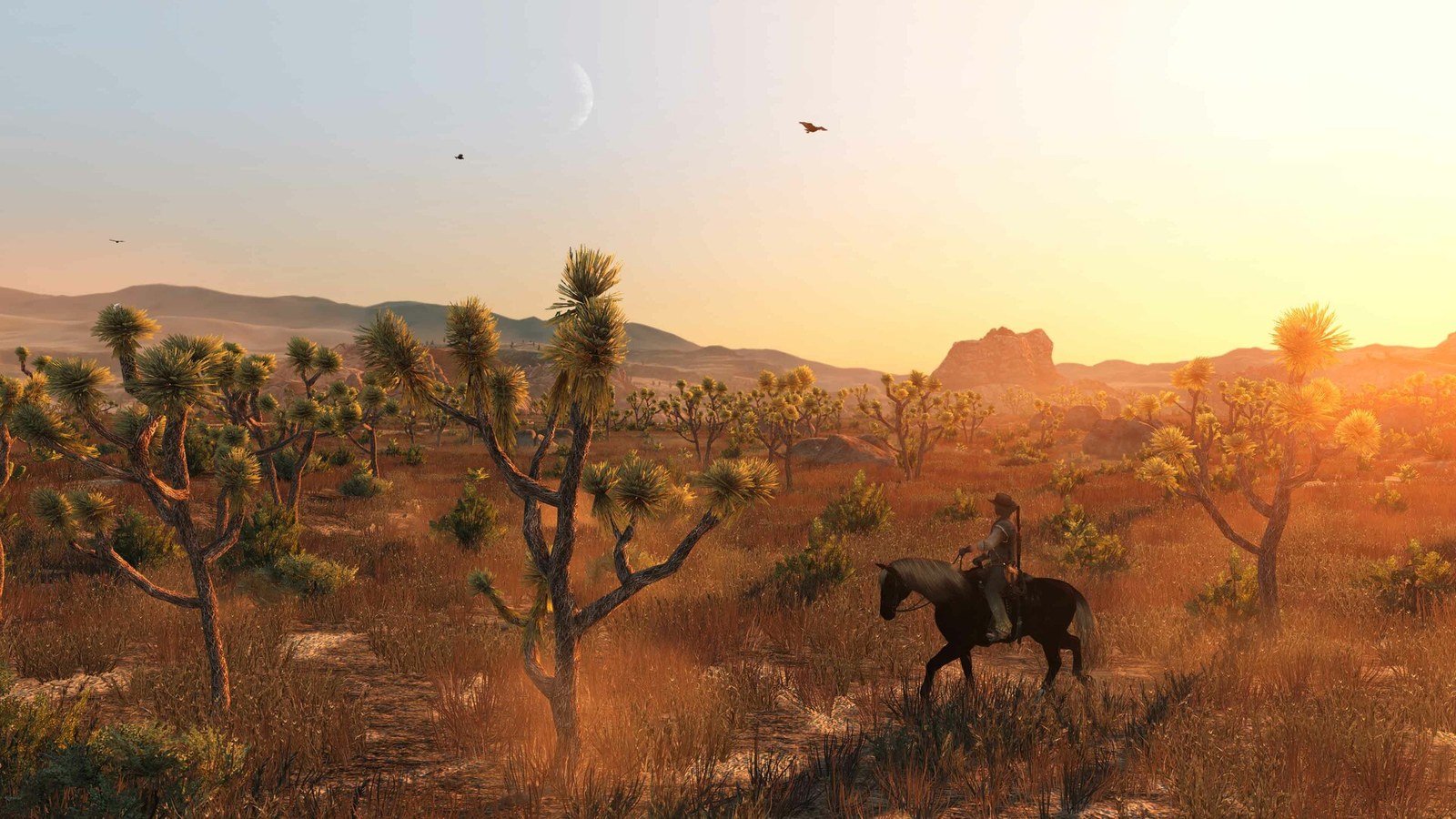
GTA IV proved RAGE could carry an entire city. At Rockstar San Diego, where the engine was born, it had already spent years powering a western.
Frequently asked questions
When did GTA IV come out?
Grand Theft Auto IV launched on April 29, 2008, on PlayStation 3 and Xbox 360. It was originally scheduled for October 16, 2007, but Take-Two delayed it on August 2, 2007, citing technical challenges. The PC version followed on December 2, 2008, and the episodes The Lost and Damned and The Ballad of Gay Tony arrived on Xbox 360 in 2009.
How many copies did GTA IV sell on day one?
About 3.6 million copies worth roughly $310 million, according to Take-Two. By the end of its first week, sales had reached about 6 million copies and close to $500 million. In May 2008, Guinness World Records named it the highest-grossing video game and entertainment product in a 24-hour period.
Who voices Niko Bellic?
Michael Hollick, a New York actor who had worked in soap operas and musicals. He told The New York Times he made just over $100,000 for about 15 months of work, paid at the standard Screen Actors Guild day rate with no royalties. He said he didn't blame Rockstar, but union contracts that didn't cover video games.
Why did EA try to buy Take-Two in 2008?
On February 24, 2008, Electronic Arts offered $26 a share, about $2 billion, and wanted to close quickly so it could profit from GTA IV's post-launch sales. Take-Two's board rejected it as opportunistically timed, EA went directly to shareholders with a hostile tender offer, and on September 15, 2008, EA walked away.
What are The Lost and Damned and The Ballad of Gay Tony?
They're GTA IV's two episodes, new stories set in the same Liberty City. The Lost and Damned (February 2009) follows biker Johnny Klebitz, and The Ballad of Gay Tony (October 2009) follows Luis Lopez, right-hand man to nightclub owner Tony Prince. Microsoft paid $50 million for Xbox 360 exclusivity, which lasted until 2010.
The conversation starts here
Sign in with a supporter account to comment. Sign in
Nobody has commented yet. Want to go first?