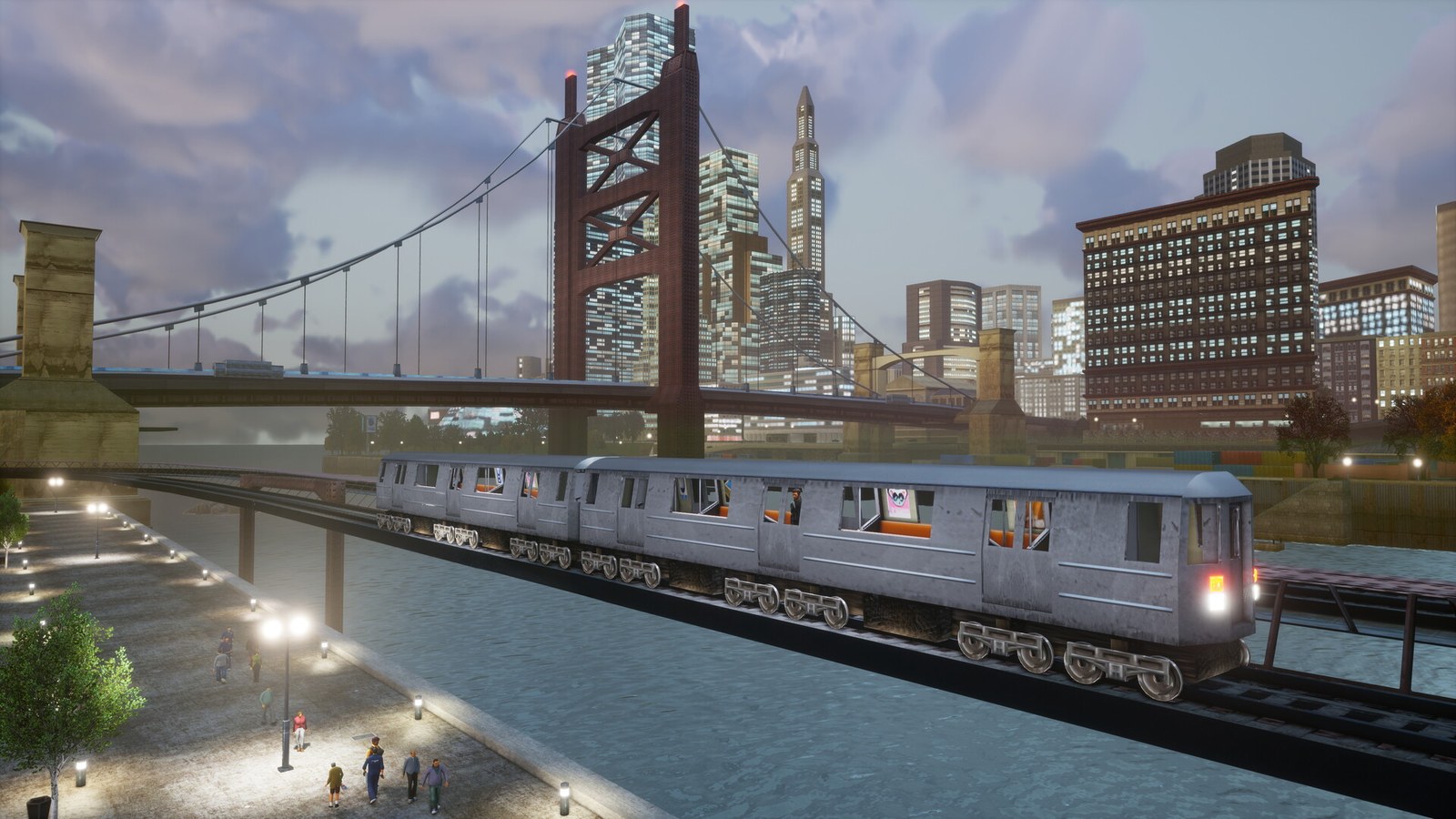

When Rockstar showed Grand Theft Auto III at E3 in May 2001, almost nobody stopped to look. Five months later it was in stores, and by the end of the year it was the best-selling console game in the United States. It was the first Grand Theft Auto in 3D, the one that traded the top-down view of the first two games for a camera over the player's shoulder and a city that kept moving whether you were on a mission or not.
Getting there took a city demo built on a Sega Dreamcast, a PlayStation 2 with very little memory, a parent company close to going under and the September 11 attacks, which hit Rockstar's home city six weeks before launch. In the Rockstar Games story, 2001 is the year GTA became the series people know today.
How GTA III started on a Dreamcast
The project began in Scotland before anyone in New York signed off on it. After DMA Design shipped Space Station Silicon Valley, the studio had nothing lined up and its teams started tinkering. Obbe Vermeij, who became the game's technical director, told GTA BOOM that producer Leslie Benzies and artist Aaron Garbut began work on what became GTA III before Rockstar had approved it. Much of the studio, meanwhile, was busy on a GTA set in Miami, viewed at an angle from above like the earlier games, that was later canceled.
Garbut told Game Informer the team got hold of a couple of Dreamcast development kits, the special versions of Sega's console that studios use to build games, and within a few weeks had city blocks with docks, shops, brownstones, pedestrians and traffic. For a while that city looked headed elsewhere. According to former DMA staff interviewed by Time Extension, studio founder Dave Jones pitched turning the demo into a Godzilla-style monster game where you stomped through buildings and ate people to grow. Take-Two's 1999 purchase of DMA, covered in the previous chapter of this series, killed the monster and kept the city for GTA.
Sam Houser, who oversaw the game from New York, had long wanted to take GTA fully 3D, Garbut says, but some veterans of the original GTA code team warned that it was too complex. The team pushed on anyway. Vermeij estimates it spent about four months on Dreamcast before moving to PlayStation 2, and in 2024 he said the switch had nothing to do with horsepower. Sega's console simply didn't look commercially viable.
DMA was also moving from Dundee to Edinburgh, the move that would turn it into Rockstar North, and his brother Dan Houser later told GameSpot that some staff didn't stay on through the move and some were convinced the game could never work. Edinburgh, with around 25 people and only seven programmers by Vermeij's count, handled code, models and levels. New York handled story, voice acting and style. The plan, Houser admitted, was to take GTA, fix the bits they didn't like and make it in 3D, which he called "probably the most naive idea we've ever had."
How they fit a city into 32MB
A game engine is the software that draws the world on screen and runs everything happening in it. GTA III used RenderWare, a toolkit from British company Criterion, but Vermeij has told Gameranx that engines like it only handled rendering. Physics, traffic, pedestrians and the rest were written by DMA, and Garbut says there was no earlier technology to build on.
Memory was the real wall. The PS2 had 32MB of main memory, according to Rodrigo Copetti's technical breakdown, and that is where a console keeps whatever it needs at any given moment. Vermeij told TechRadar it was only enough for a couple of city blocks around the player. The fix was to load the city in pieces as you played. The game pulled buildings and cars for the area ahead from the DVD and dropped the ones behind you, with no loading screens between neighborhoods.
Speed broke the trick, because the DVD drive couldn't deliver buildings fast enough and they popped in late. Programmer Adam Fowler laid out the disc so that models sitting near each other in the city also sat near each other on the disc, since the drive reads nearby data faster. It still wasn't enough, and Vermeij said in posts covered by GamesRadar+ that the team had no option but to slow the player down.
On Portland, the densest island, a long straight road let cars outrun the streaming, so artists reworked the layout and broke it up with a building. The team also raised vehicle air resistance by 5 percent, a change you barely notice behind the wheel that bought the disc the time it needed.
Memory explains other quirks players still remember. Only a few car models fit at once, so the same car kept showing up all over the street. And the Dodo, the plane with clipped wings, could barely get off the ground because from the air you would have seen more city than the game could load in time.
Liberty City, a New York built without Google Maps
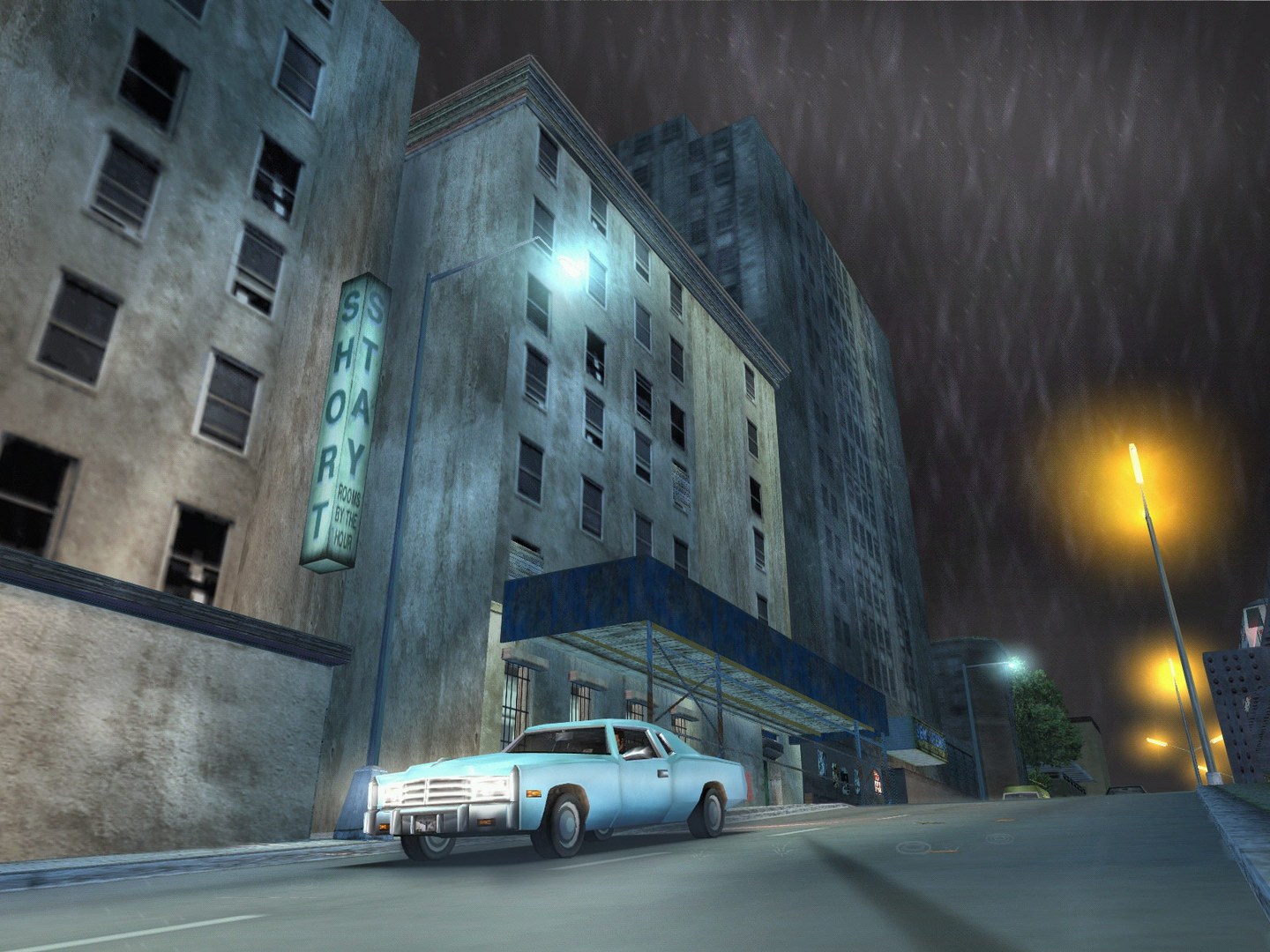
Liberty City was New York reimagined as three islands, with an industrial waterfront, a downtown of towers and a stretch of suburbs. Dan Houser called it a "hybrid of a generic American city." Garbut told PLAY magazine, in an interview republished by GamesRadar+, that the studio had no internet at first and Google Maps didn't exist yet. From GTA III on, he says, the goal was the impression of a place rather than an accurate copy, which is why the team leaned into grime, rain and weather.
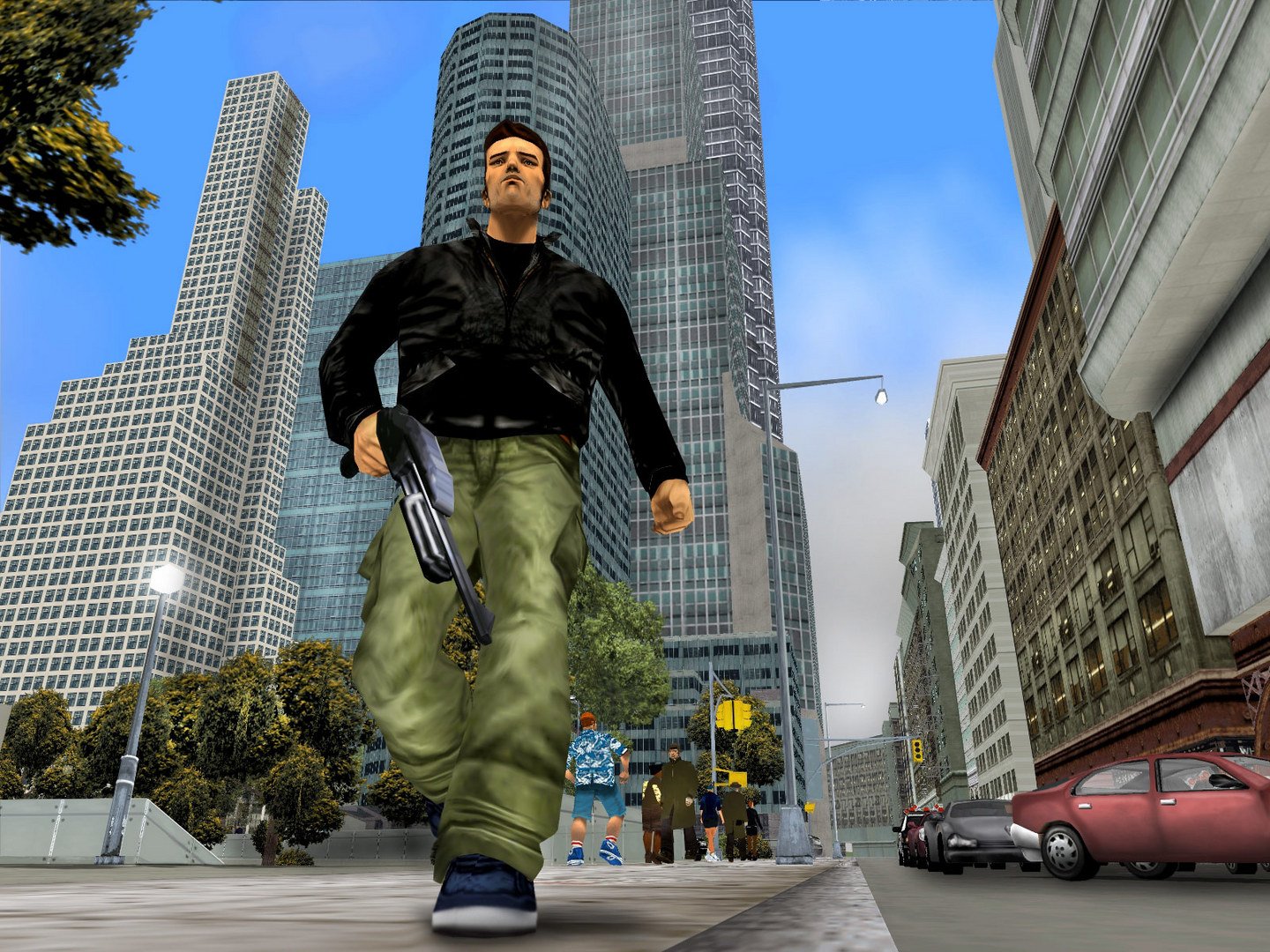
Missions came out of playing. Vermeij says level designers pitched ideas, tried them and kept the fun ones, while the story was written around them and arrived late. The protagonist, Claude, never says a word. In a 2011 Q&A covered by Kotaku, Rockstar said he stayed silent partly so players could identify with him, but mostly because the team had so many other problems to solve. The people around him did talk, voiced by a cast of familiar film and TV faces that included Frank Vincent, Joe Pantoliano, Michael Madsen, Kyle MacLachlan and Robert Loggia, as ComicBook.com lists.
For most of development the game barely ran. Vermeij wrote in a post covered by GamingBolt that it crashed frequently, the map was full of holes and for a long time it looked stuck at 20 frames per second, visibly choppier than the 30 it finally hit in the last months. Only near the end, he says, did everything come together.
E3 2001, when everyone was watching another game
E3 was then the industry's biggest annual trade show, held in Los Angeles, where publishers showed upcoming games to the press and retailers. Rockstar arrived in May 2001 sure it had something special. "Nobody cared about it," Dan Houser said in an IGN interview this October, as Kotaku reported. Back in 2011 he had told GameSpot that early showings were underwhelming and that everyone was obsessed with State of Emergency, a riot game from Rockstar's own lineup. Vermeij also remembers a disappointing E3 that left the studio unsure about the game's prospects.
The pressure wasn't only creative. Houser has said that in early 2001 Take-Two, Rockstar's parent company, was close to financial collapse. Microsoft passed, too. Kevin Bachus, then in charge of Xbox's relationships with outside publishers, said in the 2021 documentary Power On, as GamesRadar+ reported, that the company's leadership turned down GTA III as an exclusive because it seemed complicated and was based on a series that hadn't been all that successful.
What 9/11 changed in GTA III
On September 11, 2001, Sam and Dan Houser watched the attacks from an apartment on Thompson Street in Manhattan, according to Harold Goldberg's book All Your Base Are Belong To Us, which Goldberg excerpted online. Over two nerve-racking weeks, the brothers talked about shelving the game. Rockstar was about to release a story of chaos in a city modeled on New York, and the real New York had just been attacked.
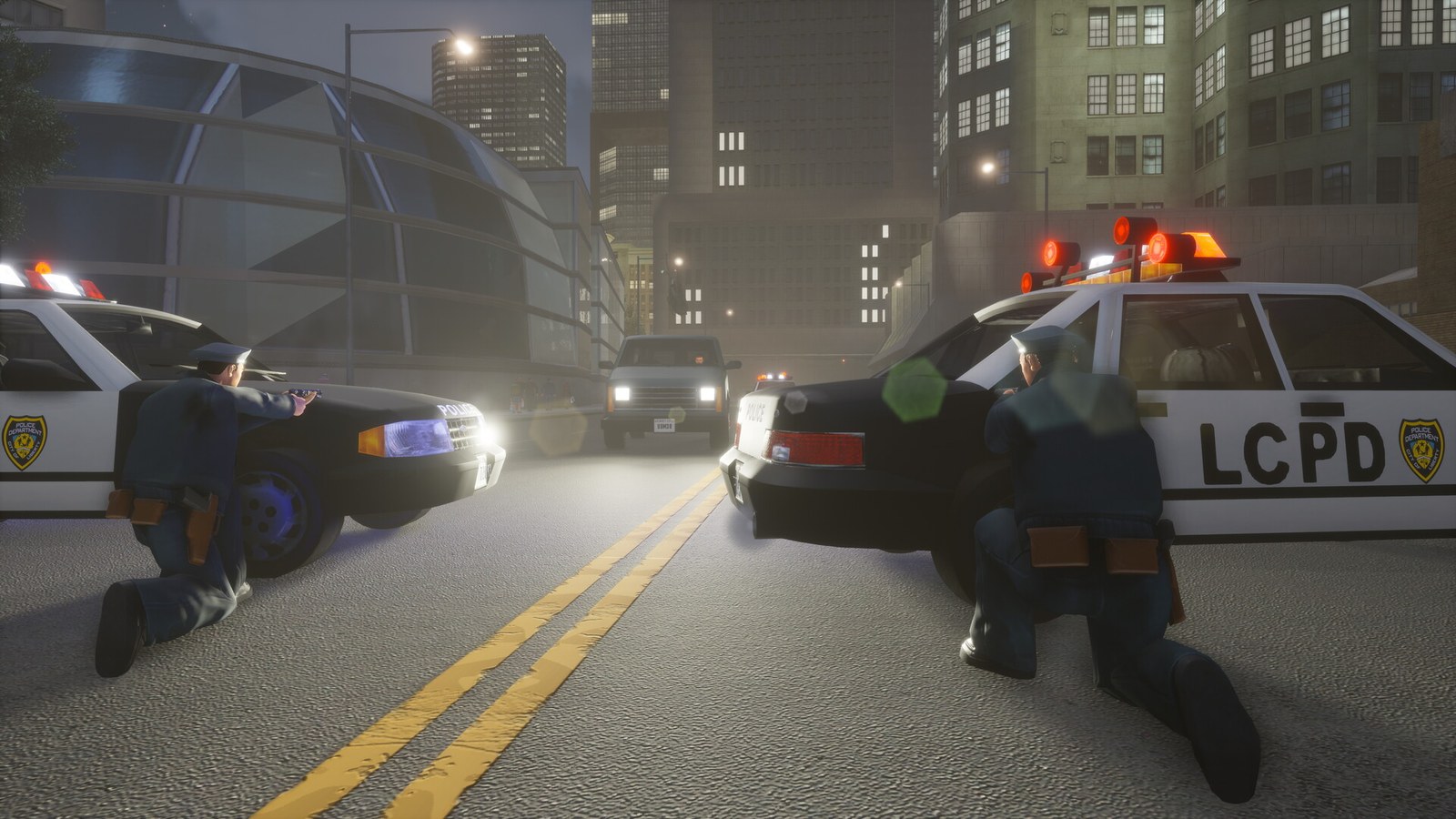
In the week of September 17, Take-Two said in a statement that GTA III, due that month, would slip to the second half of October so it could change content it no longer considered appropriate, particularly references to New York City. Vermeij recalls that the attacks came only six weeks before release, about the time it was already going to take to make the discs and get them into stores. Police cars styled like NYPD cruisers were repainted, a mission referencing terrorists was cut, a few talk radio lines were rewritten and a plane that seemed to fly through a building was rerouted, as Shacknews detailed in 2011. Rockstar later put the total change at around 1 percent of the game.
Darkel, a homeless character with bizarre missions, often turns up on lists of 9/11 cuts. Rockstar denied that in 2011, saying his missions were dropped a few months before the game was finished and long before the attacks because they were weaker than the rest and didn't fit.
The box changed too. Stephen Bliss had spent about six months painting a cover styled like an old movie poster, with police firing guns and helicopters overhead, and Dan Houser has said it was too much to release after the attacks. Bliss cut the nonviolent images out of that painting and arranged them in a grid of panels like a comic strip, he explained on Instagram, as Power Up Gaming reported. Houser remembers it taking about two evenings, while Bliss says he had a week. That grid became the series' visual signature and carries all the way to GTA VI. In Europe, according to Creative Bloq, the box kept the original painting.
GTA III sales, a hit that grew week by week
GTA III reached US stores on October 23, 2001, without a blockbuster opening week. Houser told IGN it kept selling week after week through Christmas and into early 2002, and Vermeij describes an OK launch whose sales never tapered off. In February 2002, NPD figures reported by Gamasutra ranked it the best-selling console game of 2001 in the US, with about 2 million copies sold since its October debut. A PC version followed in May 2002.
Over the years it passed 14.5 million copies across all versions, a figure cited by Time Extension. Its 2021 remake is part of the Definitive Edition trilogy, which we covered in our GTA Steam sale roundup.
Twenty years on, Garbut put its legacy plainly to Inverse. Before GTA III, games were something you played, and this one made them a place you lived in. That lived-in city is what Rockstar has been expanding for 25 years, all the way to the Leonida of GTA VI. The next step came much faster. With the technology already built, Rockstar North headed for Miami.
Frequently asked questions
When did GTA III come out?
Grand Theft Auto III launched on PlayStation 2 in the US on October 23, 2001. It had been due in September, but Take-Two pushed it to the second half of October after the 9/11 attacks so Rockstar could change some content. A PC version followed in May 2002, and a remastered version is now part of the Definitive Edition trilogy.
Who made GTA III?
DMA Design in Edinburgh, the Scottish studio renamed Rockstar North in 2002, built it with a team of about 25 people. Leslie Benzies produced, Aaron Garbut was art director and Obbe Vermeij was technical director. In New York, Sam Houser oversaw it as executive producer and Dan Houser led the story and writing with the rest of Rockstar Games.
What did Rockstar change in GTA III after 9/11?
Release slipped by a few weeks and Rockstar edited content it no longer felt was appropriate. Police cars that resembled NYPD cruisers were repainted, a mission referencing terrorists was cut, some radio lines were rewritten, a plane was rerouted and the cover art was replaced. Rockstar put the change at about 1 percent of the game. The missions of Darkel, a homeless character, are often listed among those cuts, but they had been dropped months earlier for unrelated reasons.
Why is the GTA III cover a grid?
The original cover, a Stephen Bliss painting in the style of an old movie poster with police firing and helicopters overhead, felt too aggressive after 9/11. Bliss cut out the nonviolent images and arranged them in panels like a comic strip. Dan Houser recalls it taking two evenings, Bliss says a week. That grid became the signature look of every GTA box since.
Was GTA III made for the Dreamcast?
It started there but never shipped there. DMA built its first city demo on Sega development kits and, according to technical director Obbe Vermeij, spent about four months on the Dreamcast before moving to PlayStation 2. Vermeij says the hardware could have handled the game and that the switch was purely commercial, because the console wasn't selling well enough.
The conversation starts here
Sign in with a supporter account to comment. Sign in
Nobody has commented yet. Want to go first?