
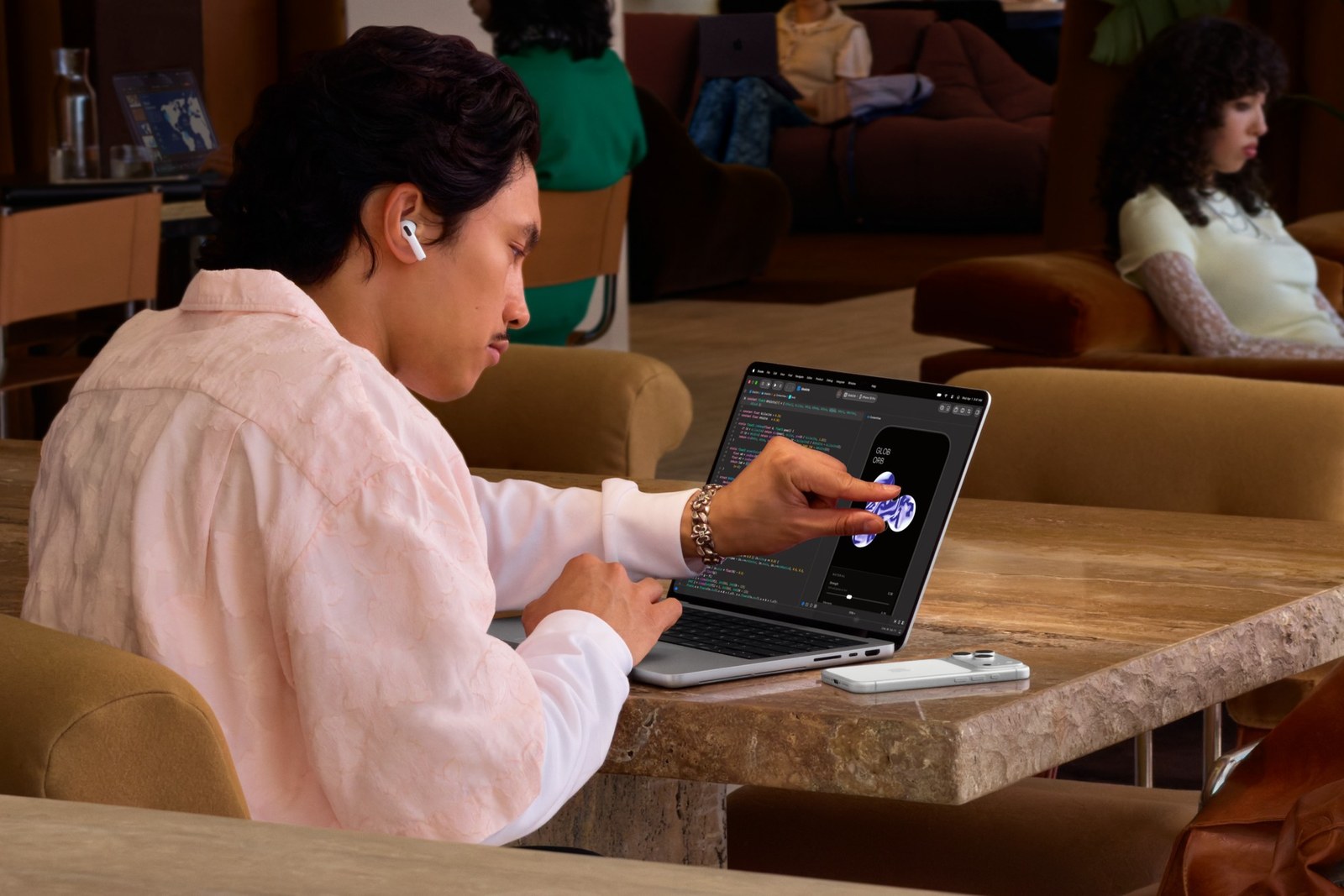
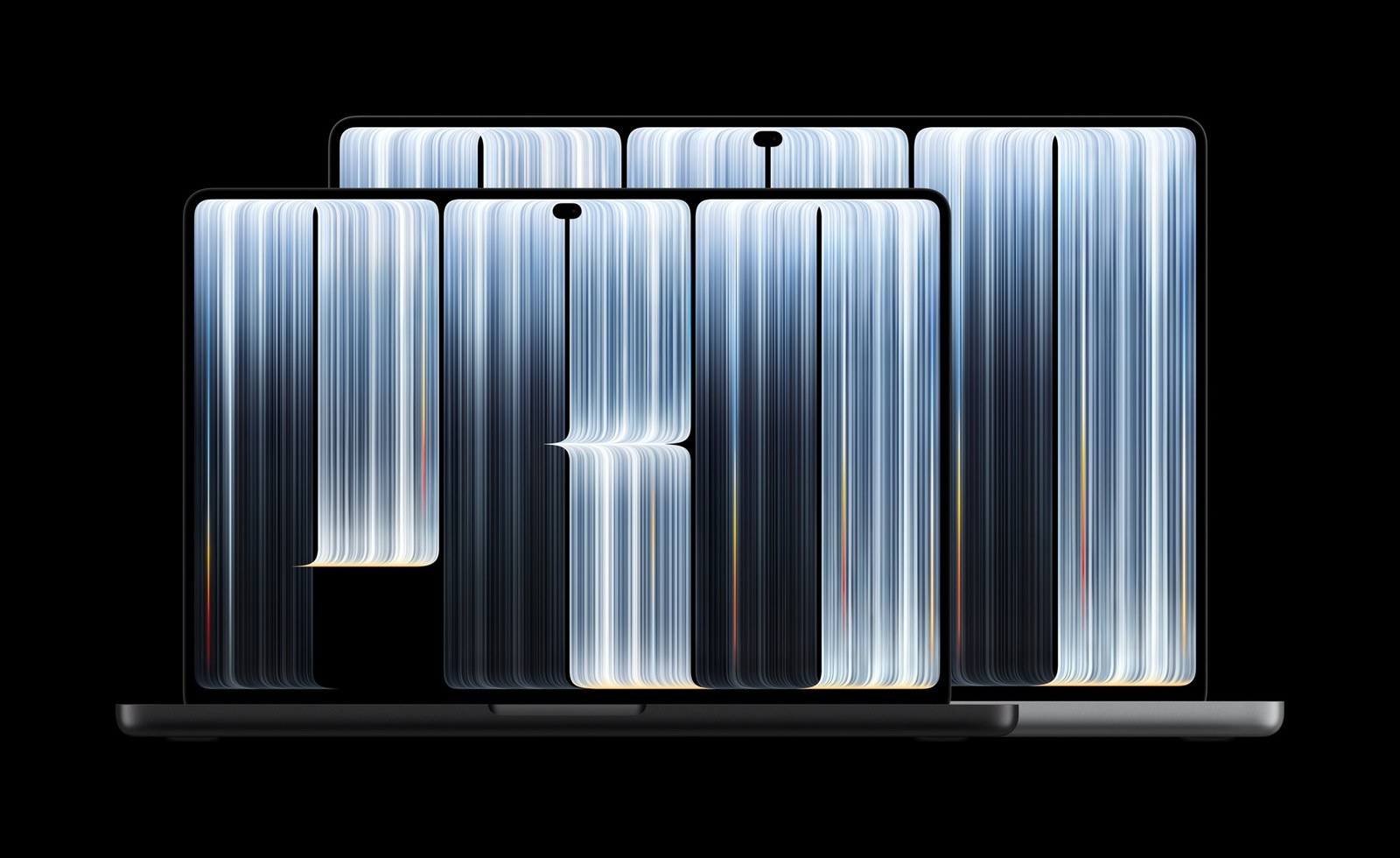
Apple's MacBook Pro with PROLED XDR Display went on sale at Apple Stores and authorized resellers on Friday, Nov. 6, after preorders opened Oct. 28. It is the first Mac you can control by touching the screen, and it comes in 14-inch and 16-inch sizes with either the M5 Pro or the M5 Max chip, Apple said in its announcement.
The 14-inch model with M5 Pro starts at $2,899, and the 16-inch with the same chip at $3,399. Moving to M5 Max raises the starting price to $4,499 for the 14-inch and $4,799 for the 16-inch. Education pricing takes $150 to $300 off, starting at $2,749.
Apple unveiled the laptop at its Oct. 28 "Pro and tell" launch, which we previewed with the start time and what to expect. It does not replace the mini-LED MacBook Pro, which stays on sale with M6, M5 Pro and M5 Max chips. Since both lines offer the M5 Pro and M5 Max, two machines with the same chip differ in display, weight and touch rather than speed.
What OLED and touch change
The mini-LED MacBook Pro lights its image with thousands of tiny LEDs behind the panel, grouped in zones. On OLED, every pixel makes its own light and shuts off completely for black, so white text on a dark background has no glow around it. Apple stacks two light-emitting layers in each pixel so each runs at lower current, which its technical paper says adds brightness, saves power and extends the panel's life. For the broader trade-offs, see our OLED vs. Mini LED guide.
Brightness is measured in nits, and more nits means a screen holds up better in sunlight. Both MacBook Pro lines sustain 1,000 nits across the full screen, but the OLED model peaks at 2,000 nits, even for everyday non-HDR content in very bright surroundings. The mini-LED model tops out at 1,600 nits, and only for HDR photos and video.
The touch sensor is built into the panel itself, and Apple redesigned the hinge so the screen doesn't wobble when you tap it. The keyboard and trackpad stay, so touch works alongside the pointer for pressing buttons, scrolling a page or pinching to zoom.
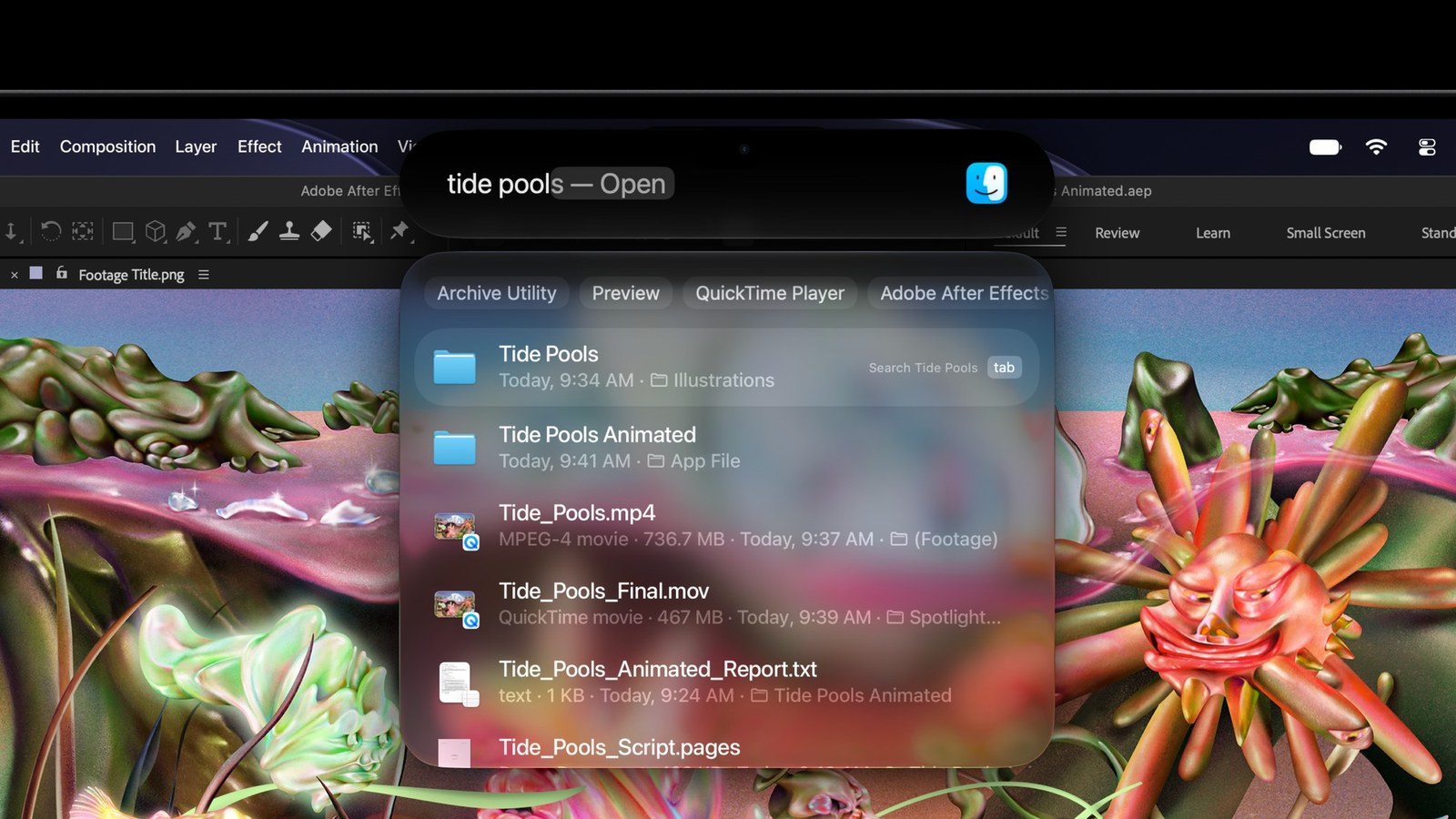
The camera notch is gone, replaced by the Dynamic Island, the black pill from the iPhone that expands to show what is happening in the background. On the Mac it holds Spotlight search, Live Activities such as the song that's playing, and Siri AI, which Apple still labels a beta with daily limits and support for only some languages.
Lighter, with the same chips and battery claim
The 14-inch model starts at 3 pounds, half a pound less than the mini-LED version, and is half a millimeter thinner. The 16-inch weighs 4 pounds, 0.7 pounds less, and is nearly a millimeter thinner. Apple says the slimmer body doesn't cost performance under sustained load, a claim that needs testing.
Apple quotes the same battery life as the mini-LED model, up to 24 hours in its own tests. Because an OLED panel draws more power the brighter the image, real-world results will depend on whether you work on white pages or in dark mode, and independent tests aren't out yet. Fast charging gets the battery to 50 percent in about 30 minutes.
What we don't know yet
Long-term wear is still an open question. OLED screens can keep a faint ghost of elements that sit still for hours, such as the macOS menu bar or Dock. Apple says it tracks how much each pixel is used and compensates pixel by pixel, but only months of use will show how well that works.
Supply could also be tight. On Nov. 2, Apple warned it will have fewer Macs than customers want through the end of the year because of the memory-chip shortage, as we covered in our report on its latest earnings. Delivery dates vary by configuration, so check the estimate on Apple's store before you pay.
The conversation starts here
Sign in with a supporter account to comment. Sign in

Nobody has commented yet. Want to go first?