
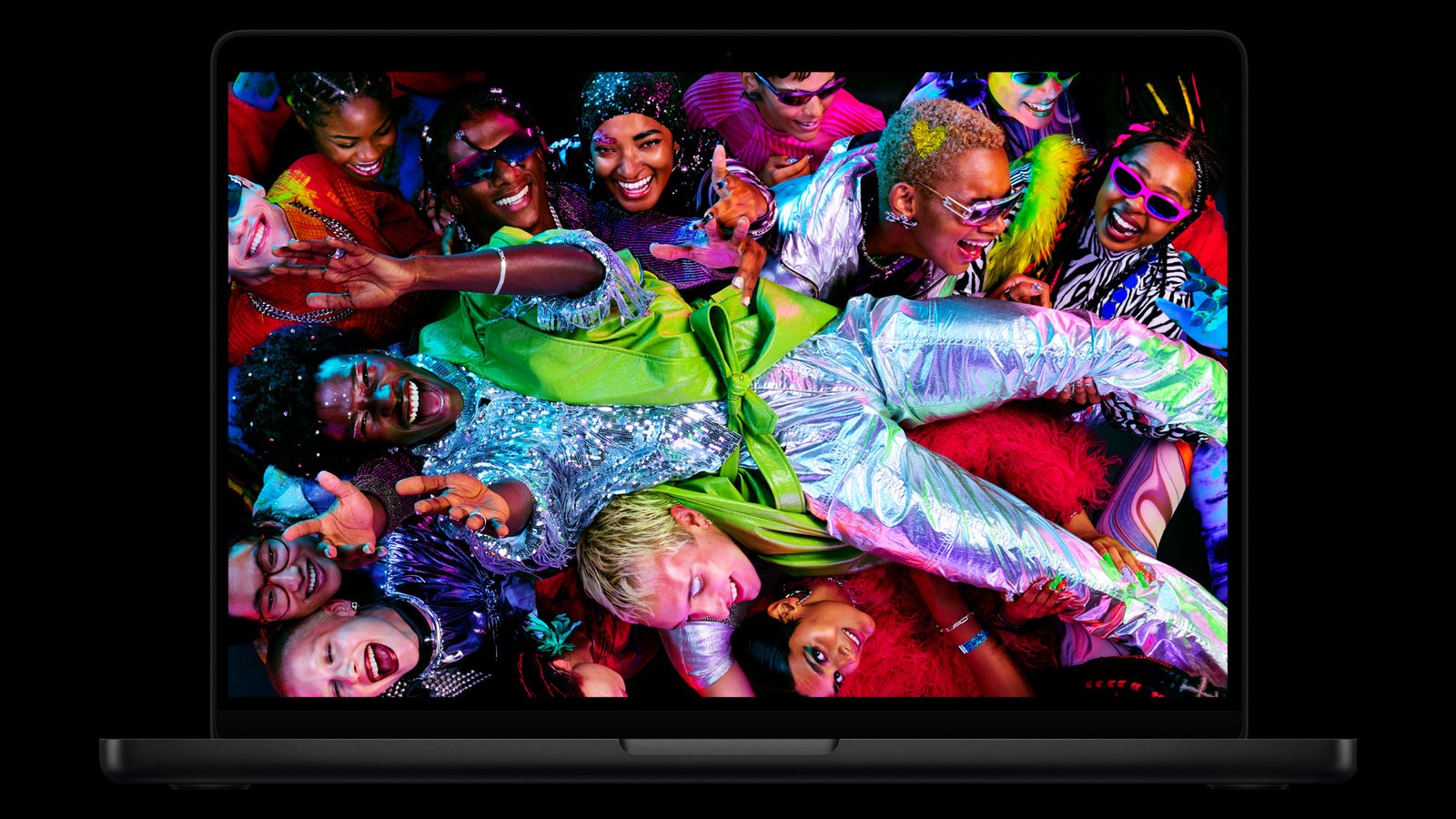
Apple will unveil new products on Wednesday, October 28, at 10 a.m. Pacific (1 p.m. Eastern). The invitation it sent to reporters on October 19 calls them to Los Angeles under the slogan "Pro and tell" and names no products. Bloomberg's reporting points to new MacBook Pro models, including the first Mac with a touchscreen.
Greg Joswiak, Apple's senior vice president of worldwide marketing, teased it on X with "Can't wait to pro and tell next week." The play on show and tell, the classroom ritual of bringing in an object and talking about it, swaps "show" for "pro," the label Apple puts on its high-end hardware.
How to follow it
The 10 a.m. PT start comes from the invitation, as reported by 9to5Mac. Daylight saving time in the US runs until November 1, so the usual conversions hold. It is 10 a.m. in California, 11 a.m. in Denver, noon in Chicago and 1 p.m. in New York.
What the invitation describes is an in-person "experience" for press in Los Angeles. Cult of Mac notes it does not promise a livestreamed keynote. MacRumors expects press releases on Apple Newsroom at 10 a.m. PT, and Bloomberg's Mark Gurman said on his podcast that Apple will, at the very least, post product videos. Apple's events page, where its presentations usually go up, listed no stream for the day as of October 20.
What Bloomberg expects
Apple has not confirmed any products. According to Gurman, the headliner is a 14-inch and 16-inch MacBook Pro with an OLED touchscreen, a noticeably lighter chassis and a Dynamic Island where the camera notch sits today. On the iPhone, the Dynamic Island is the black pill around the front camera that stretches to show live activity such as a timer or the song playing.
Alongside it, Gurman expects an entry-level 14-inch MacBook Pro and an iMac with the M6 chip and unchanged designs, plus an iPad mini with an OLED screen. On his podcast, per MacRumors, he said the new laptops could reach stores on Friday, November 6, and that the touchscreen model would sit above the current MacBook Pro rather than replace it. The long-rumored "MacBook Ultra" name appears to be gone, and the event slogan backs that up. Neither Apple nor Gurman has mentioned prices.
What touch would change on a Mac
On a Mac today, you reach a button by steering the pointer with a trackpad or mouse. A touchscreen lets your finger do that on the glass, whether you tap a button, scroll a page or pinch a photo to zoom. Bloomberg's February report, covered by MacRumors, says the keyboard and trackpad stay and macOS adjusts its controls to the input you use. Tap a menu bar item with a finger and you get a menu with bigger buttons, since a fingertip covers far more screen than the tip of a pointer.
That approach sidesteps Apple's longtime objection. In 2018, software chief Craig Federighi told Wired that reaching up to poke a screen is "a pretty fatiguing thing to do." Bloomberg says Apple will not pitch the new laptop as a touch-first device and that touch and pointer will work for every function.
The panel switch matters even if you never touch the screen. The current MacBook Pro uses mini-LED backlighting, thousands of tiny LEDs behind the panel that light up in zones. On OLED, each pixel makes its own light and can switch off completely, so black stays black and white text on a dark background shows no glow around it. The trade-off is burn-in, a faint permanent ghost that static elements such as the macOS menu bar or Dock can leave after hours on screen. Our OLED vs. Mini LED guide covers it in detail.
Why the touchscreen model skips M6
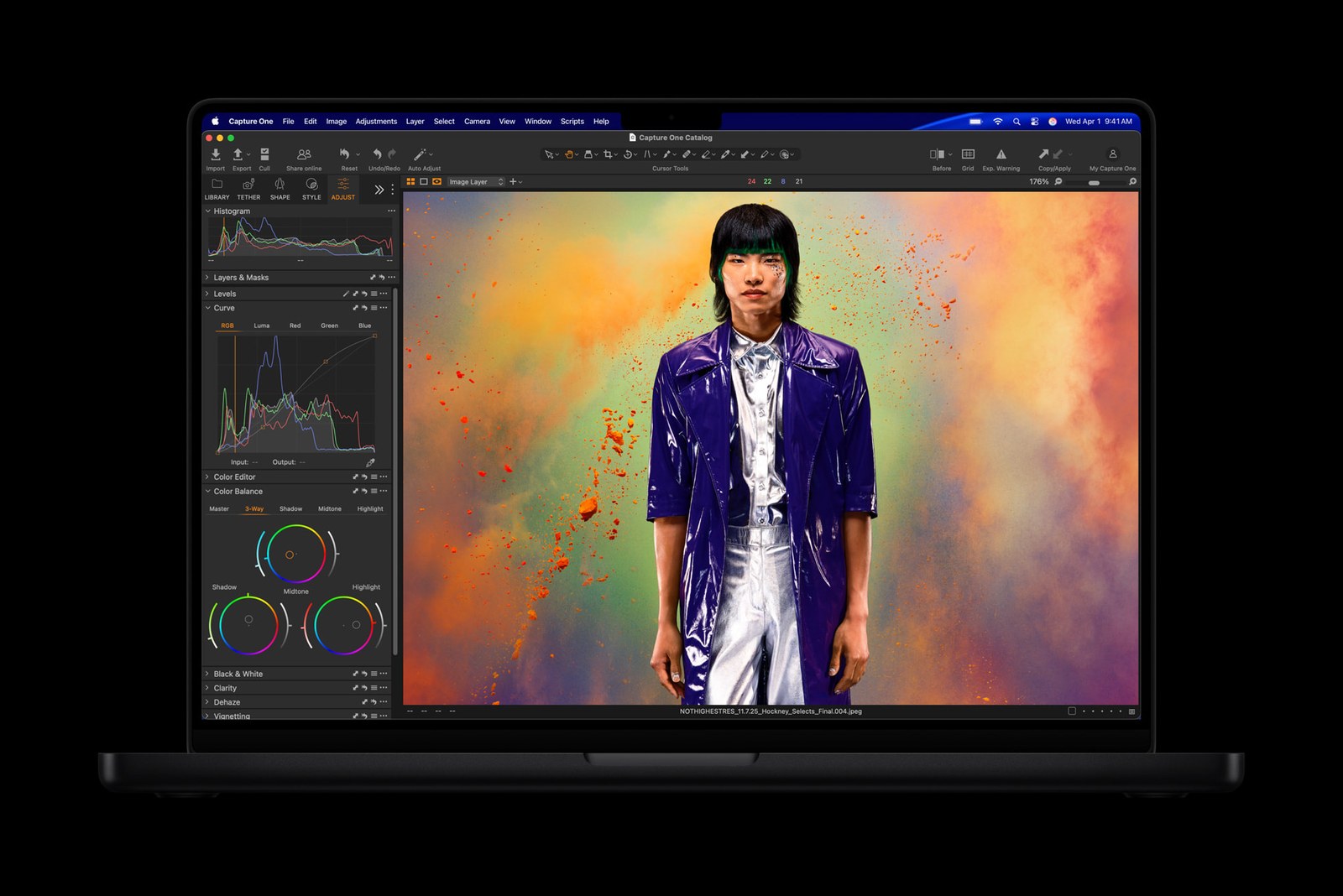
In February, Bloomberg expected the touchscreen MacBook Pro to debut M6 Pro and M6 Max. By June it reported that Apple would skip those two chips and use M5 Pro and M5 Max instead, according to 9to5Mac. Those are the chips the current MacBook Pro has shipped with since March, so what's new would be the display and the design, not the processor.
M6 itself is already on sale. Apple introduced it in August in the M6 Mac mini with a 12-core CPU and a 12-core GPU, and Gurman now expects it in the cheapest 14-inch MacBook Pro and the iMac. The practical gap with the Pro and Max chips is memory. In the Mac mini, M6 tops out at 32GB, while M5 Pro reaches 64GB and M5 Max 128GB, per Apple's specs. The CPU and GPU share that pool, so it caps how large a video project or local AI model the laptop can handle comfortably.
The current 14-inch MacBook Pro with M5 Pro launched in March at $2,199. Pricing for the new models, and whether orders open on October 28, should be clear once the press releases go out at 10 a.m. PT.
The conversation starts here
Sign in with a supporter account to comment. Sign in


Nobody has commented yet. Want to go first?