

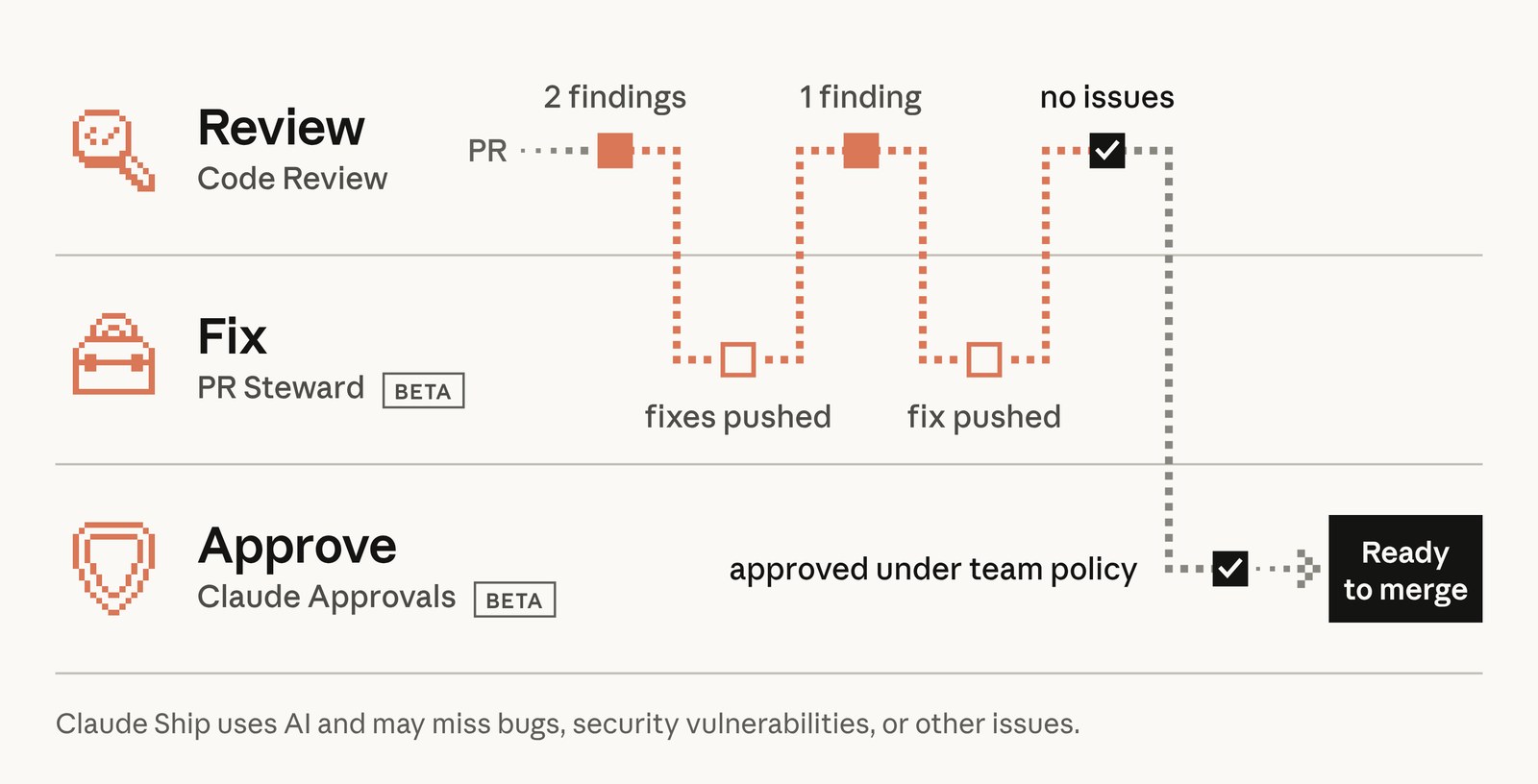
Anthropic has released Claude Ship in beta, a set of three AI agents that carry a code change on GitHub from review all the way to the approval decision. The company announced it on Monday, November 23 for organizations on Claude's Team and Enterprise plans, which pay for it separately based on usage. Each team writes a file that spells out which changes Claude may approve on its own and which need one or more people to sign off.
What code review is, and what each agent does
Software teams rarely push a finished change straight into the main version of their product. Instead, the developer opens a pull request, a proposal that shows every added and deleted line so a colleague can read it before it goes in. If branches and pull requests are new to you, our beginner's guide to GitHub covers them. That human read catches mistakes before users ever see them, and it is exactly the step that backs up when an AI writes code faster than people can check it.
Code Review reads the change alongside the code around it and leaves comments on the affected lines, ranked by severity, flagging logic errors, security holes and cases nobody planned for. PR Steward then works on whatever is blocking the pull request, such as failing automated tests, conflicts with other people's changes or reviewers' comments, and after each fix it explains how to undo it. It is built so that it never approves or merges anything.
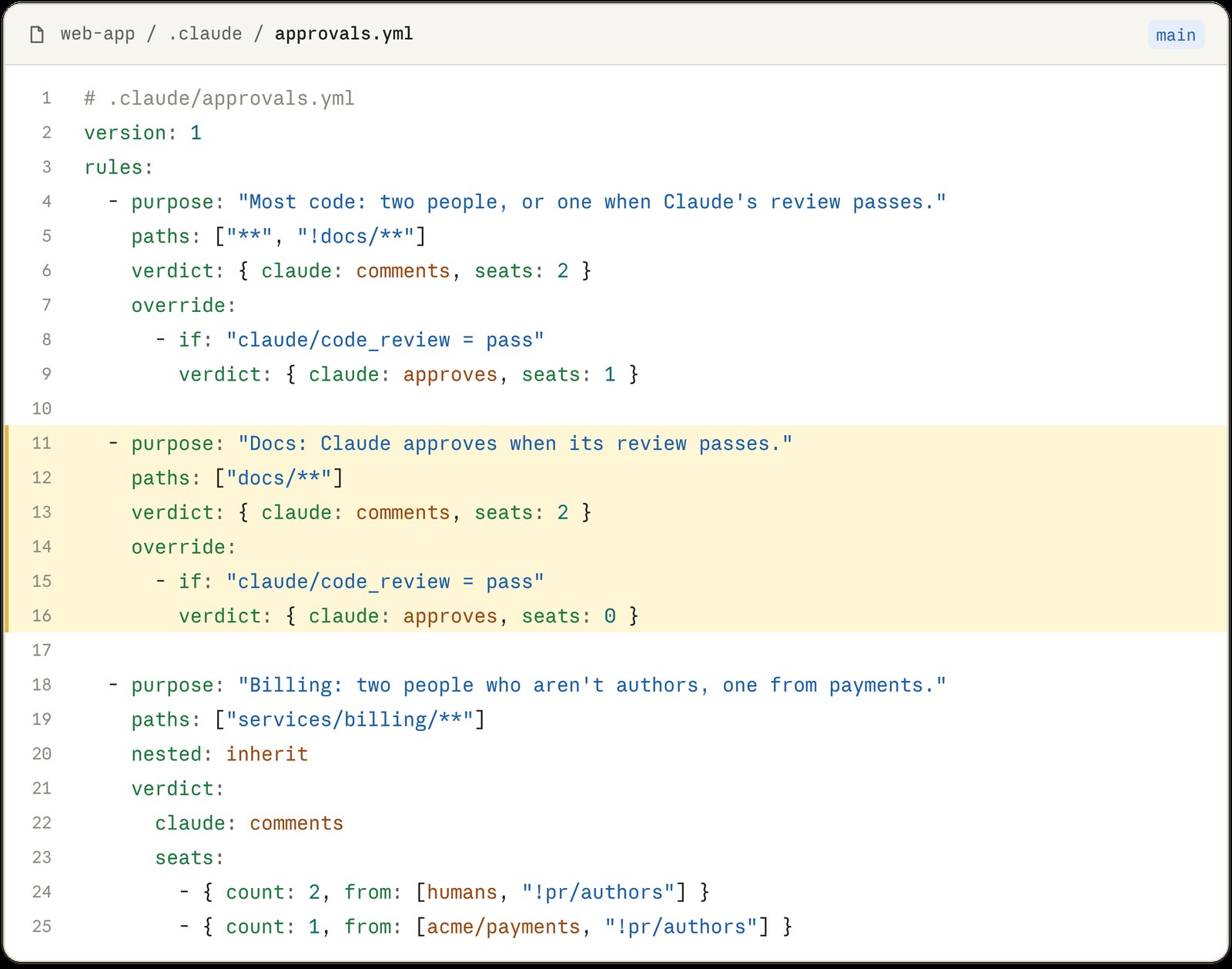
Claude Approvals is the agent that enforces the team's rules. It reads a file called `.claude/approvals.yml` and reports on each pull request who still has to approve it. In Anthropic's own examples, a change to billing code needs two people, while a documentation fix can be approved by Claude alone once its own review comes back clean.
How /ship works in Claude Code
Once a change is done, the developer types `/ship` into Claude Code, Anthropic's coding assistant that runs in the terminal. There is no confirmation prompt, just a few seconds to cancel with the Esc key. Claude then commits the work, pushes it to GitHub, opens the pull request, reviews it and keeps fixing tests and answering comments for up to seven days as long as the session stays open. The developer still does the final merge.
Who can use it and what it costs
Claude Ship requires a Team or Enterprise plan and only works with repositories hosted on GitHub. Anthropic does not say whether `/ship` works on individual Pro and Max subscriptions.
There is no flat price. The agents are billed on the tokens they use, the chunks of text the model reads and writes, through usage credits that sit outside a plan's included usage. When Code Review launched in March, Anthropic put the average at $15 to $25 per review, and the cost grows with the size of the change. Admins can set monthly spending caps, but PR Steward has none until someone sets one.
The risk of letting an AI approve code
Anthropic warns that Claude Ship can miss bugs and security flaws. Its documentation also concedes that a change can be merged without any person reading it, for example when GitHub counts Claude's approval as the only one required.
That is why the company suggests starting in observe mode, where Claude Approvals shows what it would have decided without blocking or approving anything. Observe mode is still billed. It is the same caution we recommend when you ask an AI for changes on GitHub, where a person checks what changed before anything touches the main branch.
`/ship` runs on the developer's computer with their permissions and pulls in whatever other people push to the same pull request. That means anyone who can push code to it could run programs on that machine, which is why Anthropic advises using it only when you trust all of them.
To back the product, Anthropic offers its own numbers, which nobody has independently checked. On the Claude Code team, where Claude already writes most of the code, merged pull requests more than doubled between June and September, and the share of changes that had to be reverted fell by more than 40%.
The conversation starts here
Sign in with a supporter account to comment. Sign in



Nobody has commented yet. Want to go first?