
Cursor users have a date to circle. On November 12, several OpenAI models may disappear from the editor's model picker. OpenAI has notified SpaceX that it intends to end the agreement that has put its models inside Cursor for almost four years, and has proposed that date for the cutoff.
For someone who opens Cursor occasionally, this is a change in a menu. For a team whose reviews, rules and agents depend on GPT, a contract dispute has become a model migration. The countdown is 74 days.
Axios reporter Dan Primack reported on June 16 that SpaceX had exercised a $60 billion option to buy Cursor. The acquisition has now closed, and this is one of its first visible consequences.
74 days
OpenAI published its decision on August 28 and says November 12 is the earliest date allowed by the contract. It has not said which models will go first, how Cursor's paid plans will change or the exact time of the cutoff.
Cursor should retain access to the OpenAI models it already offers during the transition, but it will not receive future releases. OpenAI names Astra as an example. If Astra or another new model launches before November 12, OpenAI can make it available in its own products without adding it to Cursor.
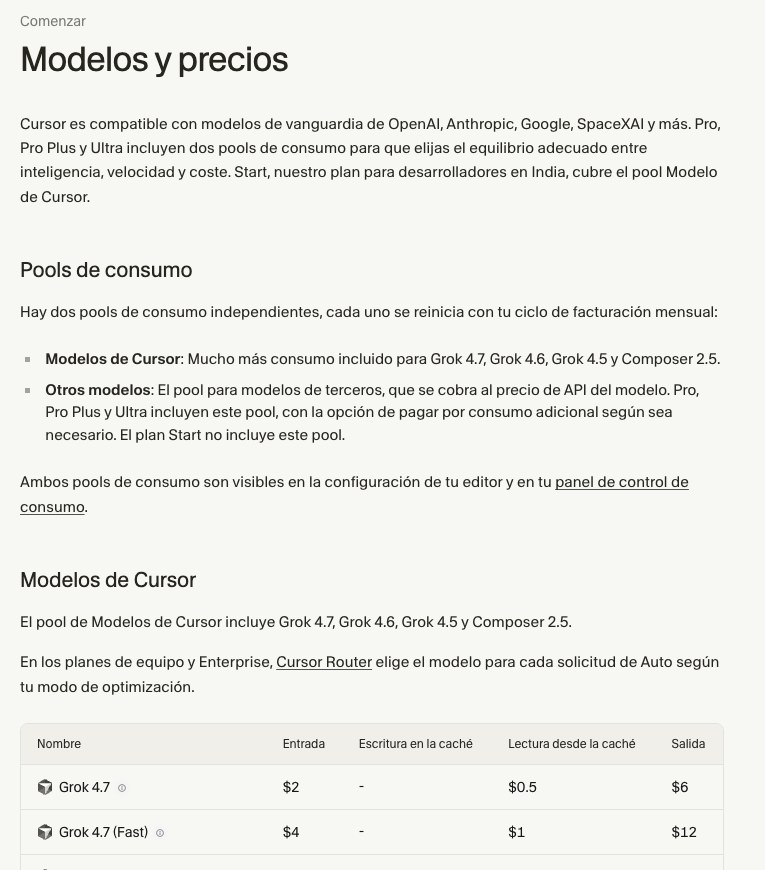
Cursor described the acquisition very differently two weeks earlier. In its August 14 announcement, the company promised that SpaceX would give it access to “the largest GPU fleet in the world”, allowing it to build cheaper and more capable models. Cursor presented Grok 4.6 as the first glimpse of that future.
OpenAI says Cursor's change of ownership triggered a contractual right to leave. It also says it cannot trust SpaceX to use its technology within OpenAI's terms, pointing to earlier disputes with companies run by Elon Musk, SpaceX's chief executive.
Why OpenAI is walking away
Cursor has not issued a specific response to the cancellation, and SpaceX may yet dispute OpenAI's reading of the contract. For now, three things are confirmed: OpenAI has proposed November 12, it plans to withhold future models and it has explained why.
There is also an obvious competitive conflict. Cursor now belongs to the group building Grok and already pitches Grok 4.6 for long-running work, while OpenAI sells Codex as a programming tool. Keeping a rival's model inside Cursor was useful for customers. After the acquisition, it became much harder for either company to justify.
Cursor's biggest strength now looks fragile
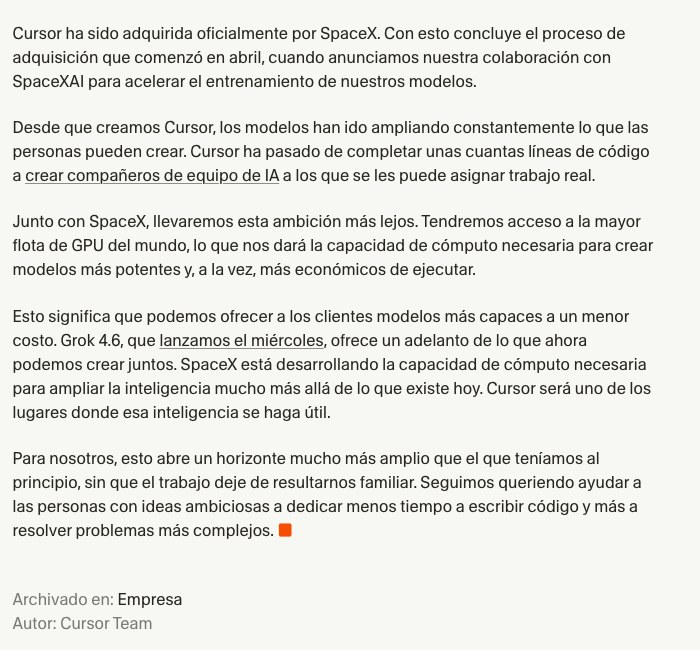
Cursor became popular because developers did not have to commit to a single model. They could keep the same editor and choose a different engine for each job. The SpaceX deal exposes the weak point in that promise: the choice depends on contracts customers cannot see, and those contracts can disappear while the subscription remains active.
If your daily work in Cursor depends on OpenAI, list the workflows tied to a specific model and keep a small test you can run against an alternative. Our guide to requesting AI changes through a safe GitHub branch also applies here. The model may change. The safety boundary should not. A technically capable replacement will not automatically reproduce every team's rules, prompts and automations. November 13 will show whether Cursor still offers genuine model choice or whether the SpaceX deal has quietly narrowed it.
The conversation starts here
Sign in with a supporter account to comment. Sign in

Nobody has commented yet. Want to go first?