
Meta has released Muse Spark Open’s weights, giving developers a downloadable multimodal model for coding and agent workflows. Local use requires substantial memory. Meta documents a setup with two 512GB Mac Studios, while Hugging Face has tested a more compressed variant on a single 512GB M3 Ultra.
Multiple input types, text output
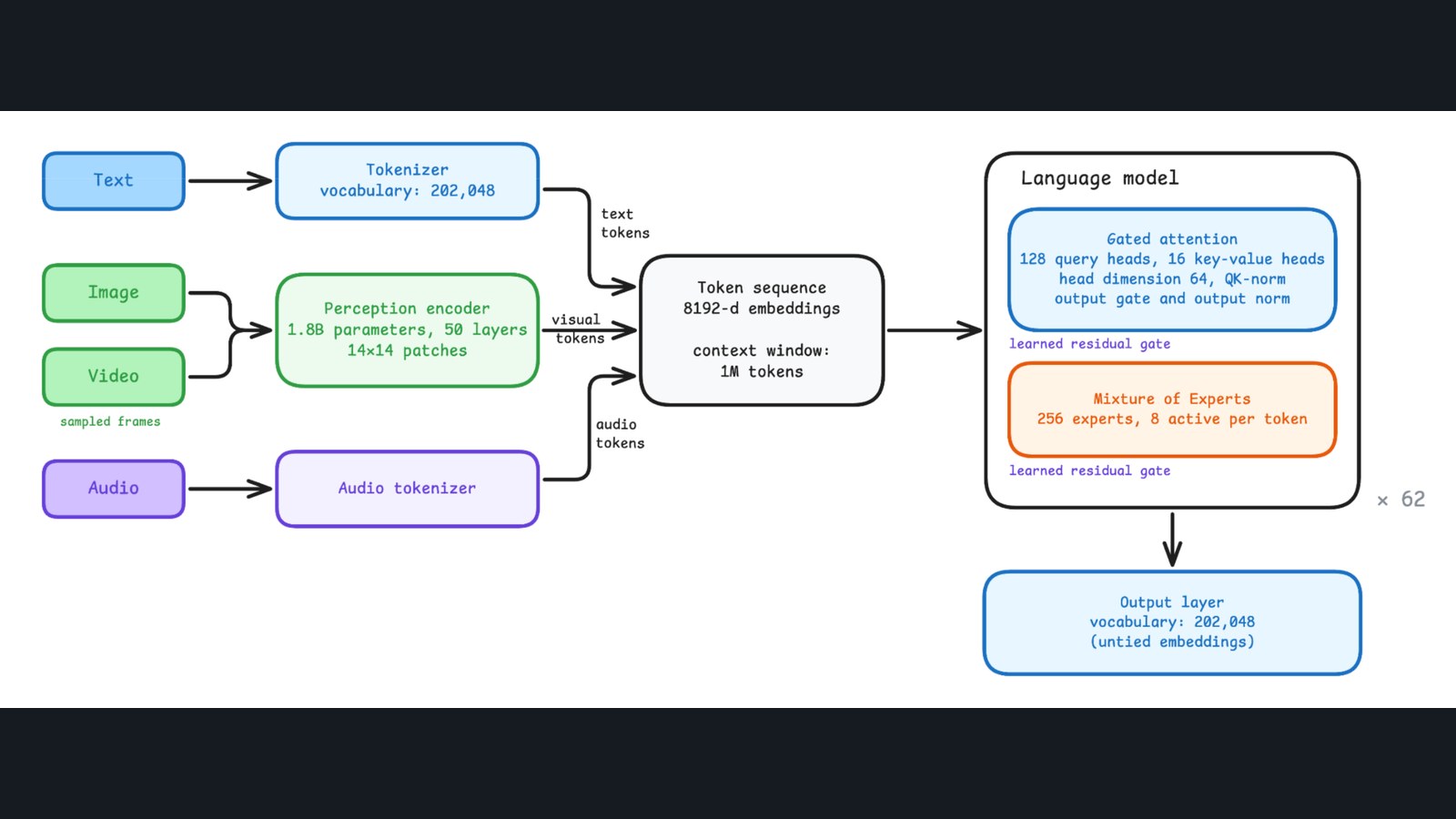
Hugging Face’s architecture overview describes text, image, audio and video input with text output. A developer can ask it to inspect a screenshot or screen recording as part of a coding task. Video input does not turn it into a video-generation model.
The mixture-of-experts design has approximately 816 billion total parameters, with around 42 billion active per token. Selecting a subset for computation does not remove the need to store the larger model. Its one-million-token context window describes material available in a request, as our context-window explainer explains.
Check the documented configuration before downloading
Meta’s hardware guide lists NVFP4, a compressed model format that reduces memory use, on Apple MLX with two 512GB or four 256GB M5 Ultra Mac Studios. It also documents professional NVIDIA and AMD accelerator configurations and an Intel Xeon route.
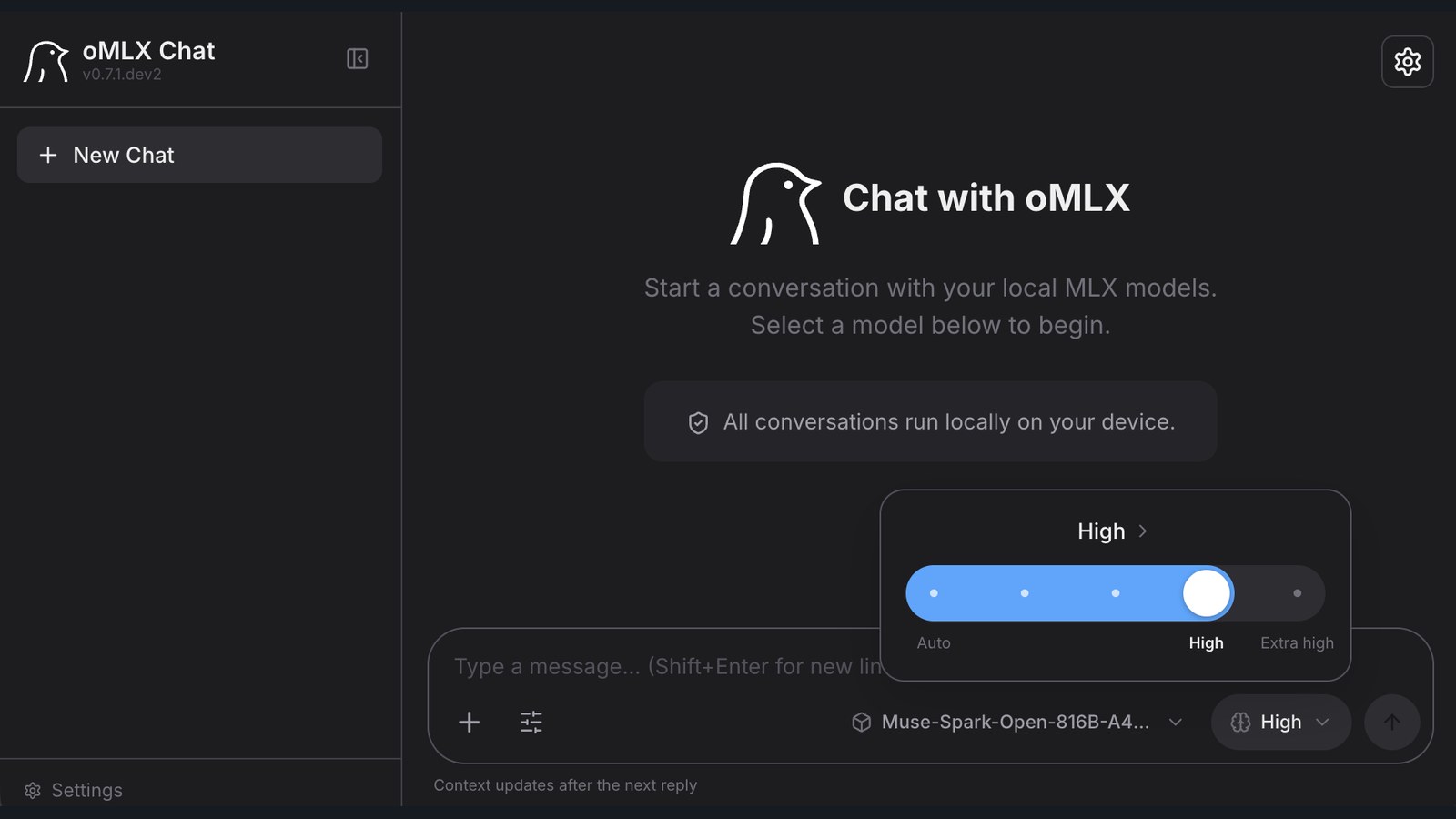
Hugging Face documents a three-bit oQ3e variant tested on one 512GB M3 Ultra, with the model occupying about 344GB. Greater compression changes the requirements, so the number of machines depends on the chosen variant rather than the Muse Spark Open name alone.
Local inference gives the operator control over where model processing happens. Our local versus cloud AI guide explains why connected tools still matter: a local agent’s browser or external API can send information elsewhere.
Open weights come with specific commercial terms
The weights use the Muse Model License with limited commercial terms. Meta says many developers can use them for free, which does not make hosting, equipment or every commercial use unrestricted.
Hosted access is also available through providers including Baseten, Fireworks AI, Groq, Modal, Nebius, OpenRouter and Together AI. That route runs on the provider’s infrastructure rather than turning an API call into a local installation.
The conversation starts here
Sign in with a supporter account to comment. Sign in

Nobody has commented yet. Want to go first?