

Google DeepMind put teams of AI agents to work on quantum algorithms, the step-by-step recipes a quantum computer would follow, and they came back with much leaner versions. The standout is a simulation that helps design laser-driven fusion experiments, whose estimated cost fell 11.8-fold. A program called Lean checked a mathematical proof of every result, because no machine exists yet that can run these circuits to test them. And in a Nov. 23 blog post, DeepMind says even the first error-corrected quantum computers probably won't have enough resources for this simulation.
What got cheaper
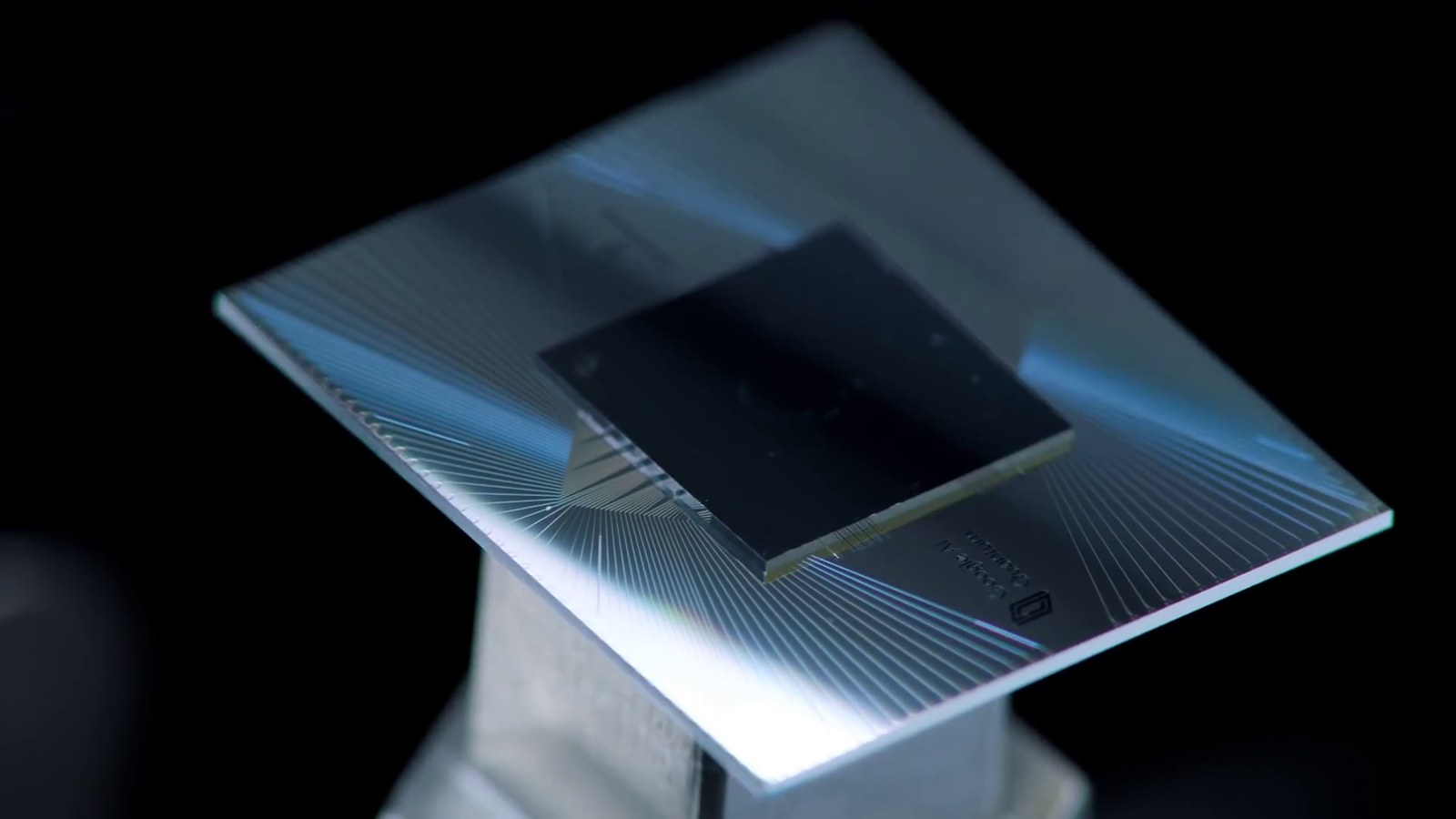
A quantum computer runs on qubits. An ordinary bit is either 0 or 1, but a qubit can hold a combination of both. Qubits are so fragile that useful machines will have to bundle many physical qubits into each error-corrected qubit, which is far more reliable. A quantum algorithm ends up written as a circuit, the exact list of operations applied to those qubits.
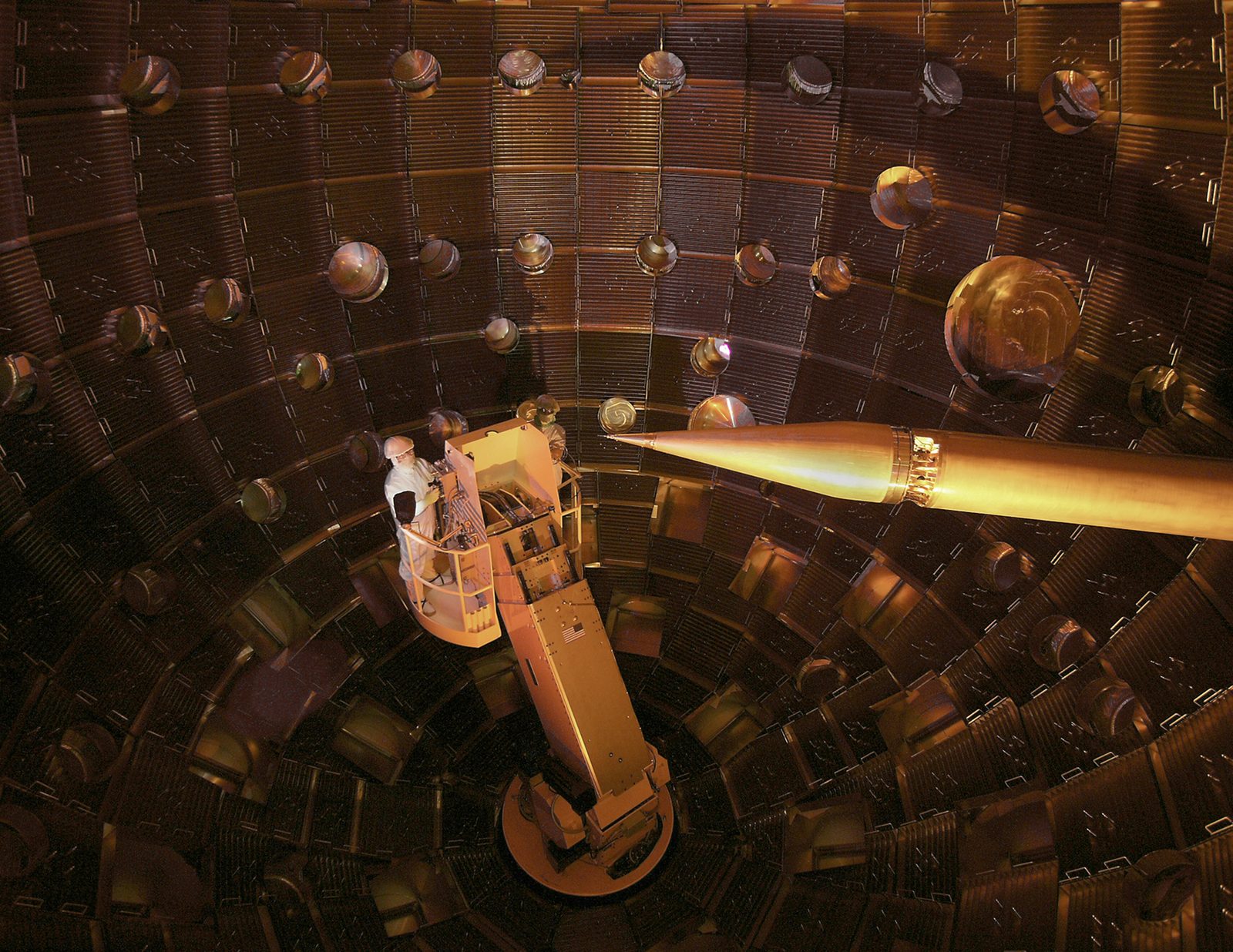
The fusion circuit calculates stopping power in inertial confinement fusion, which uses lasers to crush a capsule of hydrogen fuel until it ignites. Fusing nuclei throw off alpha particles, fast-moving helium nuclei, and stopping power measures how fast the surrounding fuel absorbs their energy, which decides whether the reaction keeps itself going. Supercomputer simulations of it can eat up hundreds of millions of CPU hours a year, according to a 2024 PNAS study, co-authored by Google Quantum AI researchers, that laid out how a quantum computer could do the job.
The circuit proposed in that study is DeepMind's baseline. Its cost measure multiplies the error-corrected qubits a circuit ties up by the number of operations it runs that are hardest to shield from errors. An 11.8-fold cut leaves the simulation at roughly 8.5% of what the 2024 design needed. The qubit count only drops from 5,650 to 4,338, so nearly all the savings come from running far fewer of those expensive operations. The research paper, dated Nov. 10, reported a 10.9-fold cut and 4,374 qubits, and the blog post doesn't explain the gap.
How the agents worked
An AI agent is a model that proposes changes, checks them and keeps going without a person directing every step. These ran on Gemini 4 Carbon, according to the paper. DeepMind set several independent teams on each problem, and they logged their progress in a shared notebook. An idea went in only once Lean accepted its proof, and every four hours the agent teams met at a virtual conference to compare notes. Humans picked the problems and oversaw the work.
The same approach made a simulation of a light-sensitive molecule 8 times cheaper and one of cytochrome P450, an enzyme that breaks down most medicines, 2.5 times cheaper.
Why every result needs a proof
A circuit with thousands of qubits is too big to simulate on an ordinary computer and too big to run on today's small quantum processors. So DeepMind turned to Lean, the proof checker that verified the Riemann hypothesis proof built with Claude. In Lean, each step has to follow from the ones before it under fixed rules, and the software rejects a proof if a step is missing or wrong. Using a Lean library built for quantum algorithms, the agents proved two things about every circuit: that it does what the problem statement asks, and that it costs what they claim.
What Lean can't check is whether the problem statement gets the physics right, so researchers still have to vet the physical model and the way costs are counted. And the proven cost leaves out the overhead of building error correction into a real chip. DeepMind is posting the library and the verified solutions on GitHub so other groups can check them.
What's still missing
This doesn't bring fusion power any closer on its own. It trims the cost of a calculation that, according to the 2024 study, a future quantum computer might do more accurately than a supercomputer, and that machine doesn't exist yet. The paper estimates that squeezing simulations like this onto the first error-corrected computers will take further cuts of several orders of magnitude, meaning 100-fold or more. Neither the blog post nor the paper puts a date on those machines.
The conversation starts here
Sign in with a supporter account to comment. Sign in


Nobody has commented yet. Want to go first?