
For the first time, the Riemann hypothesis, the most famous open problem in mathematics since 1859, has a proof that a computer has checked from start to finish. Levent Alpöge, a mathematician at Anthropic, released it on Friday, Nov. 20, as roughly 17 million lines of code in Lean, a language in which software checks every step. He built it with help from Claude. On Saturday, the communities behind Lean and its main math library, Mathlib, said they have “full confidence” the proof is correct.
That still leaves a lot open. There is no version a mathematician can read through, no journal has reviewed it, and the Clay Mathematics Institute has not awarded the $1 million it offers for a solution.
What the Riemann hypothesis says
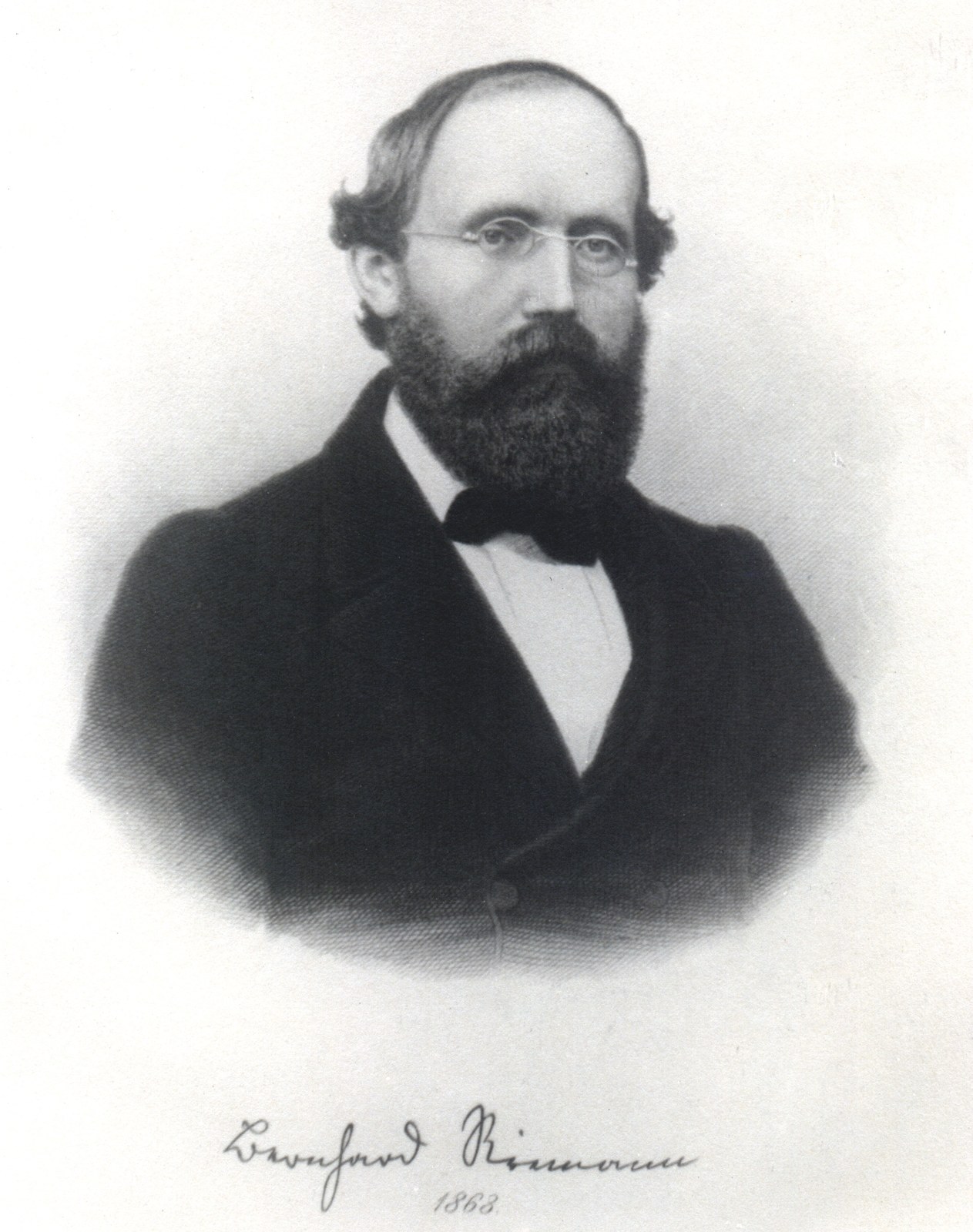
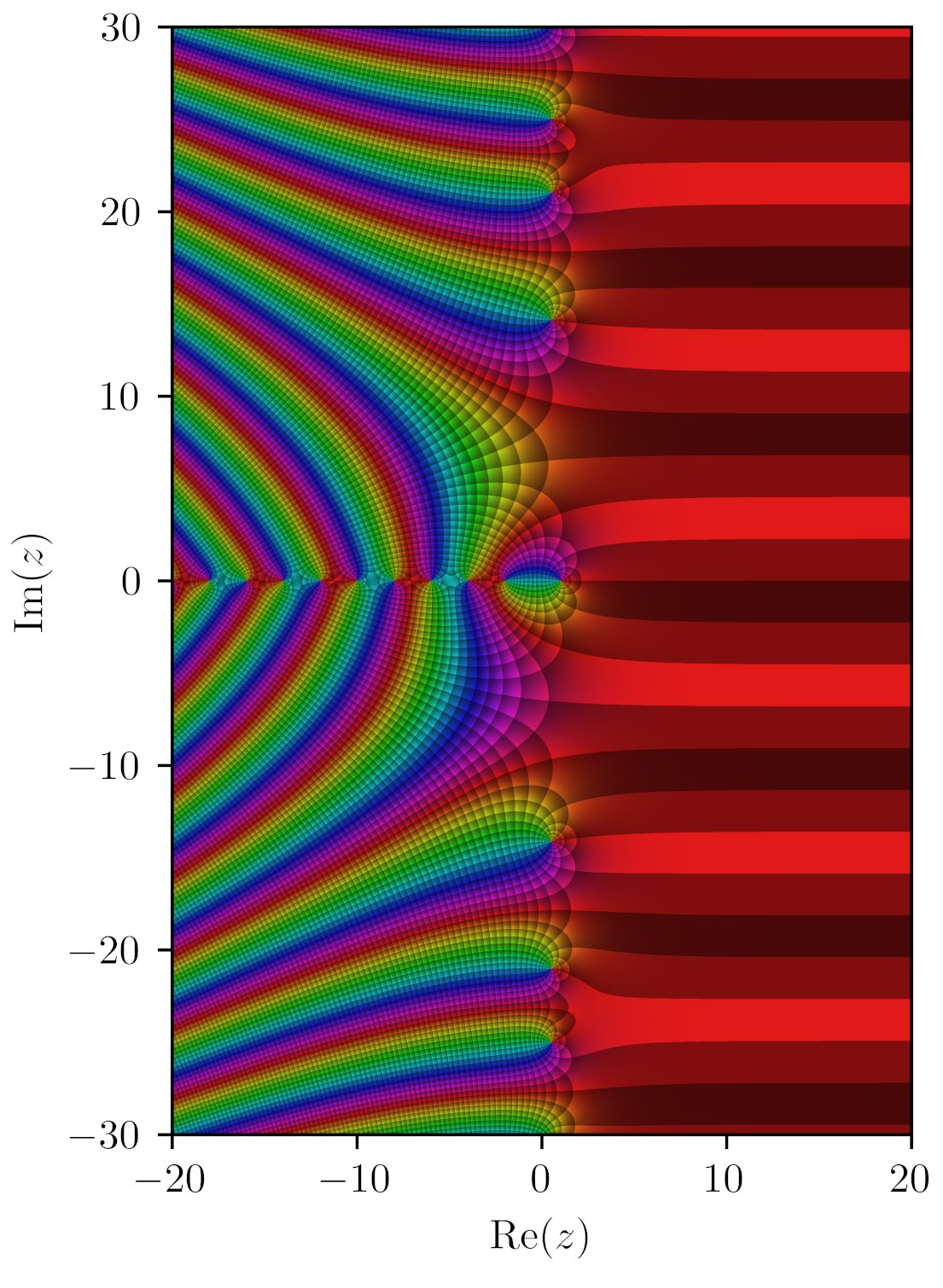
Prime numbers can only be divided evenly by 1 and themselves, like 2, 3, 5, 7 and 11, and they thin out as numbers get bigger, with no exact pattern. In 1859, Bernhard Riemann tied their distribution to a function called zeta and proposed that all of its meaningful zeros, the points where it equals zero and that encode how primes are spread out, sit on a single line. Zeta works with numbers drawn as points on a flat plane, and that line holds every point whose first coordinate, known as the real part, is 1/2.
Why it matters, and what it doesn't change
If the hypothesis holds, primes are spread out as evenly as they possibly can be, and the error in estimating how many lie below a given number stays small. Plenty of results in number theory were proved assuming it was true and would no longer need that caveat.
Your encrypted traffic is safe. Schemes like RSA rely on how hard it is to break a huge number into its prime factors, and the hypothesis offers no shortcut for doing that.
What it means for software to check a proof
In Lean, every step has to follow from earlier ones under fixed logical rules, and a small core of the program, called the kernel, checks each one. If a step is missing or wrong, Lean rejects the code, with no need for a human referee to catch the error.
The community also covered the two weak spots in that guarantee. Because Lean only certifies what is written down, number theorists confirmed that the statement in the code says what Riemann meant. To rule out a bug in Lean itself, dozens of people reran the check on their own machines, and several independent checkers accepted the proof. What Lean can't supply is an explanation. It confirms every step is valid, not why the argument works.
What Claude did and what Alpöge did
Alpöge describes the process in a short note. He set the direction and supplied intuition, such as carrying over to the integers a method from another branch of mathematics. Claude came up with a key piece of the argument and, in his words, far outpaced him near the finish line. Alpöge concedes he has little command of some fields the proof draws on, and says Claude is the expert there.
Nobody has yet explained why the proof works. Attempts to get Claude to write a readable version ran past 250,000 pages, and Alpöge hasn't released one. According to Quanta Magazine, NYU mathematician Maksym Radziwiłł criticized Alpöge's write-up as containing nonsensical statements.
Anthropic had made no official announcement as of Friday. Back in August, the same month OpenAI showed its Astra model solving open problems, the company said Claude had improved a partial result on the hypothesis and that it did not expect those techniques to lead to a proof.
What stands between the proof and the $1 million prize
Under the Clay Institute's rules, a solution has to appear in a qualifying outlet, at least two years have to pass, and the global mathematics community has to broadly accept it. None of those conditions is met yet.
No major AI-assisted math claim has made it through that process. That includes work by Alpöge and Tristan Buckmaster on a simplified version of the Navier-Stokes fluid equations and OpenAI's claim on the full problem, which we covered in September.
The next step is for mathematicians to pull the ideas out of those 17 million lines. Alpöge expects the proof to be massively simplified, “likely immediately.”
The conversation starts here
Sign in with a supporter account to comment. Sign in


Nobody has commented yet. Want to go first?