
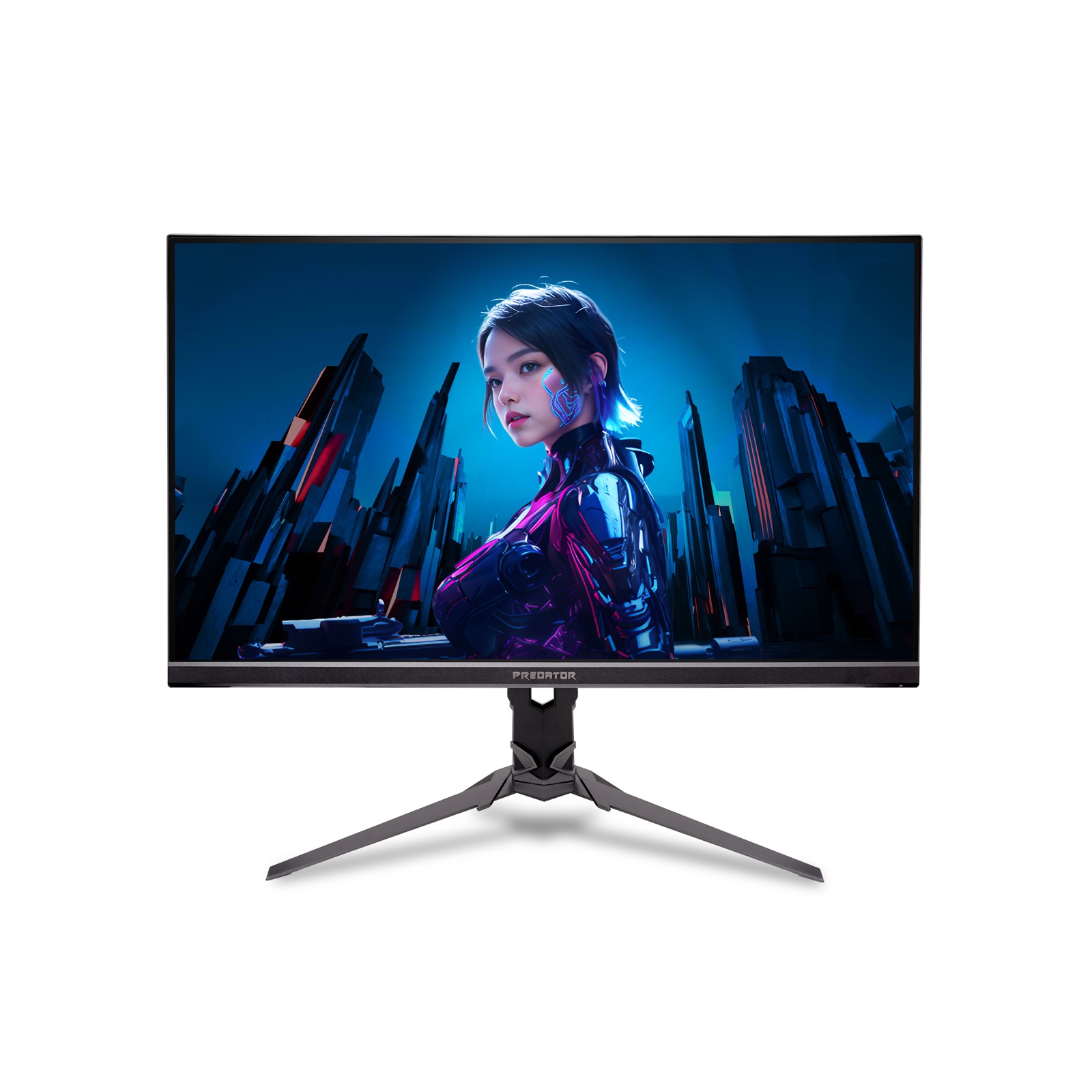
A 1,000Hz monitor still needs a 1,000fps PC
Acer used its IFA 2026 presentation to introduce a 1,000Hz monitor. Predator XB253Q U1 is a 24.5-inch Full HD IPS monitor capable of 1,000Hz over DisplayPort 2.1. It is scheduled for North America in the first quarter of 2027 at $1,099.99.
At 1,000Hz the panel can begin a refresh every millisecond, compared with every two milliseconds at 500Hz. That does not make the complete system response one millisecond. The game, CPU and GPU must deliver close to 1,000 frames per second to use every refresh, and Acer has not supplied independent latency or motion-clarity measurements.
FreeSync Premium and G-SYNC compatibility synchronise refreshes with the frames produced by the graphics card. Nor is the headline an outright record: Samsung has announced an Odyssey G6 that can reach 1,100Hz, but only after dropping to HD. Acer keeps 1080p, then charges four figures for an advantage aimed at competitors already running games at extraordinary frame rates. Check what performance your PC can actually produce before buying the largest number on the box.
Swift Blade 14 reaches 799 grams by trimming elsewhere
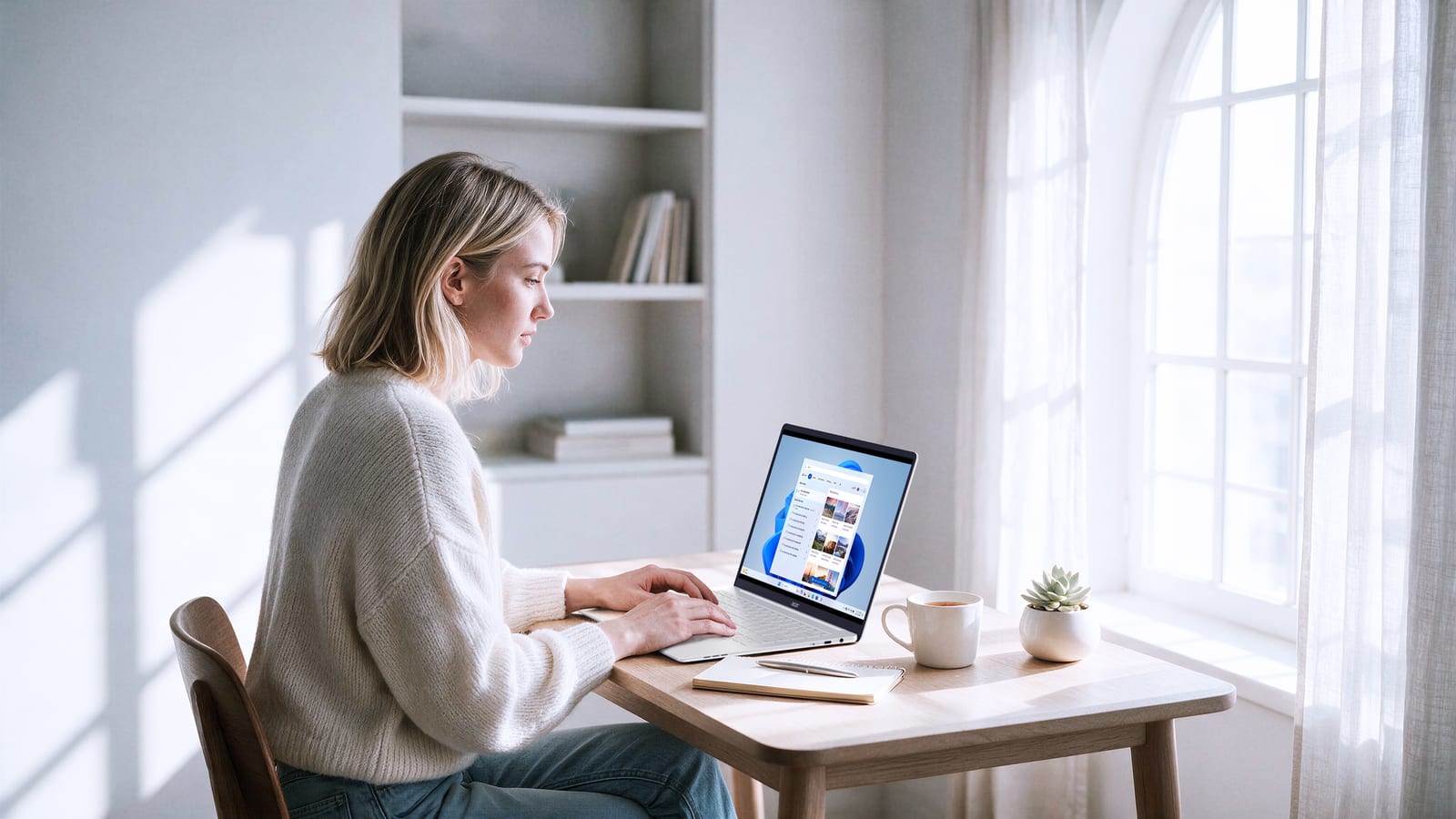
The Acer Swift Blade 14 weighs 799 grams and measures 12.9mm thick. Its magnesium-aluminum and carbon-fibre chassis can house an Intel Core 7 350, a 3K 90Hz OLED display and up to 1TB of storage. It looks like a complete laptop on a desk while weighing less than many tablets once their keyboards are attached.
The scale also reveals the compromises. Memory is fixed at 12GB LPDDR5, the battery holds 50Wh and all three ports are USB-C. There is no USB-A or HDMI, so connecting a projector, an HDMI display or an ordinary USB-A drive means carrying adapters. Acer has confirmed a December 2026 launch for Europe but no price, while North American availability remains unannounced.
That combination makes sense for constant travel, documents, web work and light editing. The 799-gram weight will pay off on every journey, but soldered 12GB memory could become the laptop's limiting factor long before the rest of its hardware ages. Acer has made the machine lighter partly by removing one of the simplest ways to extend its useful life.
Vero 16 makes a promise that is harder to copy
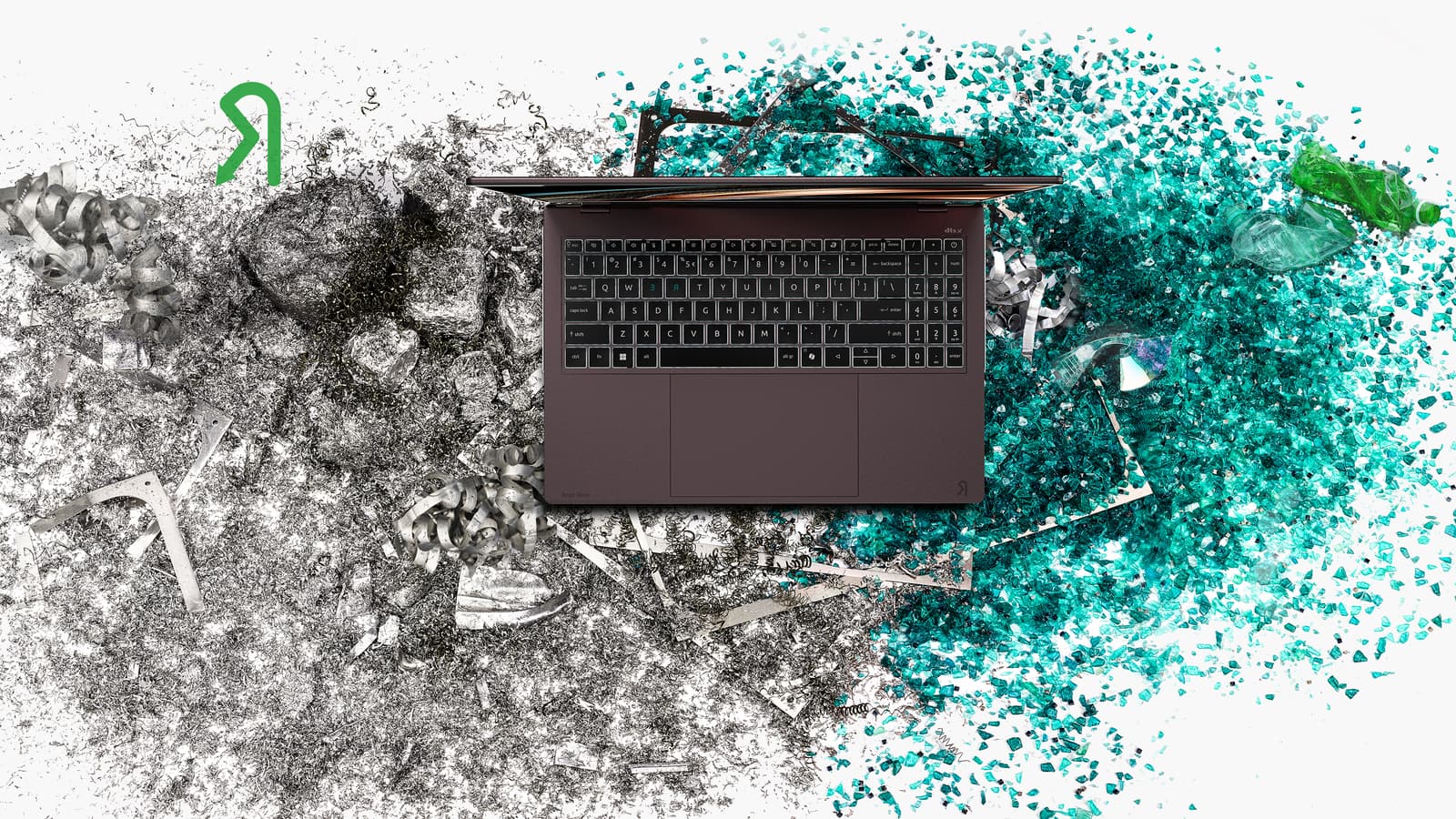
The presentation's most consequential product may not be the record breaker. Acer Vero 16 has a tool-free bottom latch, a user-replaceable battery and SSD, a detachable hinge and removable I/O covers. Its basic repair instructions are engraved into the case.
Acer also says the design will support processor upgrades for at least two generations. That statement needs practical terms: compatible boards, spare-part availability, documentation and prices that make repair worthwhile. It is a stronger idea than changing a case colour and calling it sustainable, but the parts programme will decide whether it works.
The laptop scales up to a Core Ultra X9 388H, 32GB of memory, a 3K 120Hz OLED display and a 71Wh battery. The announced 512GB storage ceiling is surprisingly low, although the SSD can at least be replaced. Vero 16 reaches Europe in the first quarter of 2027 without a confirmed price, and Acer has not announced US availability. If Acer backs the design with readily available spare parts, Vero 16 will be one of the standout products in the range.
Predator Atlas 7 chases battery capacity instead
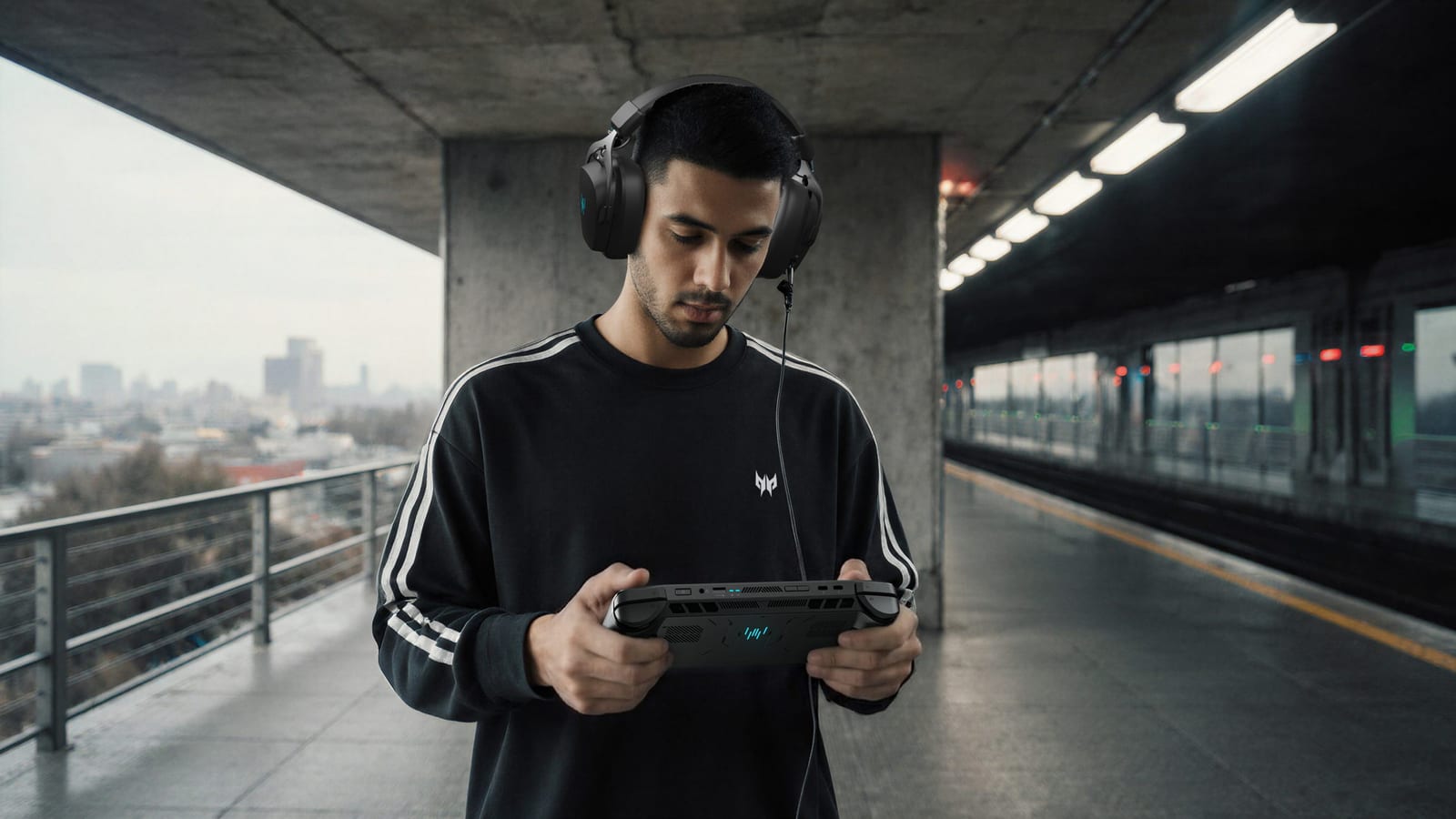
Predator Atlas 7 enters a much busier handheld market than the one Valve found three years ago. It combines a 7-inch 1080p 120Hz VRR display, Intel Arc G3 Extreme or Arc G3 processors with Arc B390 or B370 graphics, up to 24GB of memory and two Thunderbolt 4 ports. Its standout option is an 80Wh battery, 60% more capacity than Steam Deck OLED's 50Wh pack.
An 80Wh battery stores more energy, but it does not specify how many hours the handheld will run. Battery life will depend on Acer's processor power limits, display brightness and the game. The extra capacity also shows up on the scale: the 80Wh model weighs under 750 grams and the 60Wh version under 700. Acer presents TMR sticks and Hall-effect triggers as options without saying what each region will receive as standard or how much the handheld will cost. Europe is scheduled for November, with North America following in the fourth quarter of 2026.
Atlas 7 could compete on endurance and connectivity if it maintains performance without excessive noise. It also has to prove how Windows, the controls and suspend behaviour work in daily handheld use. Valve's advantage is not just the number of games: Steam Deck has years of verified profiles, updates and community fixes behind it. Our selection of games that work best on Steam Deck shows the consistency Acer will need to match.
Acer also previewed a compact NVIDIA RTX Spark desktop and the Veriton RI110 AI workstation for local models. Those are developer and business machines rather than the centre of this consumer selection.
The conversation starts here
Sign in with a supporter account to comment. Sign in
Nobody has commented yet. Want to go first?