

OpenRouter, the service that gives developers one account for hundreds of AI models and hands each request to a company that actually runs the model, has off-boarded three of those inference providers. It also pulled 125 endpoints, meaning specific models hosted by specific providers, out of its zero data retention program, the setting that promises to use only providers that keep nothing you send. OpenRouter announced the move on Nov. 22 and has notified customers who may have been affected. It does not name the three providers it dropped, though the notice links to incident write-ups from Novita, Phala and Together AI.
The trigger was an experiment by Dragos, an industrial cybersecurity firm. Its chief research officer, HD Moore, reported on Nov. 19 that over five months he had sent nearly two million booby-trapped prompts, requests to AI models with fake credentials hidden inside. Many of those credentials were later used, which can only happen if someone had read the requests.
What an inference provider is, and what zero retention promises
Inference is the work of running a trained model so it can answer, which is what a server does every time someone types to it. Open models such as DeepSeek, Kimi and GLM can be run by anyone with enough GPUs, so dozens of companies sell access to the same model and compete on price, while a router like OpenRouter picks which one gets your request. Dragos notes that every company the request passes through sees the full prompt and response.
With zero retention switched on, OpenRouter only routes to endpoints that, per its documentation, do not store prompts or responses after processing. That policy is whatever each provider declares, and OpenRouter now says it will check it with ongoing Dragos-style tests. Moore warns that a privacy flag only binds the first company to receive a request, not whoever it gets passed to next, and tracing the path of his requests turned up intermediaries nobody had disclosed.
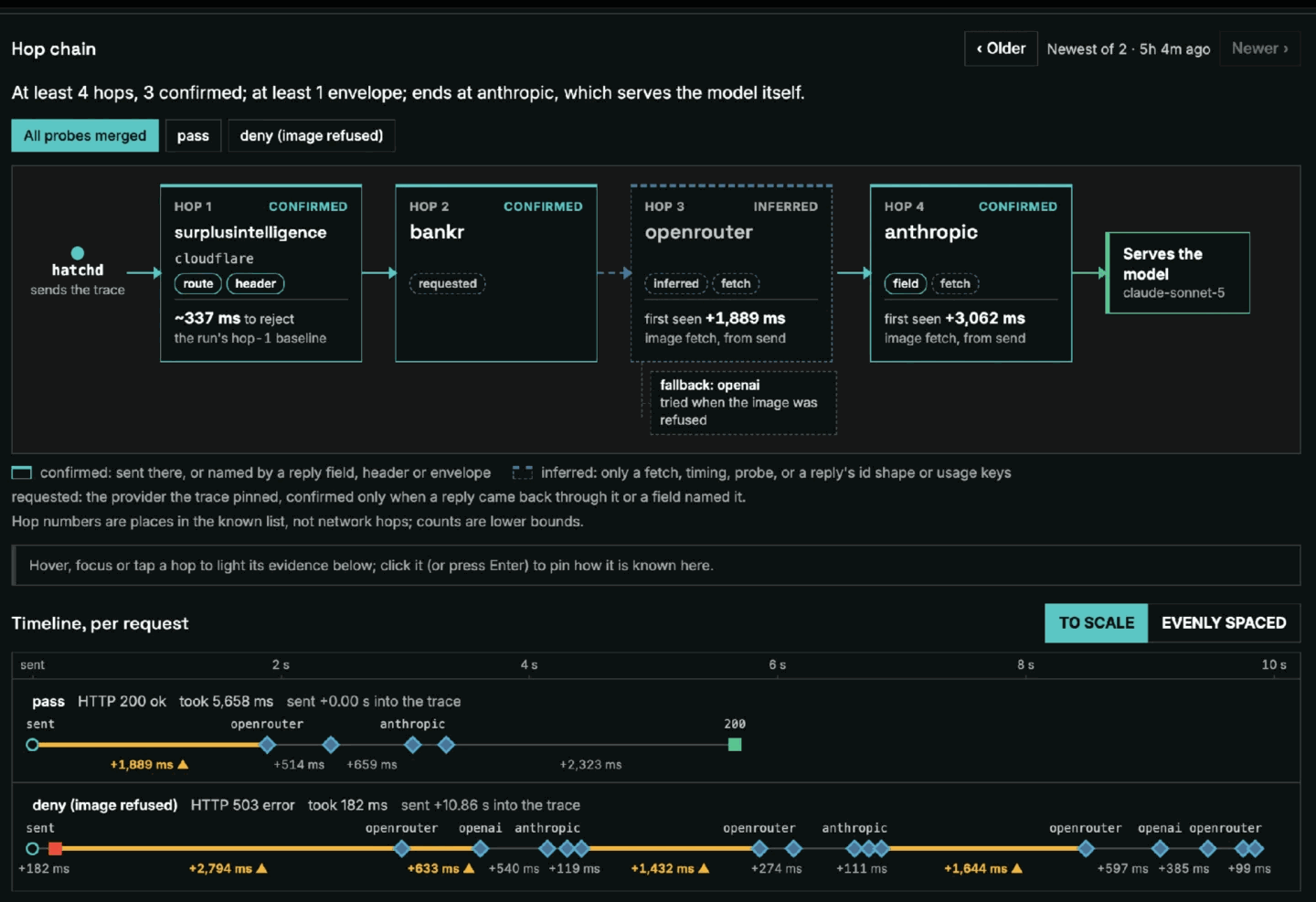
How canary credentials exposed the leaks
The fake credentials were canary tokens, a security term for decoy secrets that exist in exactly one place. Each prompt carried its own fake keys for Amazon Web Services, Amazon's cloud, and web addresses that no legitimate system would ever visit, so any use set off an alert and pointed to the request that leaked.
The report, which does not name providers, describes three kinds of leak. At least three inference companies were breached and had requests copied, some flagged for zero retention, and the stolen keys were then used for tens of thousands of AWS calls. On a marketplace that resells model access, some sellers simply kept and read prompts through ordinary logging. And systems tied to a Chinese AI lab fetched the secret links in about two-thirds of the prompts marked private that reached its models.
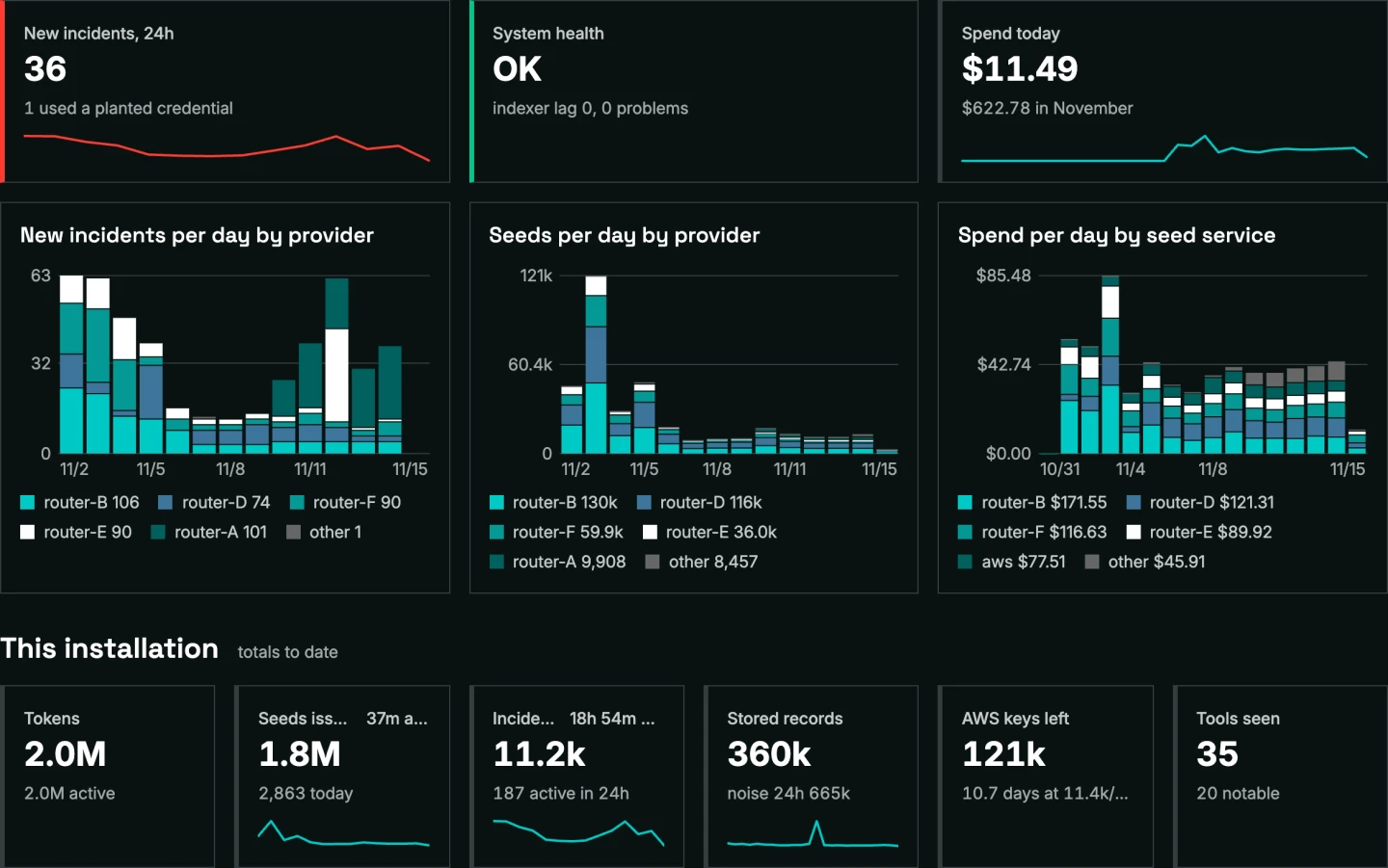
What Phala and Together AI say happened
Phala, a cloud host whose servers use special isolation to protect data while it is being processed, says that an attacker took over a new server, not yet fully hardened, that was handling DeepSeek V4 Flash 0731 requests routed from OpenRouter. Their contents may have been visible between Oct. 21 and Nov. 8.
Together AI kept samples of June and July prompts in a private repository on Hugging Face, a platform for hosting AI models and data, for testing. An AI coding agent committed the credential for that repository to Together's public GitHub, and someone used it to download the samples and try the passwords inside, five of which were Dragos canaries. Together has not said how many customers were affected, and new accounts now get zero retention by default.
What to do if you use AI through an API
These leaks mostly affect developers and businesses whose software talks to models directly through an API, via routers or open-model hosts. If you use OpenRouter, check the email tied to your account, since the company has contacted customers who may have been affected. If you sent requests to DeepSeek V4 Flash 0731 between Oct. 21 and Nov. 8, Phala says to rotate every password or key those requests contained.
The most effective fix is keeping secrets out of prompts, and that includes watching AI agents, which Dragos says will send whatever they can read, credentials included, much as they can follow orders hidden in content through prompt injection. Dragos also recommends choosing yourself which provider gets each request, avoiding resale marketplaces and, for the most sensitive work, running the model on your own hardware.
Companies that put customer or employee personal data in those prompts should treat this as a possible breach. Notification duties in the United States depend on each state's breach law, while in the European Union GDPR requires telling regulators within 72 hours when a breach puts people at risk.
The conversation starts here
Sign in with a supporter account to comment. Sign in



Nobody has commented yet. Want to go first?