

Jensen Huang no longer runs NVIDIA, the company he co-founded and had led since 1993. On November 12, NVIDIA said its board had accepted his resignation as president, CEO and director, effective immediately. Chief financial officer Colette Kress is now interim CEO and keeps the CFO job while the board searches inside and outside the company for a permanent replacement.
The first test for the new leadership comes Tuesday, November 17. Around 1:20 p.m. Pacific (4:20 p.m. Eastern), NVIDIA will post results for August through October, the third quarter of its fiscal year, followed by a call with analysts at 2 p.m. Pacific.
What we know about his exit
On November 8, the board opened an investigation after reports that Huang had a personal relationship with an executive at a Singapore company that buys large volumes of NVIDIA chips. According to those reports, U.S. intelligence accuses her of passing information to China, as we covered in our story on the board's investigation. Over the following days, U.S. outlets reported that he had also had relationships with NVIDIA employees, and the board met on the night of November 11 to decide his future. NVIDIA has not explained the resignation or officially tied it to any of those reports.
Outside the company, three Republican House committee chairs asked Huang for a closed-door briefing on November 18. Rep. John Moolenaar says Huang has agreed and that both sides are working on a date, so the 18th is not locked in. According to the financial press, Huang has also talked with confidants about returning. Neither Huang nor NVIDIA has commented.
Who Colette Kress is, and who chairs the board now
Kress, 59, joined NVIDIA in September 2013 from Cisco, where she was CFO of one of its business units. Before that she spent 13 years at Microsoft, according to NVIDIA's announcement of her hire. As CFO she walks analysts through the numbers on every earnings call, so Wall Street already knows her.
NVIDIA also gets its first-ever board chair, the person who leads the directors charged with overseeing management. The job goes to Harvey C. Jones, 73, a director since 1993 and a former CEO of chip-design software maker Synopsys.

What it means if you're shopping for a graphics card
Nothing you'll notice at the store for now. NVIDIA hasn't announced any changes to its products or release plans, and its GeForce RTX 50 graphics cards remain on sale.
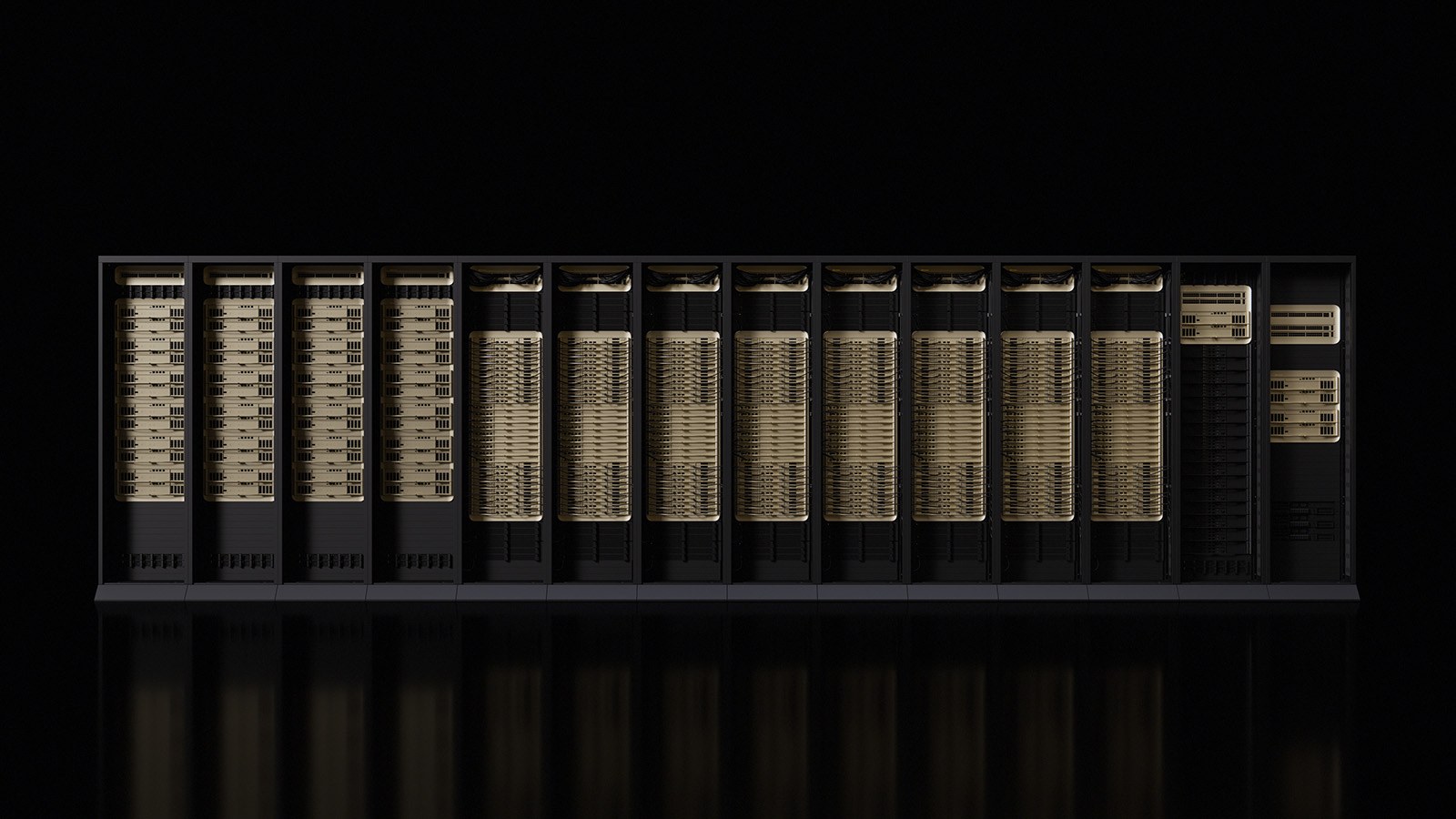
The numbers also show why this crisis is playing out far from gamers. In the quarter that ended July 26, NVIDIA brought in $96.2 billion, and $89 billion of that came from data centers, meaning the chips used to train and run systems like ChatGPT and Claude. Everything else, the bucket where NVIDIA puts RTX PCs, cars and robots, added up to $7.2 billion, less than 8%. Whoever runs NVIDIA next will be judged mostly on AI, a market where its biggest customers are already trying to lean on it less by designing chips of their own.
What to watch on Tuesday
- Revenue. In August, NVIDIA forecast about $108 billion in revenue for the August-to-October quarter, plus or minus 2%. That quarter closed on October 25, before the story broke, so the total won't show any fallout. - The forecast. What NVIDIA expects to sell from November through January will be the first number that could show whether Huang's exit is touching orders or contracts. - Who speaks. NVIDIA hasn't said who will be on the call, or whether it will offer a timeline for naming a permanent CEO.
The stock closed down a little more than 4% on Thursday, November 12, after falling as much as 13% during the session. On Friday it finished at $162.85, down another 2%, which left NVIDIA's market value, the combined worth of all its shares, below $4 trillion for the first time since July 2025.
The conversation starts here
Sign in with a supporter account to comment. Sign in


Nobody has commented yet. Want to go first?