
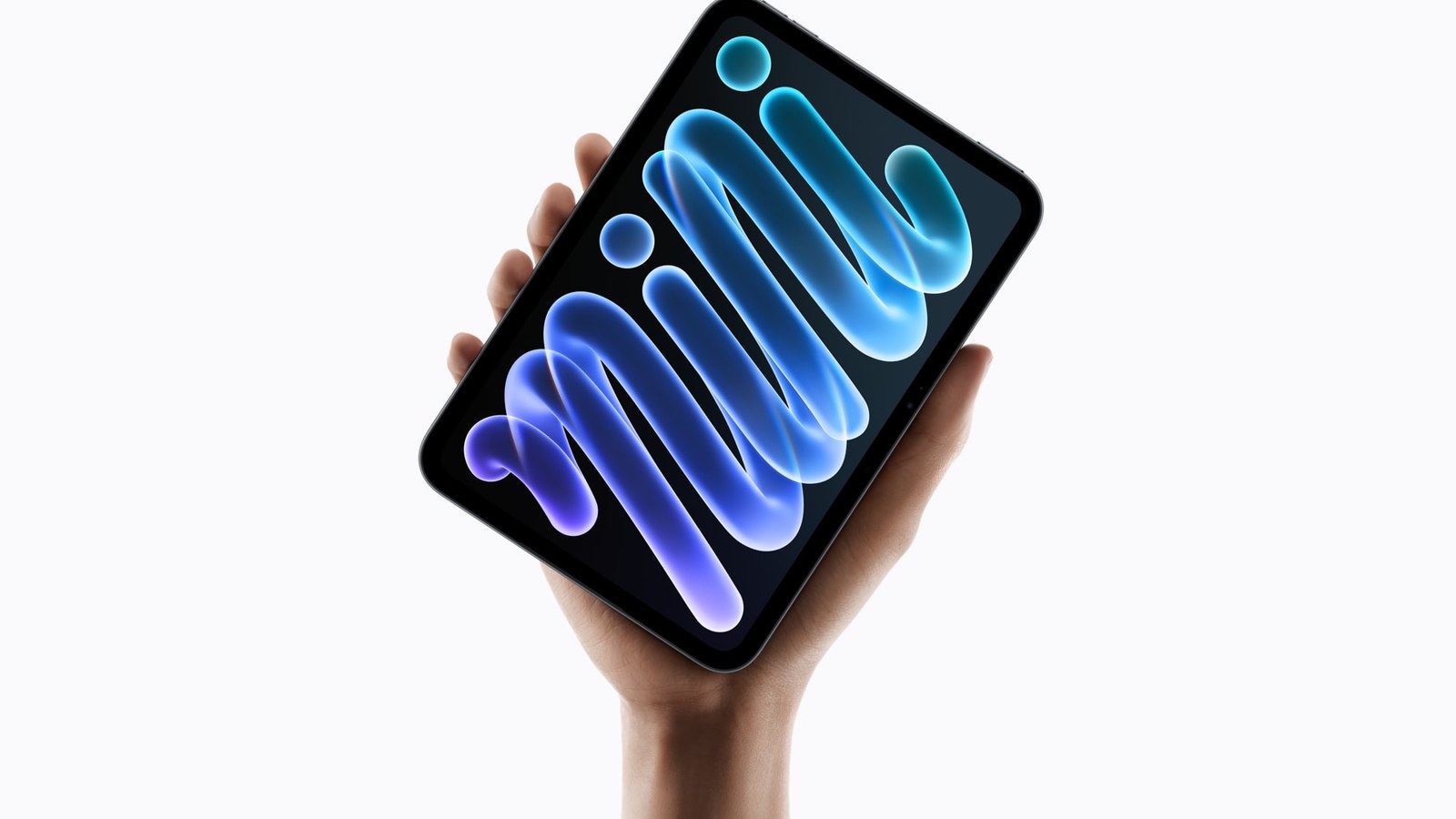
Apple has redesigned the iPad mini around an 8.5-inch OLED display and its new A20 Pro chip. Its press release from Monday, Oct. 26 puts the Wi-Fi model at $699 and the cellular model at $849. Preorders open Wednesday, Oct. 28, at 10:10 a.m. PT, and the tablet arrives in stores and on doorsteps Friday, Nov. 6.
That is $100 more than the model it replaces costs today. The A17 Pro model launched at $499 in 2024, and Apple raised it to $599 in June, according to MacRumors. Counting from the 2024 launch price, the starting price has climbed $200. Education pricing starts at $649.
Bloomberg's Mark Gurman had expected an OLED iPad mini at Apple's Oct. 28 launch, as we noted in our guide to the event's start time and the touchscreen MacBook Pro. Apple instead announced it by press release two days early, as TechCrunch pointed out, while scheduling preorders for event day. They open ten minutes after the 10 a.m. PT presentation begins.
Prices for every configuration
The tablet comes in midnight and starlight with 128GB, 256GB or 512GB of storage. On Apple's US store, the Wi-Fi model costs $699, $799 and $999, and the cellular model costs $849, $949 and $1,149.
The 256GB and 512GB models can also be ordered with nano-texture glass for an extra $100. The etched surface scatters glare from a window or overhead light instead of reflecting it back at you.
A 20W USB-C adapter comes in the US box, but fast charging needs a 35W or higher adapter, sold separately. With one, Apple says the battery reaches about 50% in roughly 30 minutes. The tablet works with both the Apple Pencil Pro ($129) and the USB-C Apple Pencil ($79), so an existing pencil carries over. The new Smart Folio costs $79.
What OLED changes
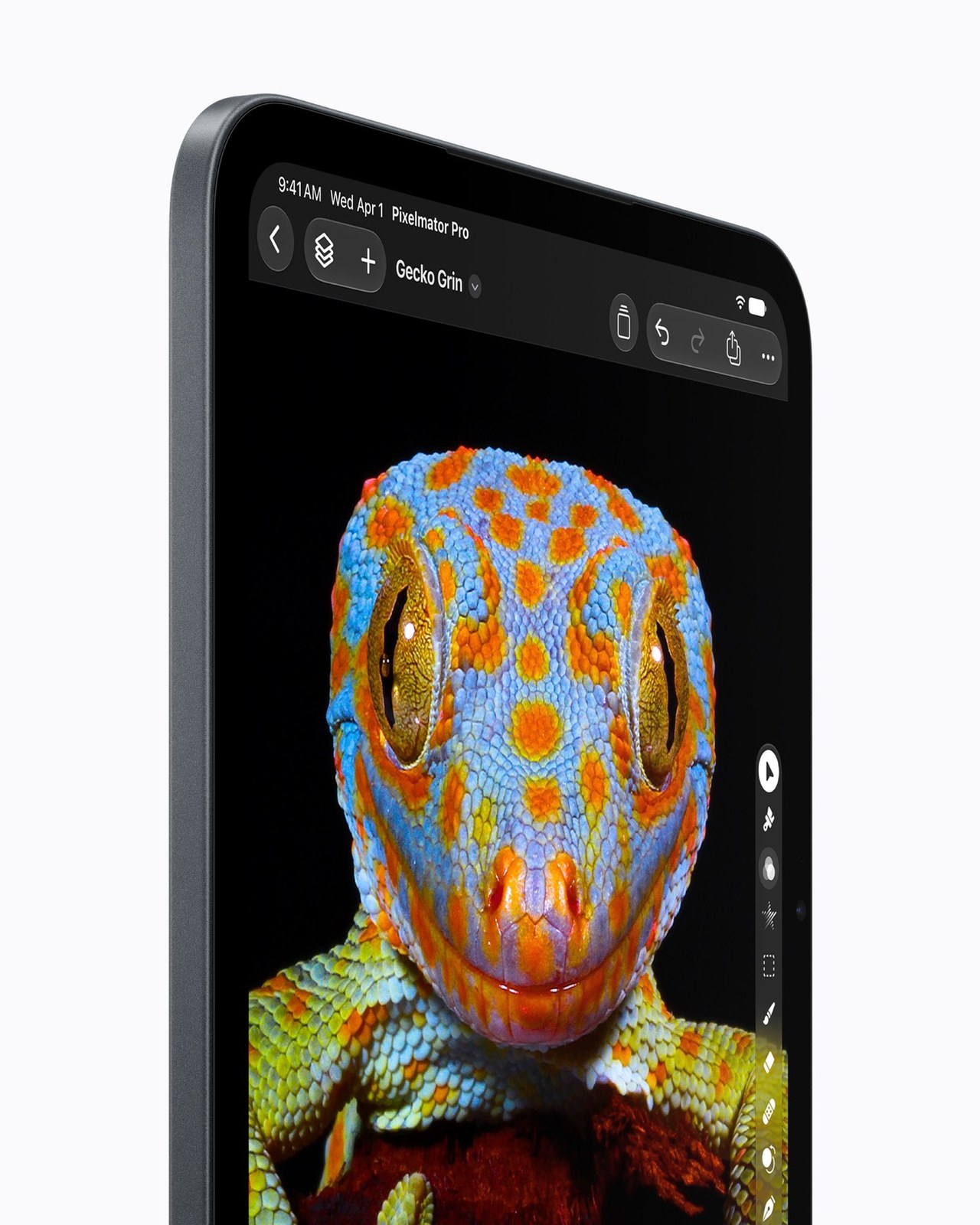
The outgoing iPad mini has an 8.3-inch LCD, where a backlight shines through every pixel at once. On OLED, each pixel makes its own light and switches off completely to show black. That is where Apple's 2,000,000:1 contrast ratio comes from, and why a dark movie scene or an app in dark mode looks truly black rather than washed-out gray. Bezels are 24% thinner, so the bigger screen fits in the same footprint.
Brightness for everyday content, measured in nits, rises from 500 to 600 nits, about 20% more, which helps when reading near a window or outdoors. The 1,200-nit peak in Apple's headline applies only to highlights in HDR video. At the other end, the screen can dim to 1 nit for reading in bed.
Neither the press release nor the spec sheet lists a refresh rate, the number of times per second the screen redraws the image. MacRumors concludes the display likely stays at 60Hz, in which case scrolling wouldn't feel smoother than on the old model or match the iPad Pro. OLED panels can also suffer burn-in, a faint ghost left by elements that stay on screen for hours, which our OLED vs. Mini LED guide explains.
The speakers moved too. According to 9to5Mac, the woofers now sit behind the display and the tweeters between the glass and the aluminum enclosure, with no grille holes along the edges, and that sealed design helps the tablet keep water out.
The A20 Pro, and the core the cheaper models lose
The A20 Pro is built on a 2-nanometer process, which packs more transistors into the same area and uses less power per task. Not every iPad mini gets the same CPU, though. Each core is a unit that runs tasks on its own. The 128GB and 256GB models have five, two for performance and three for efficiency, while the 512GB model has six, as the A17 Pro did. All versions keep two performance cores, which do most of the work when an app or web page opens.
Apple claims up to 60% faster multithreaded performance, the kind that matters when a long job such as a video export is split across every core. Apple ties that figure to its "up to 6-core" CPU, which means the 512GB model. With one fewer efficiency core, the 128GB and 256GB models will likely fall somewhat short on those long jobs. The GPU, which drives games, grows from five cores to seven, and Apple says graphics are up to 2.7 times faster.
Apple also promises up to 4.5 times faster AI performance, and the 512GB model doubles the Neural Engine, the part of the chip built for those tasks. All of these numbers come from Apple's own testing in September 2026, not independent benchmarks. Apple hasn't said how much RAM, the working memory that keeps apps open, the tablet has, only that the chip can read it more than twice as fast. Siri AI arrives as a beta in iPadOS 27.2 and only in some languages.
Camera, battery, weight and water
The 12-megapixel front camera moves to the long edge, the one on top when the iPad is in landscape. On a video call with the tablet propped up in a case, you'll be looking at the camera instead of off to one side. Its aperture widens from f/2.4 to f/2.0, letting in more light, which should help in a dim room. The rear camera stays at 12 megapixels and gains an adaptive flash.
The battery's capacity shrinks about 2%, from 19.3 watt-hours to 18.9Wh, but Apple still rates it for up to 10 hours of Wi-Fi browsing or video playback. If the new chip saves as much energy as the battery loses, real-world life should be similar, though only independent tests can confirm it.
The Wi-Fi model weighs 255 grams (0.56 lb) and is 5.4 mm thick, down from 293 grams (0.65 lb) and 6.3 mm. It is also the first iPad mini rated IP67, a standard that means it is dust-tight and survives being submerged in up to a meter of water for 30 minutes. Apple notes that the rating comes from lab tests, may decline with normal wear, and that its warranty doesn't cover liquid damage.
Wireless gets an upgrade as well. Apple's N1 wireless chip adds Wi-Fi 7, which only speeds things up with a compatible router, and Bluetooth 6, and the C2 modem in cellular models delivers up to 50% faster data speeds than the previous generation, according to Apple.

The conversation starts here
Sign in with a supporter account to comment. Sign in
Nobody has commented yet. Want to go first?