
Anthropic has published the missing explanation of Claude's text watermark, and the answers do not make the idea look any better. Future models will weave a statistical signal into their writing, translations will be fully watermarked and the company is preparing a tool that will let third parties detect it.
Anthropic stresses one crucial limitation. Finding the signal only indicates that Claude was involved. It cannot prove the model wrote the whole document, copied an idea or replaced the person's meaningful work. That nuance will disappear the moment the detector reaches a university, an HR department or a client looking for a yes-or-no answer.
Our recommendation is therefore direct: if the final text matters, stop using Claude to write, proofread or translate it. Not because using AI is cheating, but because paying for a tool that adds an ambiguous, non-optional signal to your work makes very little sense.
Translations are watermarked
The official guide clears up one of the most important points. Short or heavily fact-constrained passages may not carry enough signal. Proofreading may also leave little detectable evidence because Claude has chosen very few new words. That is not a guarantee. The outcome depends on how much the model changes and how long the finished text is.
Translation is different. Even when every idea is yours, Claude chooses almost every word in the new language, so the output is fully watermarked. A substantial rewrite may have the same result. The paradox is hard to miss. The more useful Claude is in transforming your work, the easier it becomes to attribute a form of involvement that the detector cannot explain.
Code will carry fewer watermark signals because a function offers fewer safe alternatives. Anthropic says the signal may be concentrated in comments and other places where linguistic freedom exists. Generated files such as images use another route, C2PA metadata. There is no magical signature that identifies everything, only different mechanisms with different limitations.
The irony fits inside one post
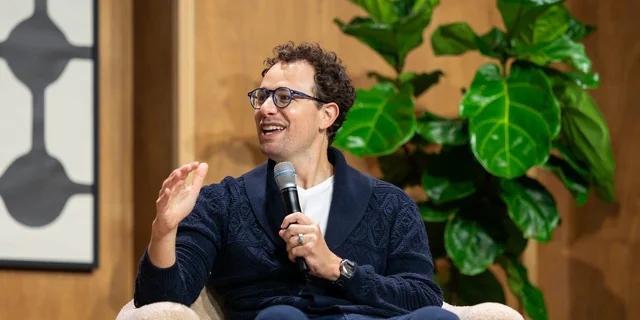
'Let's steal all the data from the internet and then add a watermark to it,' Abro wrote on X. It is a joke, not a legal description of Claude's training, but it points to a contradiction AI companies cannot bury inside an FAQ post.
The major labs built their models by absorbing a vast share of digital culture, often without giving writers, publishers, illustrators or programmers a meaningful choice. Now one of those companies wants to mark the writing produced by its tool in the name of provenance. It may satisfy a European obligation and still be profoundly ironic.
Nor will the measure stop anyone producing AI slop. Anthropic acknowledges that a complete rewrite can remove the signal. A spam operation will automate that step, while the person who uses Claude in good faith to draft an email, translate a text or polish an article will be the one who keeps the mark.
Today, we would choose ChatGPT. If it follows suit, we will move again
OpenAI currently uses provenance systems for certain images and audio, but it has not rolled out a general statistical watermark across all ChatGPT text. That is why we currently prefer ChatGPT to Claude when the result will be published, submitted or signed.
Anthropic itself says other major providers have agreed to introduce watermarks under the European code. If OpenAI deploys the same global, non-optional system, our recommendation will change: Grok, open models or Chinese alternatives such as Kimi. A tool should work for its user, not force them to carry an accusation its own detector cannot support.
Nobody should mistake this position for an invitation to fool teachers or conceal automated content. The principle is simpler: evidence that Claude was involved should not decide who thought, wrote or deserves the credit.
Anthropic owns the watermark. Its users inherit the suspicion.
The conversation starts here
Sign in with a supporter account to comment. Sign in
Nobody has commented yet. Want to go first?