
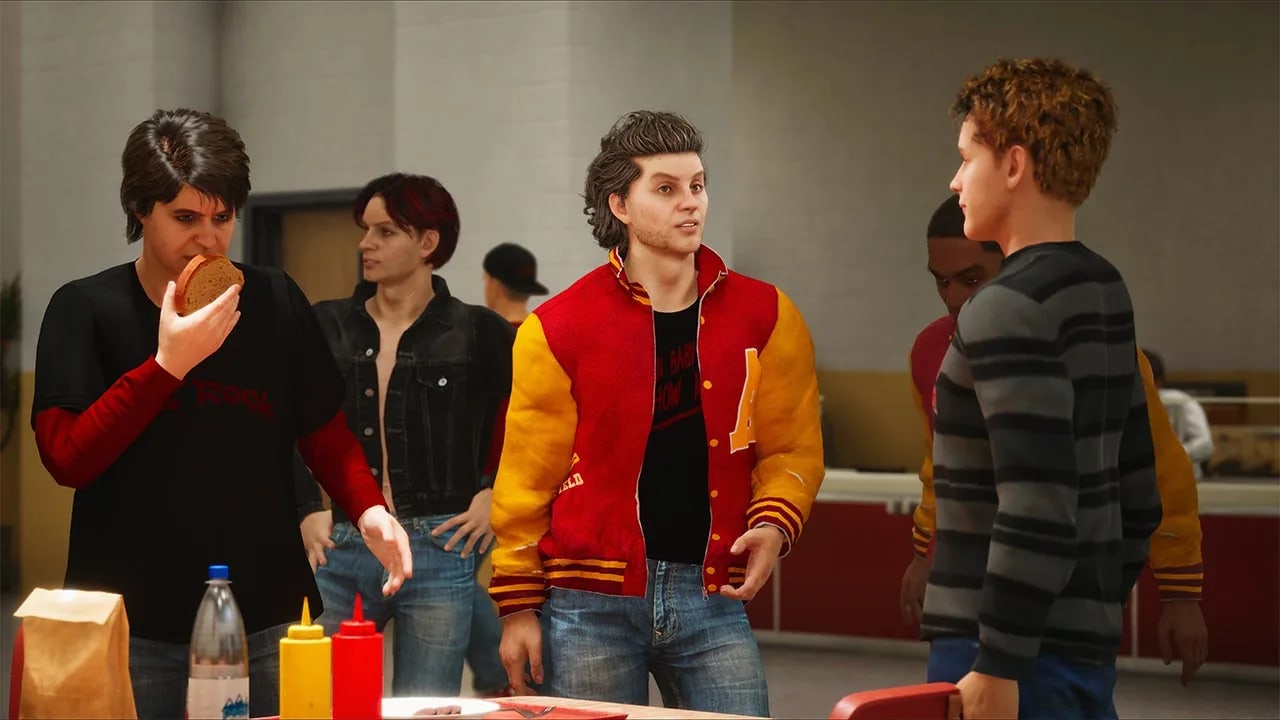
What looked like a bad Bully imitation turned out worse
I have gone to class in Agefield High: Rock the School, answered yet another multiple-choice quiz and waited for its clock to let the story continue. Then I walked into the hallway, got spotted from a position the stealth display said was safe and entered another fight where it was impossible to read which punches would connect. That loop explains the game better than any feature list.
We played the PC release after launch, and the problems we identified from IGN's preview are still there. They were not temporary flaws in an unfinished build. Combat, stealth, classes, the timetable and the small open world all reached paying customers without the precision required to carry a roughly 10-hour adventure.
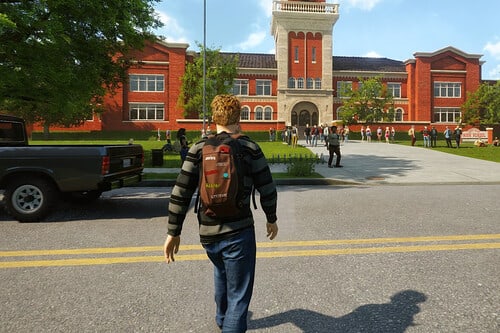
Going to class is dull. Skipping it fixes nothing
The premise could have worked. Sam moves to an American high school in 2002, falls in with Kale and Axel, and has a few final weeks to make his mark before graduation. A calendar forces him to attend class or accept the consequences of skipping, while the town offers jobs, bicycles, shops and activities. It is an ideal framework for adolescent choices to collide with a school timetable.
In practice, time does not organise the adventure. It stops it. Main missions activate at fixed hours, there is not enough worth doing between them and travelling from one end of the tiny town to the other mainly stretches out a sparse map. When the next objective takes several real minutes to appear, the game is not simulating a school routine. It is asking you to wait.
Classes offer no rescue. English, maths, geography and German change the questions, but most share the same multiple-choice template. Music class attempts something different with a rhythm minigame whose prompts never quite align with the song. The school should be the game's centre; instead, it becomes a waiting room with desks.
Beyond class, missions cycle through fights, chases, errands and stealth without developing any of them. Punches lack readable range, opponents absorb hits or attack from odd positions, and the camera makes every group fight worse. In stealth, the minimap cones promise information that enemies ignore: Sam can be detected through obstacles or from another floor.
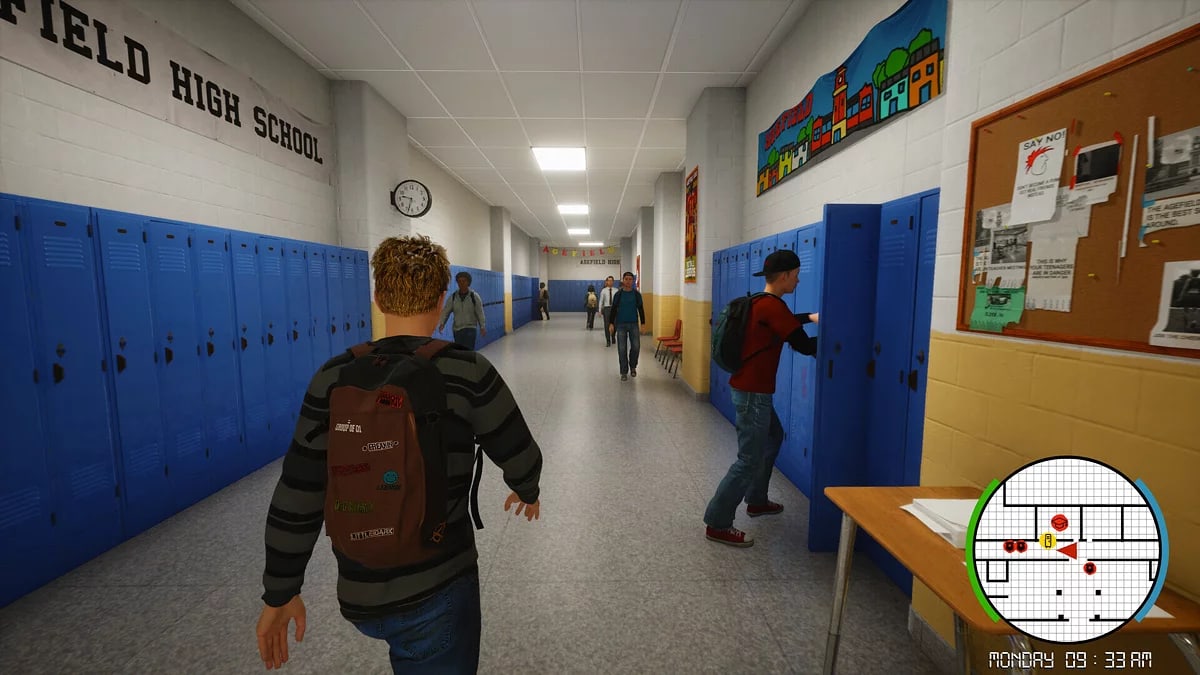
It looks like 2002 for all the wrong reasons
Refugium sells nostalgia for turn-of-the-century teen comedies, but mistakes the period for the execution. Characters stare into space, pauses between lines kill the jokes and cutscenes last far longer than their direction can support. Sam and his friends do not sound like awkward teenagers in 2002. They sound like adults trying to remember a film they watched too long ago.
Agefield never feels like a town either. It is a collection of streets with few interiors, recycled pedestrians and ambient conversations that restart as soon as you cross the road. The bicycle is the least tedious way to move around, though its stiff handling makes every kerb frustrating. Nobody expected Rockstar's budget. Recognisable characters, purposeful spaces and a school that feels inhabited were reasonable expectations.
The technical presentation finishes the job. Animations, lighting and faces appear generations out of date, yet the official requirements recommend an RTX 3080 or Radeon RX 6950 XT and 32GB of RAM. That demand is not visible on screen and does not prevent performance drops.
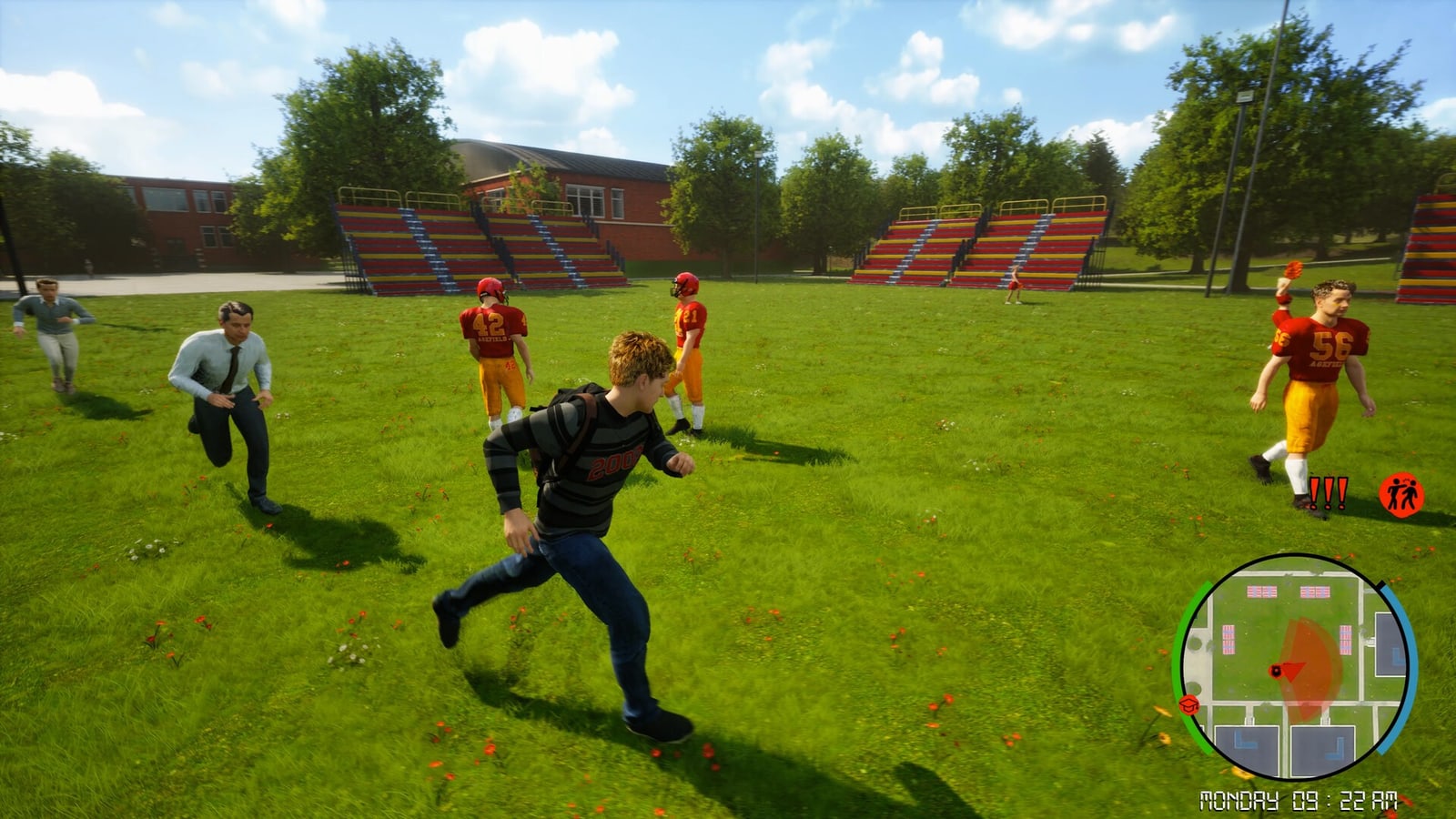
The 1 is not about a small budget. It is about systems that fail their basic jobs
A small studio can make a short, ugly or limited game and still earn a recommendation. What Agefield High sells at a base price of €29.99 is a set of systems working against one another: the timetable creates dead air, classes recycle questions, stealth lies, combat fails to respond and the open world separates objectives without filling the space between them.
Our 1/10 is not the result of comparing an indie game with an impossible budget. On this site's scale, Baldur's Gate 3 earned a 10 by turning every system into another possibility, while Clair Obscur: Expedition 33 earned a 9 because its combat was still growing dozens of hours in. Here, every system makes the next one harder to trust. The bicycle works and a few tracks land their nostalgic target, but they are brief relief inside a game released before it was ready — almost as though much of it had been made by AI.
For months, Agefield High occupied the empty space where Bully 2 should have been. The finished game lets us correct that line: this is not a failed heir to Bully. It is proof that copying a circular minimap, school uniforms and adolescent pranks was always the easy part. The school is open, but the game failed its exam.
The conversation starts here
Sign in with a supporter account to comment. Sign in
Nobody has commented yet. Want to go first?