
Anthropic, the company behind Claude, brought in $16.3 billion in revenue in the first six months of 2026, almost 15 times what it made a year earlier. Over the same stretch it booked an $80.7 billion loss, according to a draft of its IPO prospectus reviewed by The Wall Street Journal and reported by Al Jazeera. Both numbers hold up because that loss blends real money spent on chips and data centers with accounting charges that never touch a bank account. A third ingredient isn't on the books as a loss at all yet: contracts to rent computing power for years to come.
Our story on Anthropic's IPO filing covers everything else the prospectus reveals.
Where the money goes
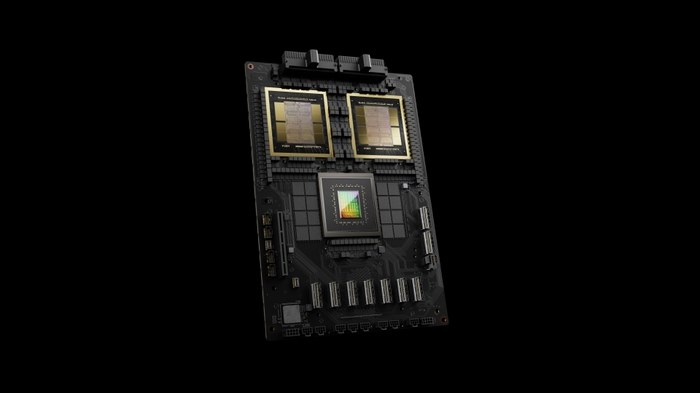
Inside, an AI model like Claude or ChatGPT is an enormous collection of numbers. To produce each word of an answer, a computer runs billions of multiplications between your question and those numbers. A laptop processor would grind through them almost one at a time. A GPU, a chip originally built to draw video game graphics, handles thousands at once, which is why AI companies wire thousands of them together to work as a single machine.
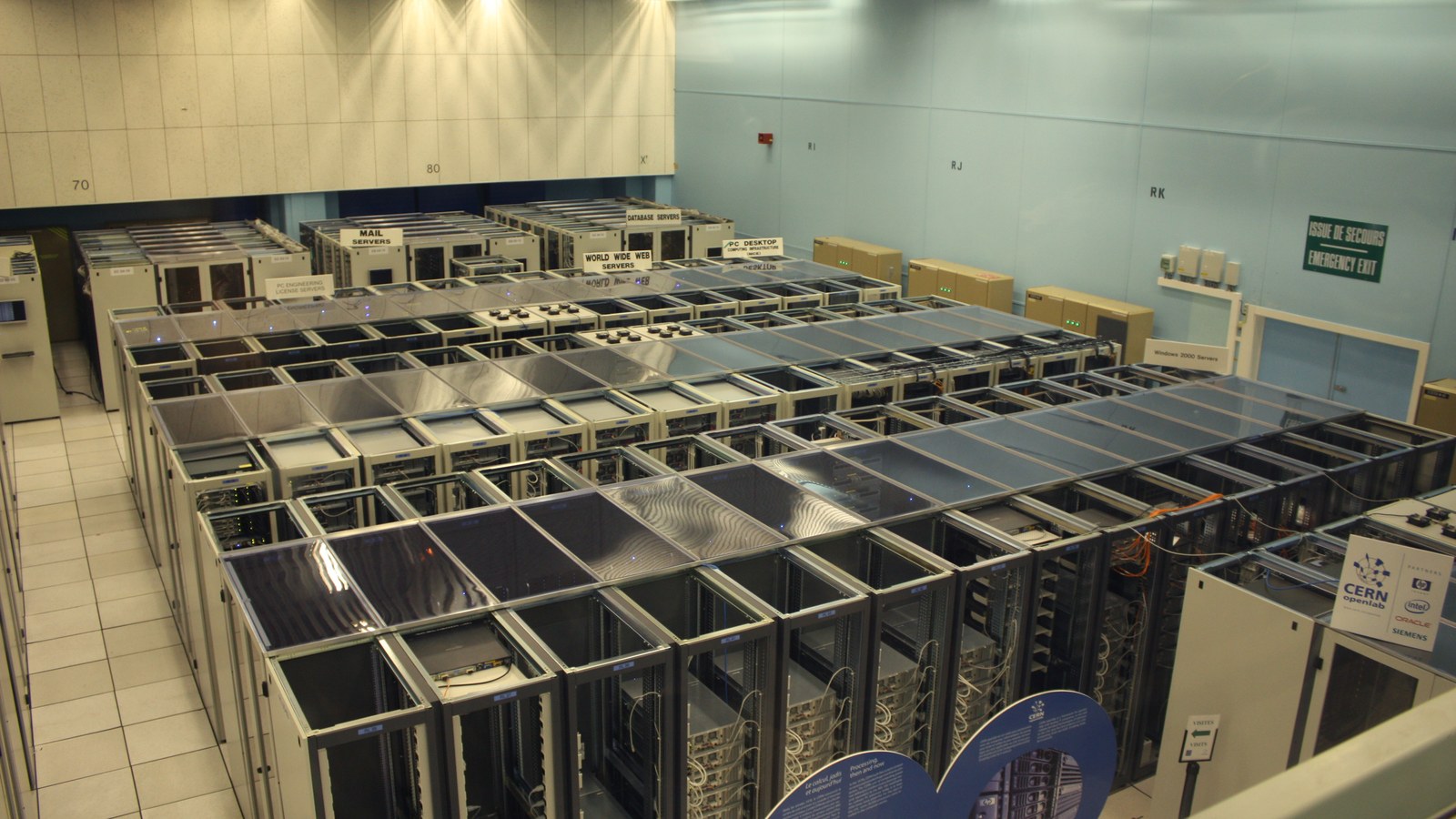
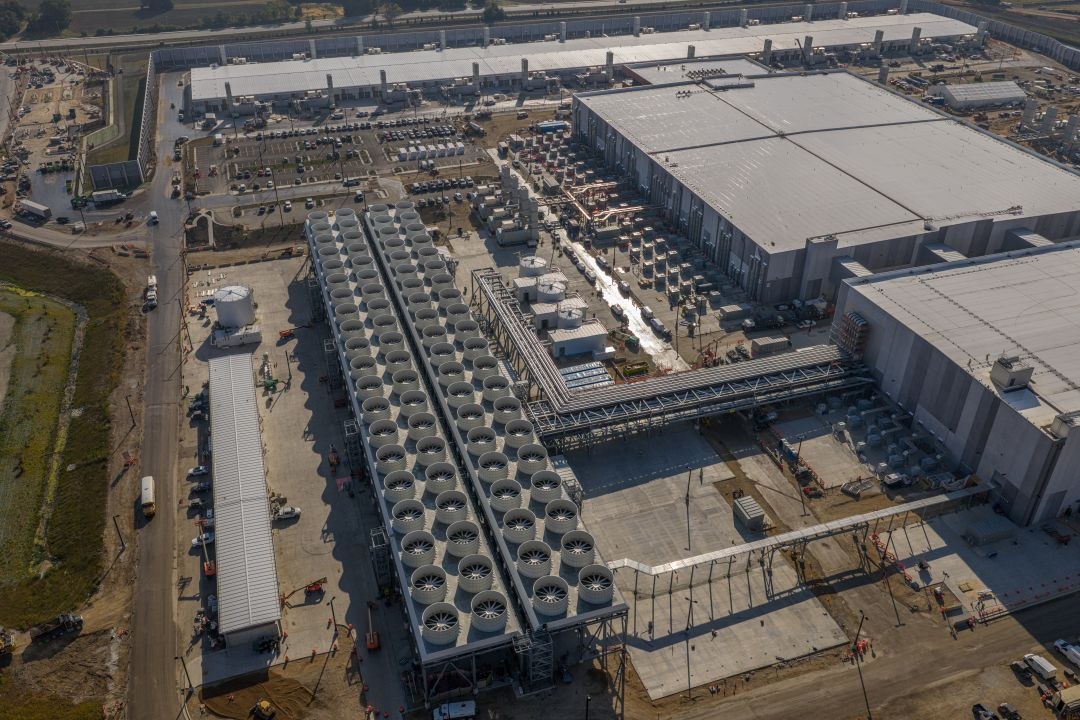
Those chips live in data centers, warehouse-sized buildings packed with server racks, cooling systems and very fast networking. OpenAI and Anthropic rent much of that capacity from Amazon, Google and Microsoft, which bill them for the time they use. Anthropic spent nearly $9 billion on compute and infrastructure in the first half of 2026, more than half of what it earned in that half and nearly four times the $2.3 billion of a year earlier, according to Implicator's breakdown of the draft.
Electricity is a big bill too. The International Energy Agency estimates that a typical AI-focused data center uses as much power as 100,000 households. Still, the chips cost far more than the power. When the research group Epoch AI broke down what it cost to develop several frontier models in 2024, hardware made up 47% to 67%, staff 29% to 49%, and energy just 2% to 6%.
Training a model and running it are separate bills
Training is where the model gets built. For weeks or months, thousands of chips churn through vast amounts of text and code, nudging those numbers slightly on every pass so the model gets better at predicting the next word. The bill arrives before anything is sold, and it grows with each generation because every new model uses more chips for longer. In the same study, Epoch AI found that the cost of the largest training runs had grown two- to threefold a year since 2016.
Running the model, which the industry calls inference, is what happens every time someone asks it something. Each answer ties up a chip for a few seconds, and longer answers tie it up for longer. That length is measured in tokens, the word fragments AI reads and writes, which we unpack in our tokens explainer. That cost scales with usage, so every new customer means more chips.
Separating the two explains much of the paradox. OpenAI CEO Sam Altman told a group of reporters in August 2025 that the company was already profitable on inference and that "if we didn't pay for training, we'd be a very profitable company," Axios reported. Shareholder documents later obtained by The Information and summarized by The Decoder put numbers on that side of the business. In the first quarter of 2026, OpenAI kept $39 of every $100 in revenue after paying the direct cost of delivering its service, up from $33.
That $39 has to pay for training the next models, salaries and everything else, and it fell short. OpenAI booked $5.7 billion in revenue for the quarter and an operating loss of $9.3 billion, which is how far its business expenses outran its sales.
Losses that never leave the bank
Most of Anthropic's $80.7 billion loss isn't money spent. Roughly $72 billion comes from accounting charges tied to convertible notes and other instruments the company used to raise money. Strip those out and the half-year loss shrinks to about $8.7 billion.
Here is how a convertible note works. An investor lends money today in exchange for the right to turn that loan into shares later at a set price. If the company becomes more valuable, those future shares are worth more, and the accounting records the rise in what the company will eventually hand over as a loss, even though no cash moves. The counterintuitive result is that the better Anthropic does, the bigger this charge gets.
OpenAI shows the same pattern. Its first-quarter 2026 net loss topped $21.3 billion, and about $12.4 billion of that came from revaluing rights granted to investors. Stock-based compensation, the part of employee pay handed out in shares instead of cash, added more than $2.3 billion that quarter. It doesn't drain cash either, but it isn't free, because every new share splits the company among more owners and shrinks everyone else's slice.
Cash burn measures something else, the money actually going out the door. OpenAI spent about $3.7 billion more than it took in during the first quarter of 2026, and it had more than $73 billion in cash and securities to cover the gap. Anthropic told investors on October 14 that it generated more cash than it used in the third quarter and posted an adjusted profit, a measure it hasn't fully explained, the Financial Times first reported, as The Next Web notes. One company can show a huge loss, positive cash flow and an "adjusted" profit at the same time, so it pays to check which of the three a headline is quoting.
The multiyear compute contracts
The third piece hasn't hit the losses yet. To lock in chips, AI companies sign long-term rental contracts with data center owners, and most can't be canceled, so they get paid even if the capacity ends up idle. The draft shows Anthropic has signed about $450 billion in cloud agreements running seven to ten years, mostly with Google and Amazon. Add chip and equipment leases and its commitments top $600 billion, rising to roughly $750 billion with deals still being negotiated.
OpenAI operates at a similar scale. Altman wrote in November 2025 that the company was looking at about $1.4 trillion in commitments over eight years. Those contracts turn into expenses as the chips get used, so what is signed today lands on the books over the years ahead.
Companies sign them because cutting-edge chips are scarce and providers rarely build a multibillion-dollar data center without a customer committed to filling it. Suppliers also fund part of the bill, and the money they invest comes back to them as payment for chips and cloud capacity. Amazon invested $50 billion in OpenAI while OpenAI expanded its Amazon Web Services contract to about $100 billion, and AMD will invest up to $5 billion in Anthropic as Anthropic buys its chips.
Why investors put up with the losses
The first reason is the pace of growth. Anthropic went from about $4.7 billion in revenue in the first quarter of 2026 to $16.8 billion in the third, according to figures it shared with investors. In the second quarter it had already overtaken OpenAI, which brought in $6.7 billion, The Wall Street Journal reported, as carried by Yahoo Finance.
The second is market share. Investors are betting that a business that has already wired Claude or ChatGPT into its software and workflows will have little reason to switch providers, so customers won now will keep paying once each answer costs less to produce.
The third is that falling cost. Epoch AI found in 2025 that the price of reaching a given level of model performance was dropping between 9 and 900 times a year, depending on the task. Matching GPT-4 on PhD-level science questions got about 40 times cheaper each year. If the cost of serving each answer falls faster than what customers pay, each answer leaves more margin. OpenAI's climb from 33% to 39% points that way, though its numbers don't show how much of it comes from cheaper chips.
The real risks
The first is those noncancelable contracts. If growth slows, revenue falls, but the chip rental bills stay the same even when the machines sit idle.
The second is leaning on a few customers. Two unnamed customers accounted for about a fifth of Anthropic's first-half revenue, according to the draft.
The third is pricing. The same cost declines that widen margins also let rivals, including Chinese models, offer something similar for less, and The Decoder flags a possible price war among OpenAI, Anthropic and those models as one factor that could change OpenAI's financial picture.
The last is valuation. Investors who attended Anthropic's investor day in San Francisco discussed a valuation of around $1.5 trillion, down from the roughly $2 trillion previously expected for its November listing, according to The Wall Street Journal's reporting as summarized by Al Jazeera.
Once the prospectus is public, two sections will separate real spending from paper charges and long-term contracts. The cash flow statement shows how much cash is really being consumed, and the commitments table shows how much is still owed and in which years.
The conversation starts here
Sign in with a supporter account to comment. Sign in

Nobody has commented yet. Want to go first?