
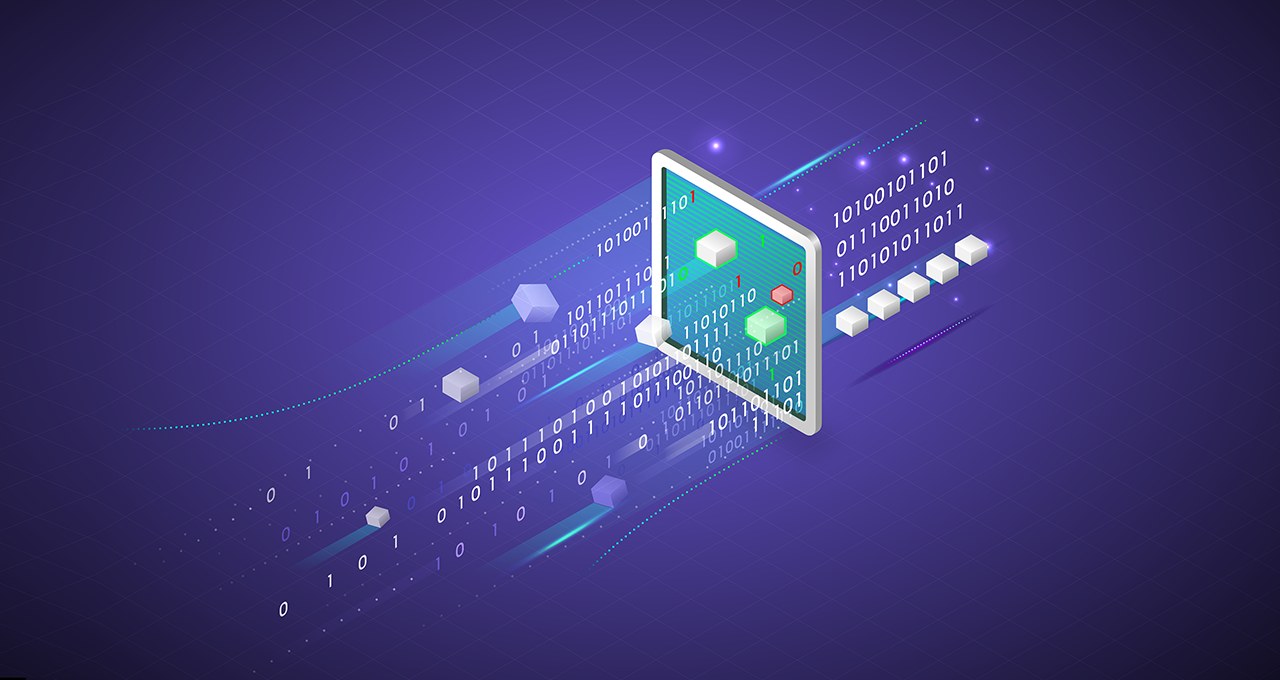
There's an electricity meter in your home that nobody looks at, yet it decides every month's bill. AI works the same way, except its meter doesn't measure kilowatts, it measures tokens. Every question you ask ChatGPT or Claude makes that meter spin, and even if you pay a flat subscription, somebody is paying for the exact consumption. Understanding what that meter measures is understanding why AI costs what it costs, why it sometimes forgets what you said half an hour ago, and why it can't count the letters in a word.
What exactly is a token (and how many tokens is a word)
A token is the chunk of a word that models like ChatGPT, Claude or Gemini use as their smallest unit for reading and writing, and it has nothing to do with cryptocurrency tokens. The quick rule: a token is about three quarters of a word, so a thousand words of yours are roughly 1,300 tokens on the meter.
The chopping is done by a shredder that cuts your message into pieces and turns each piece into a number, because the model only understands numbers. Short, frequent words tend to be one whole token ("hello", "house"), and long ones get split into several, "extraordinarily" can be four or five chunks.
This explains one of AI's most famous embarrassments. For months, half the internet laughed because the world's best models failed to count how many r's there are in strawberry. It wasn't stupidity, it was physiology: the model never sees the letters. To it, strawberry is two or three numbers, not ten letters in a row, so counting its r's is as hard as you counting the bricks of a house from an aeroplane.
Two meters, one for reading and one for writing (the expensive one)
The AI bill has two rates. Everything the model reads (your question, the document you paste) is charged at the input rate, and everything it writes is charged at the output rate, which is five to six times more expensive. There's a logic to it, reading is fast, but writing forces the machine to manufacture the answer token by token, like knitting a jumper stitch by stitch, and that loom burns real machines and real electricity.
With the price lists in hand, the numbers get fun. The most expensive model on the market, Claude Fable 5, charges $10 to read a million tokens and $50 to write them. Don Quixote is around half a million tokens, so reading it would cost someone about $5, and asking the model to write it from scratch, about $25. At the other end, China's DeepSeek charges $0.14 for that same million, seventy times less. Between the private jet and the city bus, every company picks which seat its chatbot rides in, and the price war is now as fierce as the model war itself.

Even if you never touch an API, tokens rule your daily AI life
You don't see the meter, but you feel it. When your subscription says you've hit your limit and makes you wait, what ran out was a token budget. And when a very long conversation starts forgetting the beginning, it's because the model's memory, its context window, is measured in tokens too: when the chat no longer fits, the oldest part falls off the edge. It's not absent-mindedness, the meter rules memory as well. It also explains another classic, why pasting a hundred-page document burns through your limit far faster than asking twenty short questions, because the machine re-reads the whole chat on every turn and the meter runs on every pass.
Demis Hassabis, the head of Google DeepMind and a Chemistry Nobel laureate, repeats in every interview that the best way to get the most out of this technology is to understand how it works inside. Tokens are that first step: next time the AI cuts you off, makes you wait or forgets your name, you'll know who did it. The meter you never look at has been spinning the whole conversation.
The conversation starts here
Sign in with a supporter account to comment. Sign in

Nobody has commented yet. Want to go first?