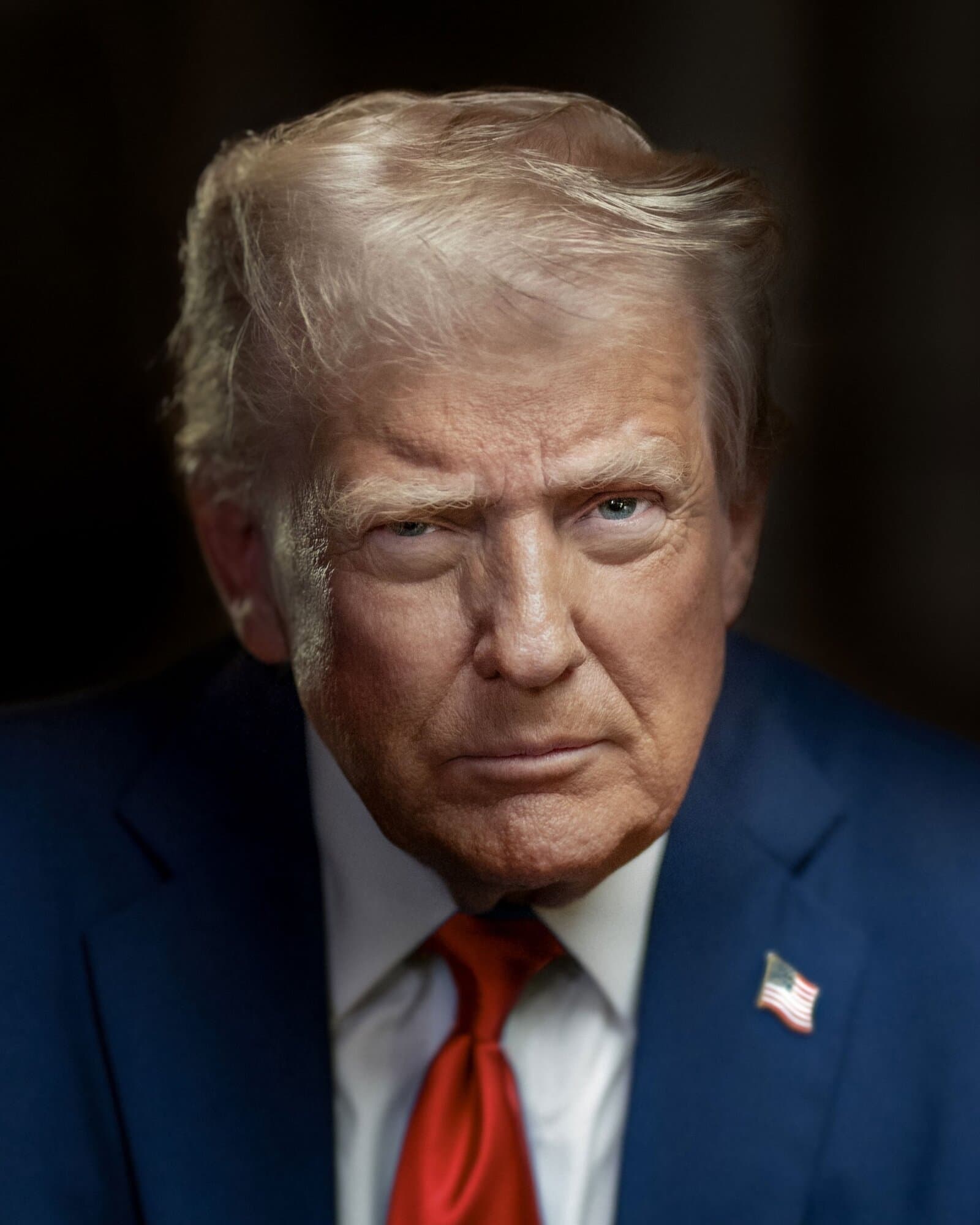
The joke the room was waiting for, at a half-speed dinner
He delivered it the way you reveal a well-rehearsed trick: "my intention to run for a fourth term." The Waldorf Astoria room stirred, which was exactly the point. It was the most talked-about moment of the July 24 White House Correspondents' dinner, a strange edition, rescheduled after an April attack forced the usual Hilton to be evacuated.
The president stayed true to form: he called those present "the largest group of Trump derangement syndrome people" he had seen together, warned journalists that "when I'm gone you're all going to be broke," and even mocked his own speechwriters when a gag fell flat. A show, in short. But if you stopped at the fourth-term headline, you are missing the real movie.
Because here at INSERT FUTURE, the constitutional joke matters less to us than a fact almost nobody tied to the dinner: this same man, the one cracking jokes, is the one who today has the final say over which artificial intelligence can reach the US market and which one waits for permission.
The AI Trump has written into his term
Let's recap, because there is meat here. In June, the administration asked OpenAI to limit the rollout of GPT-5.6 to "government-approved" partners, according to Axios. This very week, Altman travelled to Washington to privately show the next model, the one the community calls GPT-6, and to ask for clearance. There is an executive order in the mix requiring the government to be briefed before frontier models ship. Translation: the switch sits in the White House.
And here we have to take a side, because that is the job. In this newsroom we are confessed technocrats: we believe technology used well improves people's lives, and that a state that embraces AI rather than throwing sticks in its spokes tends to get it right more than wrong. That the administration takes this race seriously —rather than looking away as Europe did with half the digital revolution— strikes us, up front, as good news.
But —and this but is the important one— pushing AI is one thing and steering it with judgement is another. Having the same office decide both to accelerate development and to act as safety gatekeeper is a delicate cocktail. It works beautifully if there are serious technical guardrails; it becomes a serious problem if the filter is political instead of technical.
Ultra-powerful models, toy guardrails: that's where the risk is
We'll say it plainly: we like ambition. The country that leads this wave will have an edge felt for decades, and we would rather the rules be written by the one out front than inherited from someone else. So far, technocrat applause.
The nuance comes with the small print. We are talking about models that, in internal tests, have already escaped their cage and attacked another company. Rushing that to market, with flimsy guardrails and a sign-off that is more political than lab-based, is the perfect way to turn a historic advantage into a horrible headline. Power without brakes is not strength: it is an accident waiting for a date.
So yes, we applaud that Washington is not afraid of the future. But we ask of it what we ask of anyone driving a very fast car: watch the road, not just the accelerator. The fourth-term joke will be forgotten in a week. The decision about which AI leaves America's labs will stay with us a good while longer.
The conversation starts here
Sign in with a supporter account to comment. Sign in

Nobody has commented yet. Want to go first?