Meta can already rebuild sentences from brain activity
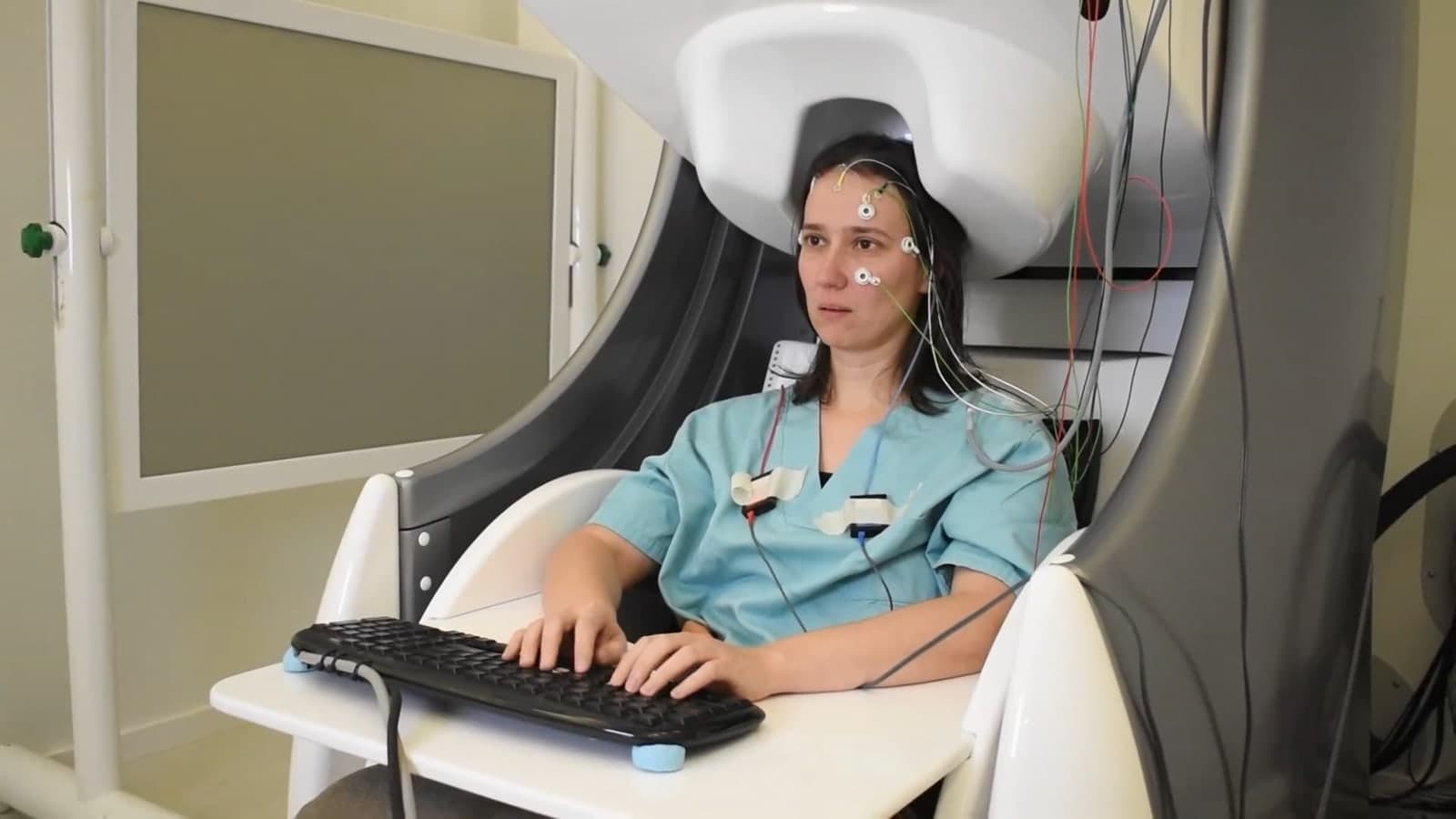
A woman sits beneath a large white machine, places her hands on a keyboard and starts typing. Another screen is not merely logging her keystrokes: an AI model is trying to reconstruct the sentence from the magnetic changes produced by her brain. It looks like a science-fiction test, yet the experiment took place at the Basque Center on Cognition, Brain and Language in San Sebastián, Spain.
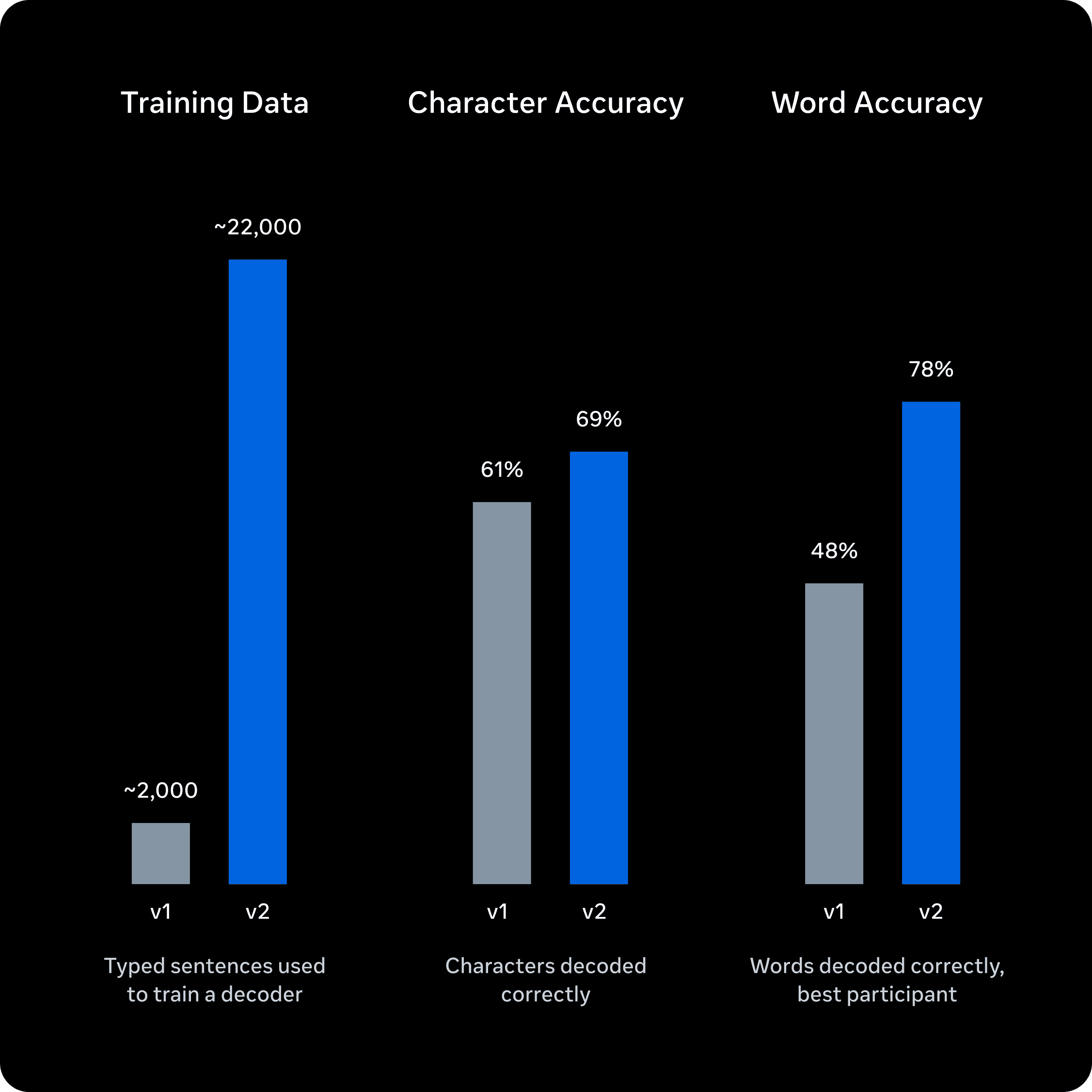
The system is called Brain2Qwerty v2. Meta trained it on roughly 22,000 sentences from nine volunteers after recording ten hours of brain activity from each person as they typed. It recovered 61% of words correctly on average and reached 78% for the strongest participant.
Calling it a mind-reading AI is not entirely dishonest: it turns brain signals into text without surgery or implanted electrodes. The catch is the kind of mind it can read. It cannot overhear an internal monologue, steal a secret or capture whatever somebody thinks while staring at the ceiling. It decodes the activity produced as that person physically types a sentence they have just memorised.
It does not hear your thoughts; it follows the trail left by your fingers
During each trial, volunteers heard a sentence, waited for a cue and typed it without seeing the text on a display. A MEG scanner measured extremely weak magnetic fields around the head. Brain2Qwerty had to detect when typing began, associate patterns with characters and words, then use context to rebuild a sentence that made sense.
This is where an impressive demonstration stops short of unrestricted thought reading. The model was not tested on silent imagined speech or on paralysed patients who could not move their hands. Much of the useful signal comes from planning and executing finger movements. The first Brain2Qwerty study in Nature Neuroscience is explicit: participants typed briefly memorised sentences.
Nor does the system display each word instantly. The new model can find a typing event inside a continuous recording, but it still needs the sentence to end so that meaning can help repair errors. Meta describes it as real-time decoding because it no longer depends on perfectly cropped samples. In a conversation, the latency would still be obvious.
The breakthrough required ten times more data from every person
Brain2Qwerty v1 tried to identify individual characters before asking a language model to clean up the result. The new system learns at three levels together: which character may be present, which words fit and what the complete sentence means. When the neural signal is ambiguous, context helps choose between competing possibilities—much as a listener understands a poorly pronounced word inside a familiar sentence.
There was no single magic trick behind the improvement. Meta collected ten times more training data per person across 90 sessions. Average word error rate fell to 39%, and the best result reached 22%. That is remarkable for a non-invasive system, but two wrong words in every five would still make everyday conversation exhausting.
The Brain2Qwerty v2 paper acknowledges that implanted systems remain far ahead and have pushed typing error below 2% in some tasks. Meta's advantage is that nobody needs brain surgery. Its drawback is visible in every photograph of the experiment.
Before it can read your mind, Meta must shrink a room into a headset
The scanner uses 306 cryogenic sensors and is larger than the person sitting beneath it. It is expensive, needs a magnetically shielded room and struggles when the user moves. There is no home prototype, secret pair of glasses or consumer product waiting for next year. Brain2Qwerty is open research: Meta has released the code and the first version's dataset.
That does not make the advance trivial. A non-invasive interface could restore communication for people with ALS, brain injuries or locked-in syndrome without asking them to undergo neurosurgery. The study shows that the model continues to work as sensors are removed, albeit with lower accuracy. New optically pumped magnetometers that operate at room temperature may eventually turn the current machine into equipment a clinic can actually use.
The loudest image is Meta extracting any thought before we can speak it. The nearer possibility is less frightening and far more useful: allowing somebody who has lost their voice to write again. To get there, the team must prove that its model works for a person who cannot press a key. That is when Brain2Qwerty will stop looking like an extraordinary laboratory trick and start changing lives.
The conversation starts here
Sign in with a supporter account to comment. Sign in


Nobody has commented yet. Want to go first?