

Steam asked for transparency. Players have spoken
Scroll down a Steam page and you may find an AI Generated Content Disclosure. Valve created it to explain which parts were made with artificial intelligence. On paper, that is information. In many players' minds, it already reads like a restaurant admitting that its paella arrived frozen.
Northeastern University researchers Mahsa Bazzaz and Seth Cooper analysed 508,192 English-language Steam reviews. They compared 5,970 games disclosing AI-generated content with 5,186 titles built around procedural generation, the decades-old technology that creates maps, enemies and worlds from rules designed by developers.
The recommendation rate was 86.3% for procedural games and 68.4% for generative-AI titles, a 17.9-point gap. In action games it grew to 27.5 points; in RPGs, 22.1. Reviewers also gave up sooner, with a median of 2.4 hours played against 6.1 hours.
This signal appears across hundreds of thousands of purchases, play sessions and reviews.
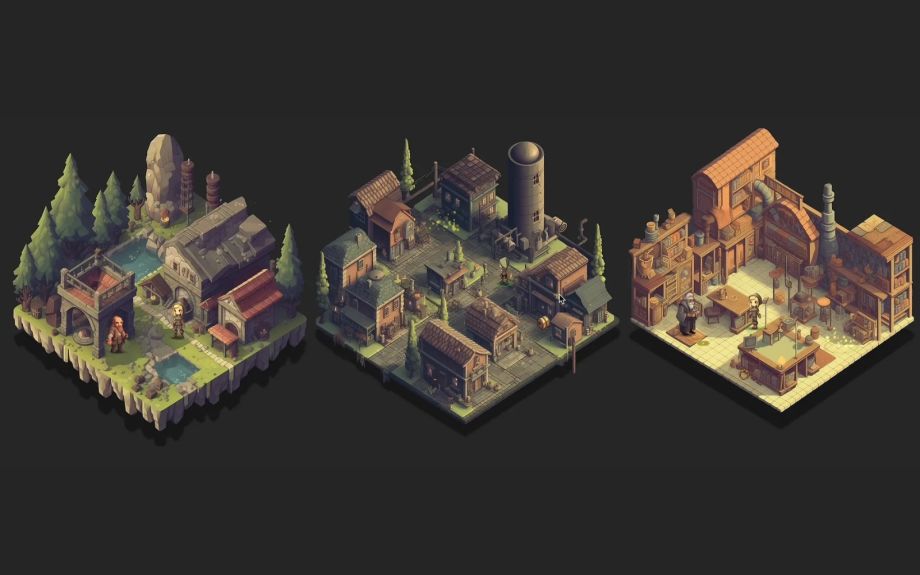
The label does not ruin a good game
We need to make one distinction: the study did not take one game, add a disclosure and watch its score collapse. Games disclosing AI tend to be cheaper, are more often free-to-play and appear more frequently in early access. Comparing two different catalogues cannot deliver a perfect verdict on cause and effect.
Even so, the gap remains when the researchers control for price, early access and playtime. A separate Game Oracle analysis of 9,879 games released in 2025 estimated 52.6% fewer first-month reviews for comparable projects that disclosed AI. Reviews are not exact sales figures, but on Steam they are a useful proxy.
The most revealing part is what buyers actually write. After manually examining 600 reviews, the researchers found the same association repeatedly: unedited artwork, robotic voices, awkward translations and the suspicion that if one part was rushed, the rest may have been rushed too. AI colours the perception of the whole product.
Steam only asks developers to disclose content that reaches the player: artwork, sound, narrative, localisation or live generation. Internal efficiency tools that never appear on screen fall outside that requirement, which I think is a sensible line.
Nobody buys a game to admire the studio's cost savings
Procedural generation has worked for 40 years because it gives players something useful: Diablo dungeons, Minecraft worlds or runs that never unfold the same way twice. Generative AI is too often pitched in reverse, as a way to hire fewer artists, actors or translators. One technology creates value inside the game. The other advertises money that was not spent outside it.
That also explains why some uses are welcomed. If AI enables conversations that were previously impossible, reshapes an adventure around each run or gives a small team genuinely new tools, players can understand the trade. If it delivers six fingers, lifeless voices and a badly translated menu, the disclosure did not cause the rejection; it gave the mess a name.
Our position has not changed since we explained how artificial intelligence is used in games: using AI does not automatically turn a work into AI slop. Shipping the result without judgement does. Studios using it now have to earn trust by showing players what the technology adds.
The label does not condemn a game. It makes every shortcut answer for itself.
The conversation starts here
Sign in with a supporter account to comment. Sign in


Nobody has commented yet. Want to go first?