
The AI that's already in your game, and you don't even notice
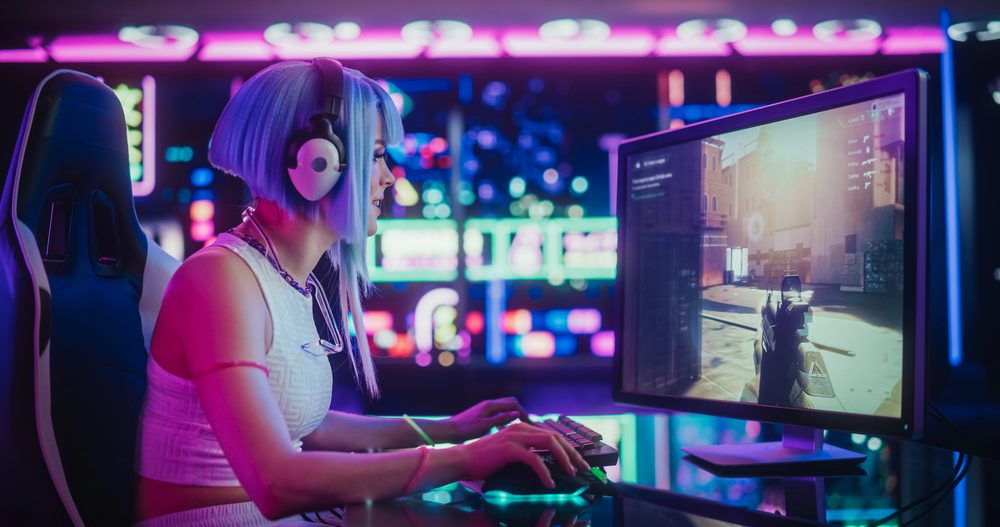
Every time you play, an artificial intelligence is grinding away for you without a word of thanks. Not the headline kind —the one that writes emails and draws portraits— but a quieter, much older one: the AI that decides how the enemy who just flanked you moves, and the one that, right now, is inventing pixels so your game runs smooth. The new part is that this silent AI has started to talk.
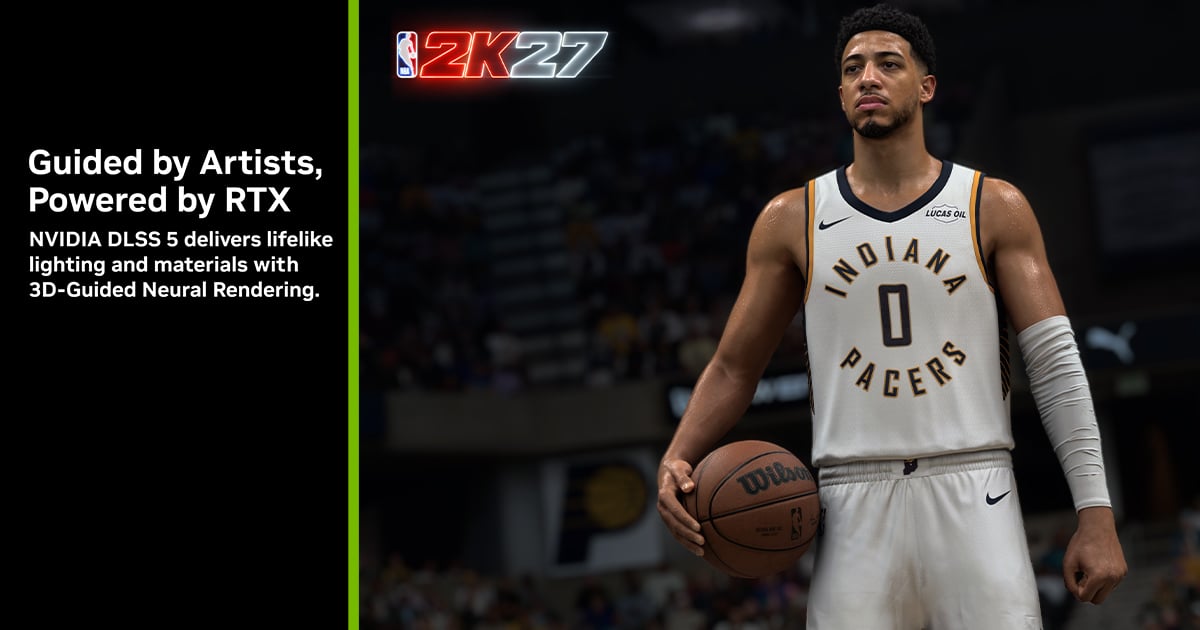
The enemy stuff goes way back: the 'AI' in video games, the kind that plots routes and decides whether a guard chases you or calls for backup, existed long before the ChatGPT boom, even if it's a more handcrafted family. What's genuinely massive today is something else: AI upscaling. If you play on PC or a PS5 Pro, a neural network is very likely reconstructing the image and inventing entire frames so the game runs smoother, which is exactly what technologies like DLSS, FSR and PSSR do. That AI isn't science fiction: it's working on the frame you're looking at right now.
NPCs are starting to improvise
Here comes the change you actually notice. Companies like NVIDIA, with its ACE tech, or Inworld have spent a while showing characters that understand what you say and answer with their own voice and expression, without a single hand-written line of dialogue. Instead of picking from three menu lines, you talk and the character improvises.
From demo to shipped game, mind you, there's a gap. NVIDIA showed ACE-powered teammates in Mecha BREAK, Ubisoft prototyped its NEO NPCs on the same idea, and the most real case so far is inZOI, Krafton's simulator, which runs a small on-device model so its character reacts in-character to what you do. But let's be honest: as of mid-2026 this is still a handful of cases and a lot of caveats. The promise is huge; the rollout, still shy.
The frontier: games that generate themselves
And then there's the part that's scary and dazzling at once. Google DeepMind unveiled Genie 3 in 2025, a model that can generate a playable world from a simple sentence, frame by frame and with no traditional engine underneath. Earlier, its GameNGen had already recreated a working DOOM painted by a neural network, and Microsoft showed with Muse a model that generates gameplay sequences learned from real matches.
None of this is a game you can buy tomorrow: it's lab research pointing at a horizon where part of the content —settings, levels, maybe mechanics— comes straight from a model instead of a team drawing it by hand. It might end up as just another tool for fast prototyping, or it might rewrite how games are made. Nobody knows yet, and anyone who tells you otherwise is selling something.
The side that doesn't make the trailers
This whole party has a bill, and it's worth facing head-on. Generative AI hits the work of artists, writers and actors squarely, and the industry has already fought over it: video game voice actors, organised in the SAG-AFTRA union, held a strike of over a year that ended in 2025 with a contract requiring consent and notice before cloning a voice with AI. It's not an abstract debate: it's people defending that their face and voice aren't used without permission.
And there's the flood of filler: so-called "AI slop," that mass-produced, low-quality generated content starting to swamp the stores. So much so that Steam now makes studios disclose whether they've used AI, and around one in five new games admits to it. AI in games is neither the villain nor the messiah each camp paints; it's a tool, and everything depends on what it's used for: to make better games, or to make them cheaper at the expense of the people who build them.
Next time an enemy sets an ambush that's a bit too good, or a character says something you didn't expect, stop for a second: maybe there's no writer behind it, but a model. And that, for better and for worse, is the game we're all already playing.
The conversation starts here
Sign in with a supporter account to comment. Sign in


Nobody has commented yet. Want to go first?