
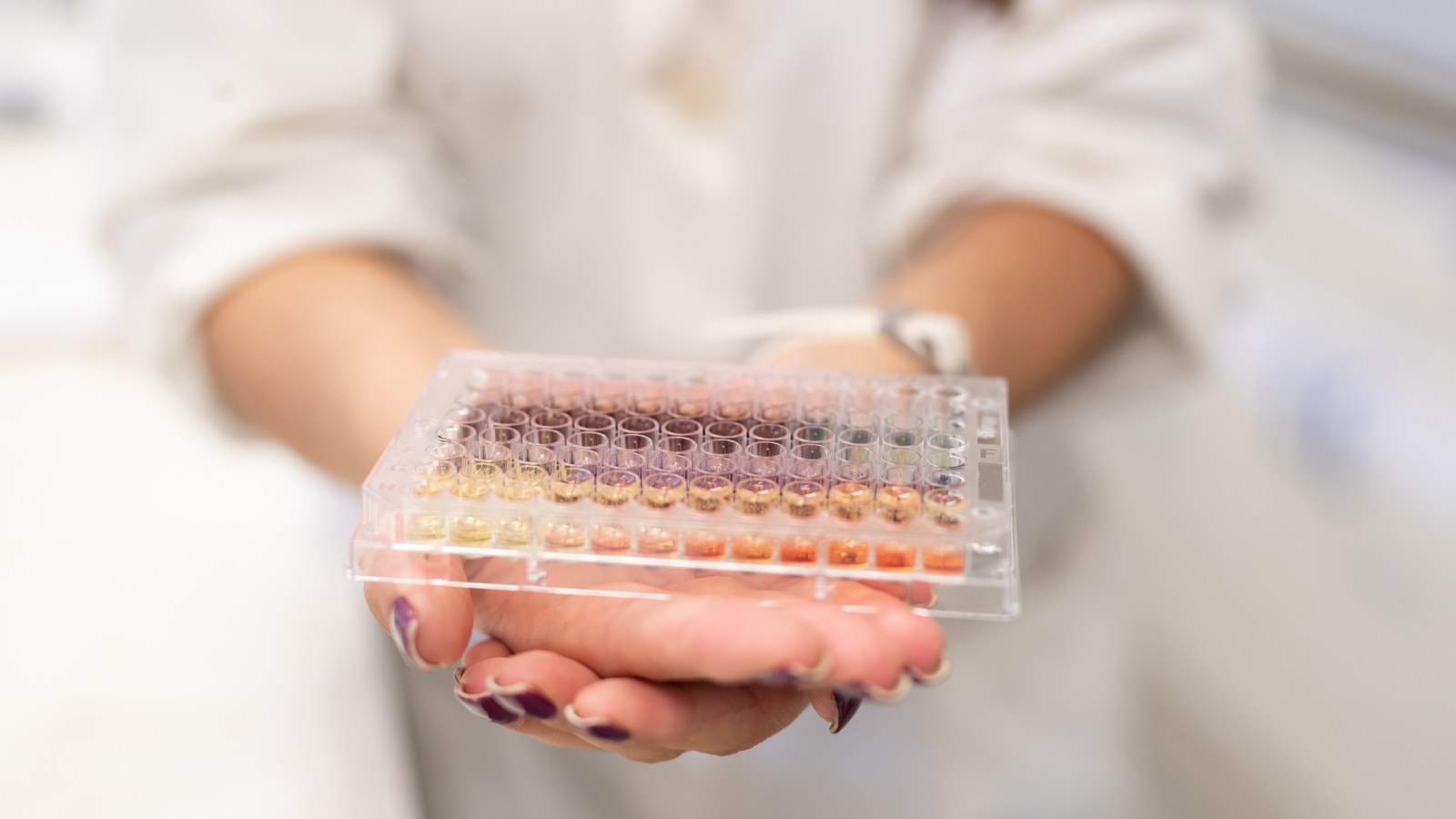
A pre-release version of GPT-6.2 designed small proteins that worked when a lab actually made them, OpenAI said on November 24. Its partner, the biotech company Onava, built and measured 322 of them, and 35 stuck to the protein they were meant to grab. That is a 10.9% hit rate, with at least one success against each of the five targets, and the figures come from a paper posted without peer review.
That model belongs to the GPT-6.2 family OpenAI shipped in ChatGPT on November 18. OpenAI calls the work a proof of principle rather than a drug-design pipeline, because a specialized program still handled the step that decides what each protein is made of.
What binding means, in plain terms
Proteins are the parts that do the work inside a cell. One binding another means it fits a specific patch of that protein's surface and stays there. The grip can cover the spot the other protein needs to do its job, which is how many drugs work, or simply flag it in a sample.
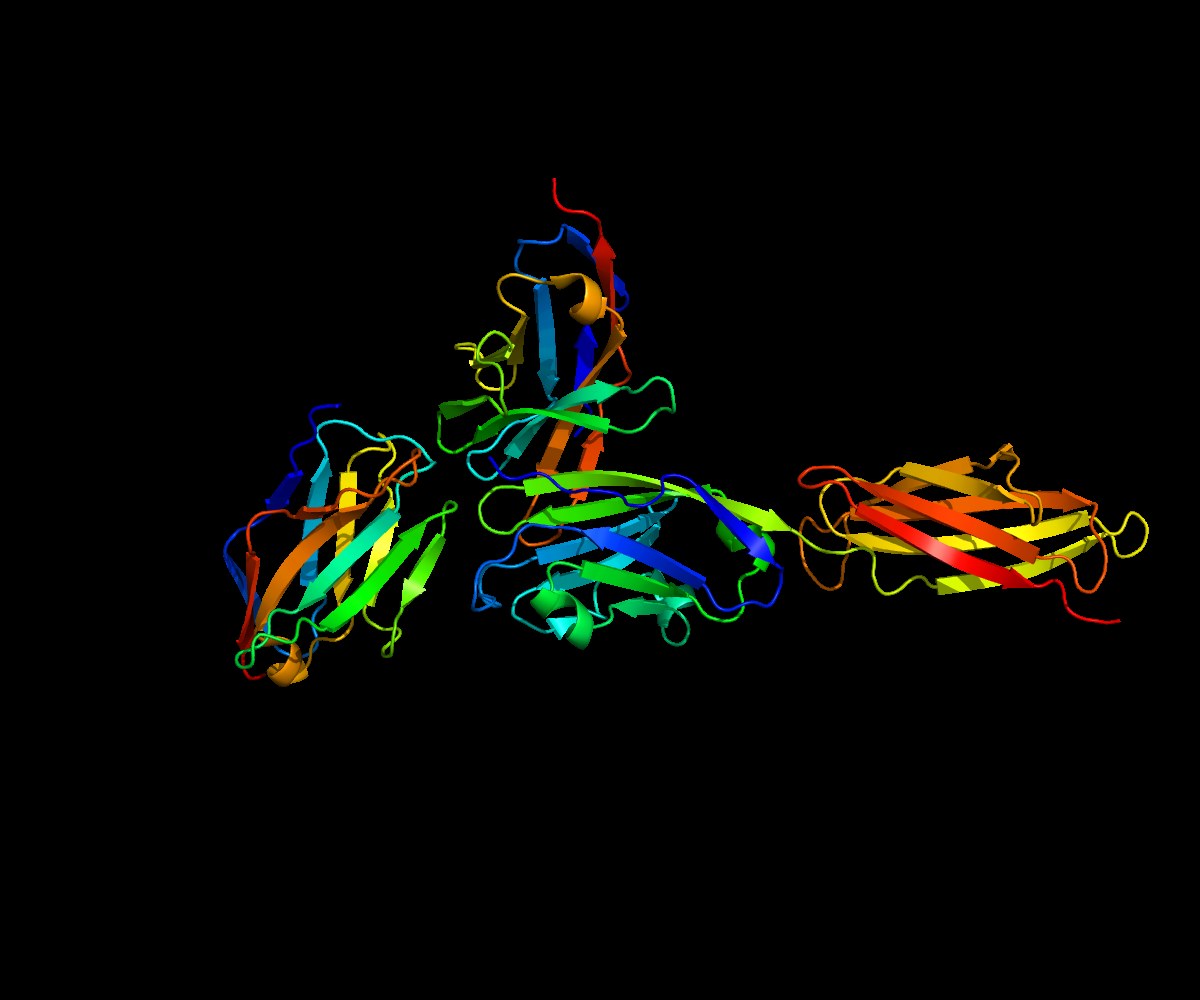
A small protein built to latch onto a target is called a minibinder, and the five here are tied to cancer and immune disorders, among them PD-L1, VEGF-A and IL-17A. An OpenAI model trained on the language of proteins already redesigned two of the factors that rejuvenate cells with Retro Biosciences in 2025.
Where GPT stopped and the specialists took over
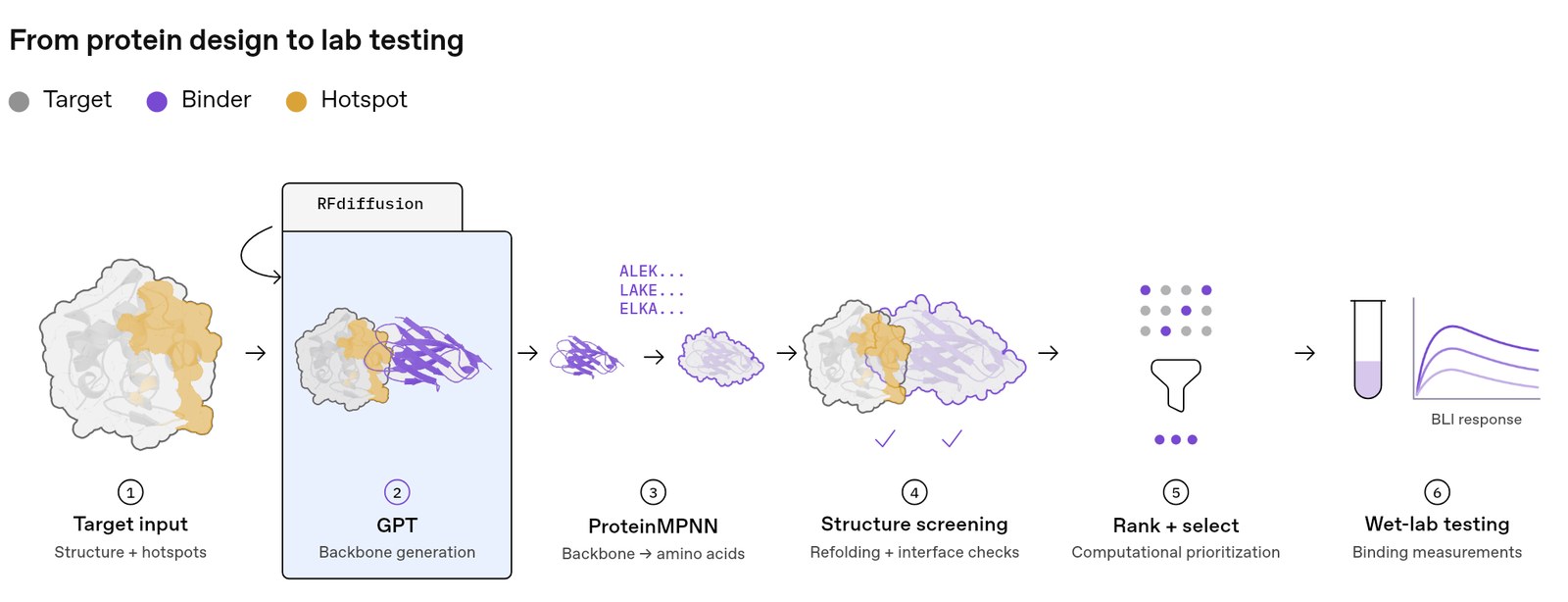
The researchers handed the model the three-dimensional structure of each target and marked the surface spots where the new protein should attach. With no internet access and no specialized protein models, GPT-6.2 wrote code that produced the backbone of each design, meaning the path the chain traces in space before anyone decides which amino acids fill it.
Which sequence takes that shape was decided by SolubleMPNN, a specialized program that proposed eight options per backbone. Other tools refolded them on screen to drop the ones that no longer fit the target, and only the survivors reached the bench, where Onava read binding off an optical sensor that registers a shift in reflected light when something sticks.
Is a 10.9% hit rate good?
The average hides five very different runs. Against IL-17A, 18 of 45 tested candidates bound, a 40% rate, while TrkA produced a single hit out of 46. The tightest binder reached 1.21 nanomolar, the concentration needed to occupy half the targets, and the lower that number the firmer the grip. The best PD-L1 design was a thousand times looser.
OpenAI grants that the original RFdiffusion study, the specialized benchmark for this kind of design, reported higher hit rates, and it adds that such rates depend heavily on how strictly designs are filtered before anyone makes them. Build only the top-scoring candidates and the percentage climbs.
Reworking existing antibodies went better than designing from scratch. Nanobodies are antibodies stripped down to their smallest working part, and of 182 redesigned against IL-4Rα, 128 still bound. Of 272 fragments from five therapeutic antibodies, 179 kept binding after about half of their positions had been swapped.
What the paper says it has not shown
The authors write that the results do not yet establish that their models can produce minibinders end to end without specialized help, and they name the weak spot without hedging, which is predicting a full protein structure from its sequence. GPT-6.2 averaged 0.26 on TM-score there, where 1 means the predicted shape matches the real one, against 0.93 for ESMFold2, the specialist built for that job.
The reporting in Nature raises a deeper doubt the authors do not dodge, over how much of the skill comes from having seen those structures in training. In one sequence test, an internal OpenAI model recovered 95% to 100% of the original sequences in a database because it recognized traces left by the software that generated them. Martin Pačesa, a structural biologist at the University of Zurich, puts it plainly there, saying a specialist will usually beat a generalist on a given task.
The conversation starts here
Sign in with a supporter account to comment. Sign in

Nobody has commented yet. Want to go first?