
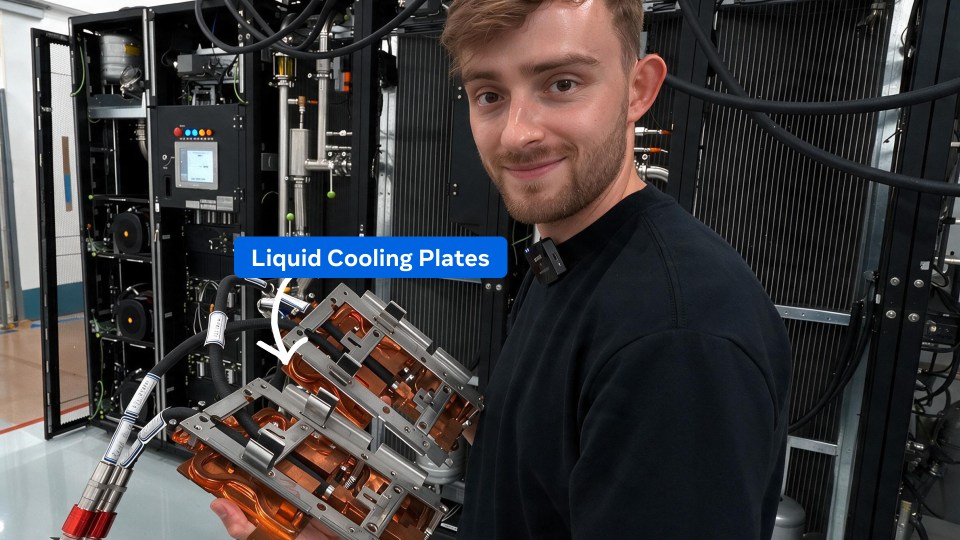
Heat leaves the chip and enters a loop
A GPU turns much of the electricity it consumes into heat. AI workloads place many accelerators inside dense racks, where air alone becomes inefficient. Liquid cooling puts a cold plate near the component and circulates coolant through it.
In a closed loop, water mixed with glycol absorbs heat, reaches a heat exchanger and cools before returning to the server. It is not discharged after every pass. Meta says the coolant can remain in service for years.
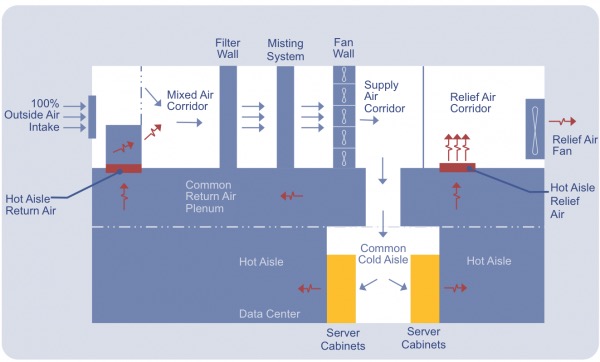
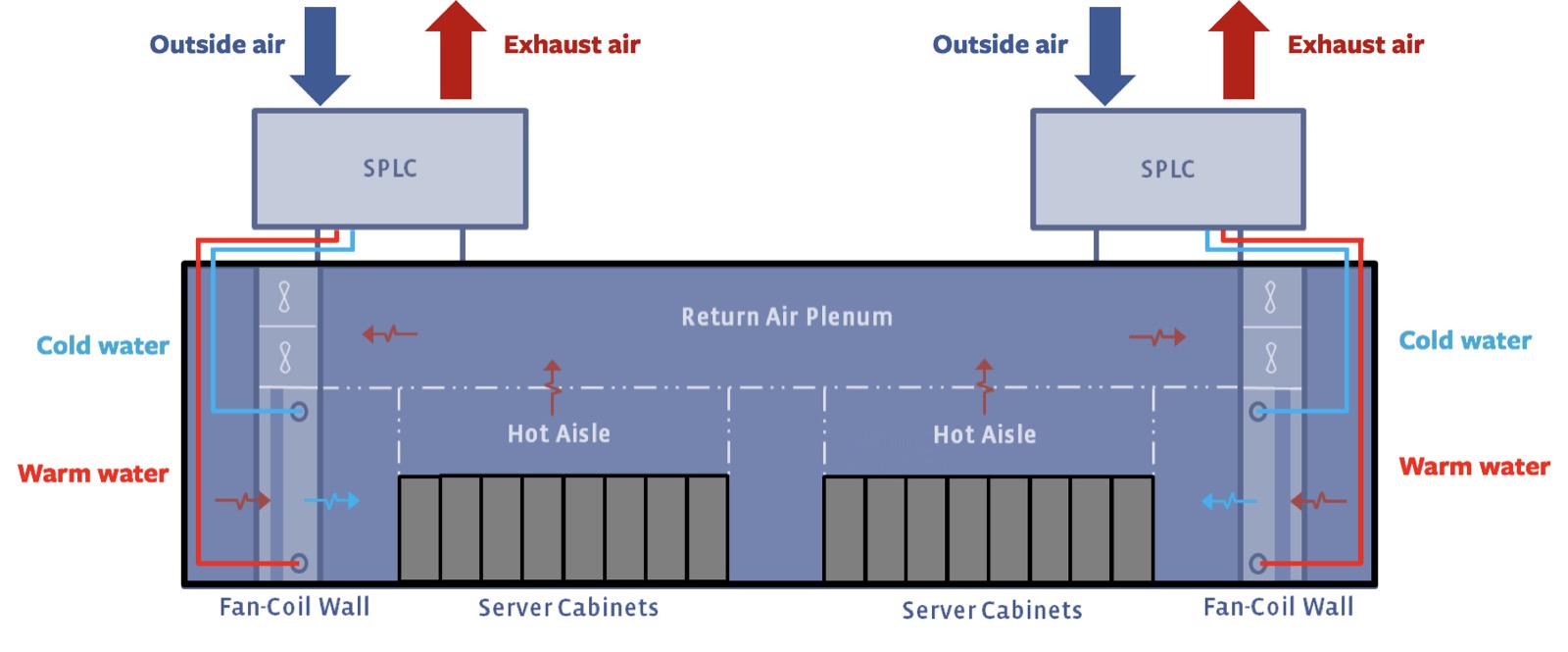
Direct-to-chip, air-assisted and evaporative systems move heat differently. A water-use figure for one design therefore cannot be applied automatically to every data center.
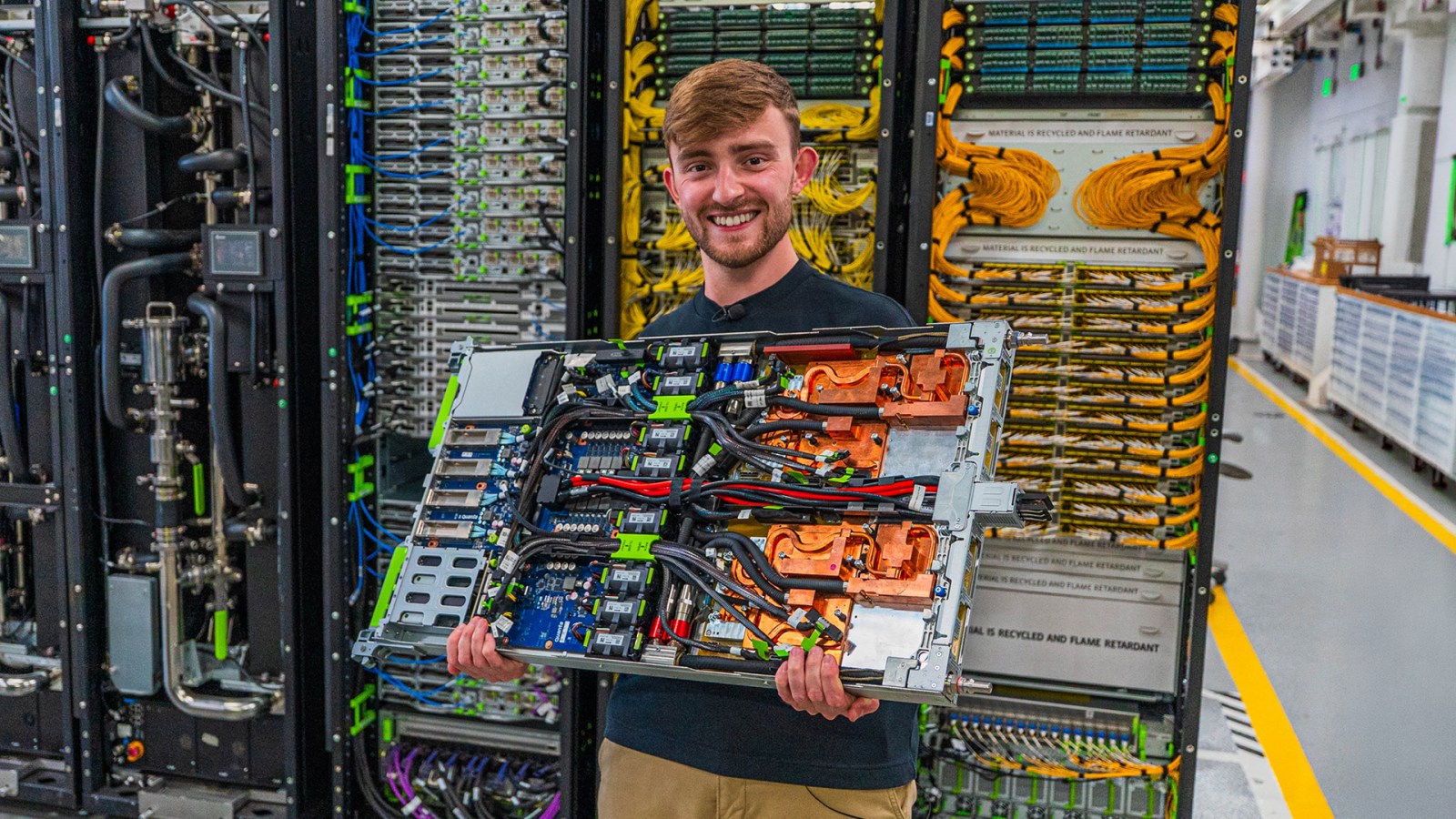
Our look inside Meta’s infrastructure lab shows where racks and cooling designs are tested before mass deployment.
What the data center gains
Liquid carries more heat than air through less space. That can reduce fan requirements, pack accelerators more closely and avoid much larger trays for similar compute capacity. The goal is not a cool-looking pipe. It is more reliable computation per rack.
The system still needs pumps, pipes, dripless connectors, sensors and heat exchangers. Every joint adds maintenance, and the heat must eventually leave the building through dry coolers, towers or another climate-appropriate system.
Meta reports that one reinforcement-learning pilot cut supply-fan energy by an average of 20% and water use by 4%. Those figures describe its own deployment, not every facility.
The AI chip war extends beyond processors because power, networking and cooling determine how many accelerators can work together.
The conversation starts here
Sign in with a supporter account to comment. Sign in


Nobody has commented yet. Want to go first?