
Where it is available and what it costs
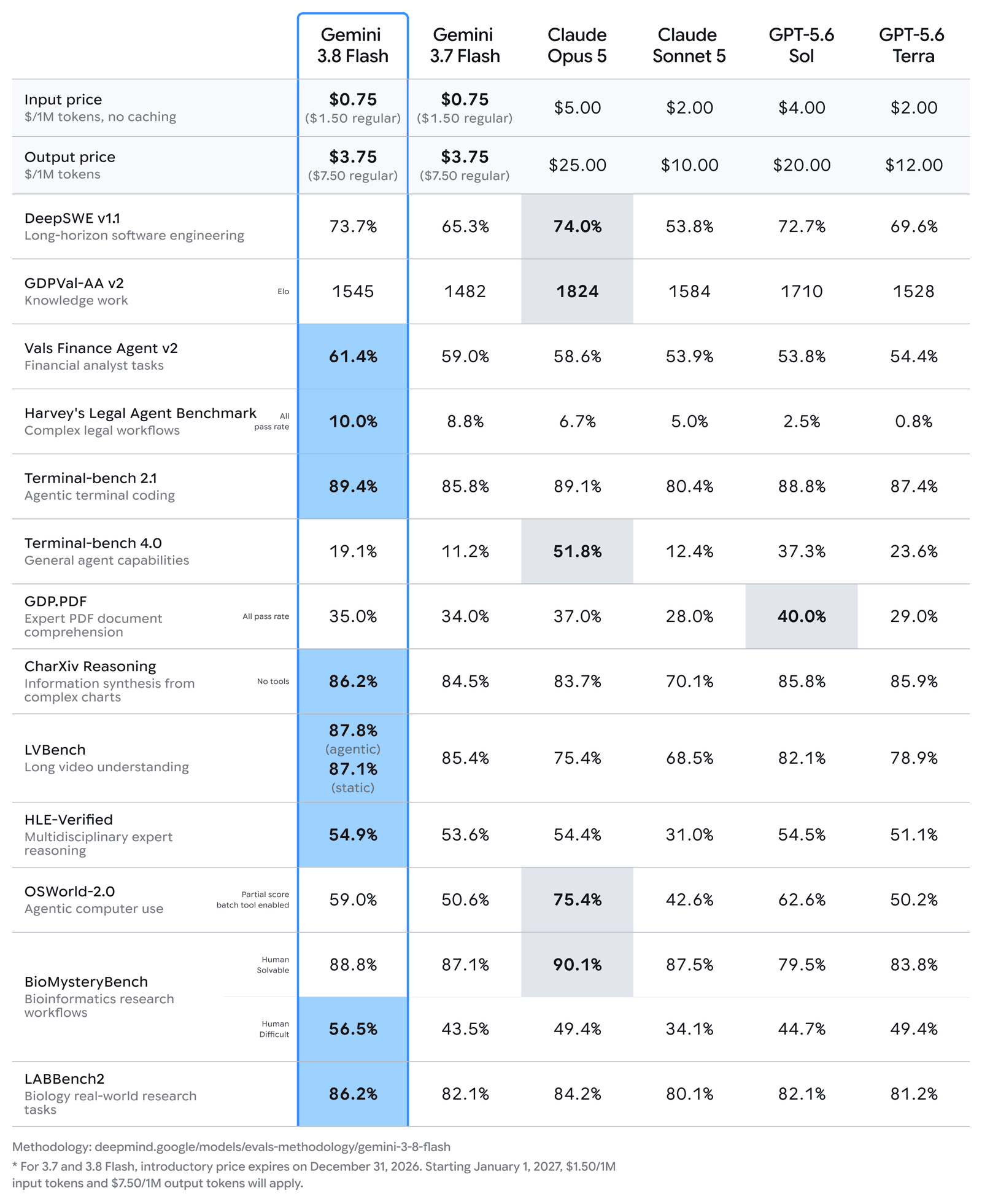
Google has released Gemini 3.8 Flash through the API, AI Studio, Android Studio, Gemini Enterprise and the Gemini app for AI Pro and Ultra subscribers. It is also entering Google Search's AI Mode and Gemini in Sheets. Promotional API pricing remains $0.75 per million input tokens and $3.75 per million output tokens.
That rate expires on December 31, 2026. Prices rise to $1.50 and $7.50 respectively on January 1. Tokens are the fragments a model reads and produces, so the second figure matters most for tasks that generate long responses.
What improves and what Google's charts cannot prove
Google describes 3.8 Flash as a substantial improvement in long-horizon coding, agents and multi-step reasoning. On an internal vulnerability benchmark spanning 20 programming languages, the Cyber variant passed 70 per cent. Chrome's security team also says it generated 2.6 times more correct patches than the best larger commercial models it tested.
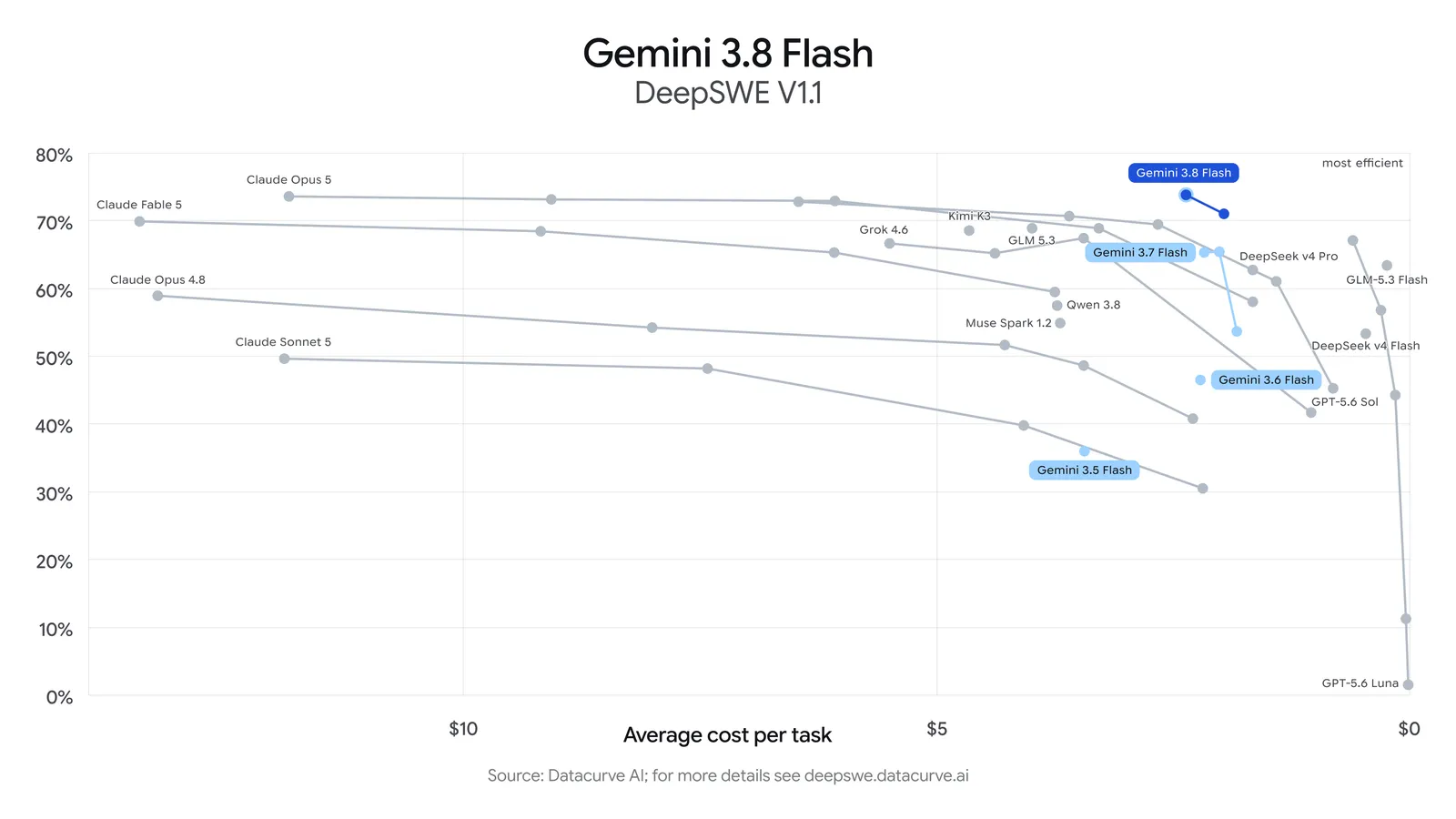
These are vendor-published results, not an independent measure of general reliability. They do not reveal how long a real task takes, how many failed attempts occur or whether a patch creates a different fault. A useful comparison with GPT-6 Astra will need the same environment, tools and budget.
Why Flash Cyber is restricted
Flash Cyber uses more permissive safeguards for vulnerability research and automated patching, capabilities that could also be adapted to attack systems. It therefore does not appear as a public model in the consumer app. Google's Fairwind programme provides it to approved government authorities, critical-infrastructure operators and software maintainers.
The standard Flash model retains restrictions against offensive cyber use and chemical, biological, radiological and nuclear risks. Sharing a technical foundation does not give both variants the same permissions.
The conversation starts here
Sign in with a supporter account to comment. Sign in



Nobody has commented yet. Want to go first?