

Midnight. You hit the wish button, the screen fades to black and a meteor streaks across the sky. Gold. Your pulse spikes over an anime character, 70 luckless pulls in. That scene repeats every night on millions of phones, and it has a Japanese name: gacha. If you play any mobile multiplayer game, you've lived it even if you didn't know what it was called.
From the corner-shop capsule machine to your pocket
The name comes from gashapon, Japan's capsule-toy machines: insert a coin, crank the handle — "gacha, gacha", hence the onomatopoeia — and pray for the figure you're missing. Japanese game studios moved that crank to smartphones in the early 2010s and discovered the business of the century: a digital capsule costs nothing to manufacture and can be cranked infinitely.
Japan had its first scandal back in 2012, when the government banned kompu gacha, a variant that required completing collections of random prizes to win the big one. The system survived the trim and crossed the ocean.
Today it powers the highest-grossing games on the planet: Genshin Impact has taken around $10 billion since launch, and Honkai: Star Rail hit $2 billion in under two years.
The real maths: 0.6% odds and a safety net called 'pity'
Let's look at the numbers the golden flash doesn't show you. In Genshin Impact, the base probability of a wish producing a five-star character is 0.6%. So you don't despair completely, there's the pity system: from pull 74 the odds climb sharply, and at 90 the jackpot is guaranteed. Guaranteed, yes — but it can be the banner character or the standard-pool consolation prize, the famous 50/50. Losing it is part of the design too.
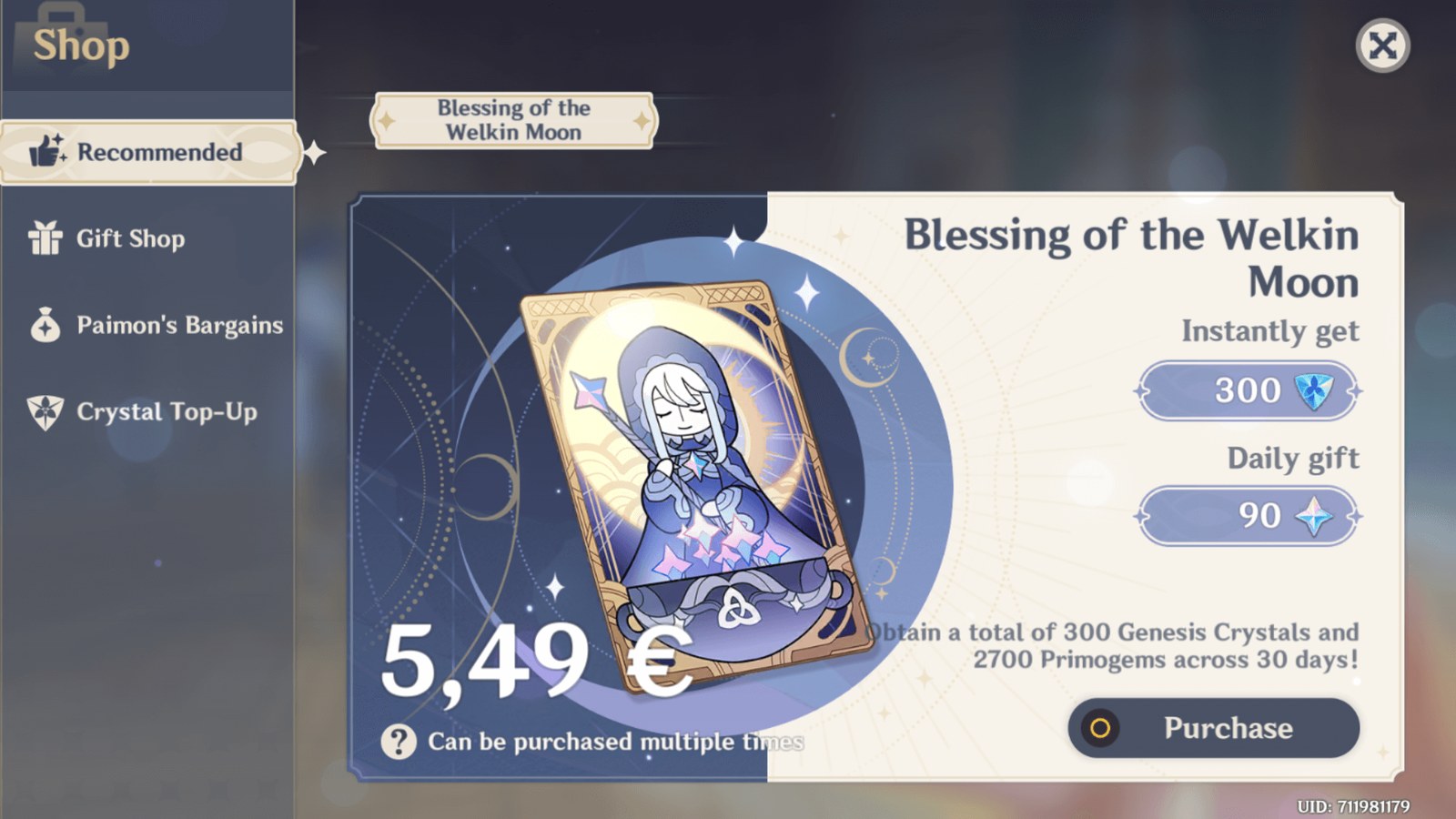
The other trick lives in the wallet. You never buy pulls with euros: you buy crystals, which convert into gems, which convert into pulls. Every conversion moves you one step further from the real price — the same fog we saw with Mobile Legends' diamonds. And the entry door is deliberately friendly: the Blessing of the Welkin Moon subscription costs €5.49 a month and makes you log in every day to collect your gift. That's not generosity; it's manufactured routine.
Why it hooks you: a Skinner lever with anime aesthetics
Psychologists call it variable ratio reinforcement: when rewards arrive at unpredictable moments, the brain keeps pulling far harder than when they arrive on schedule. It's the slot machine mechanic with two extra twists. First, the near miss: the golden flash that turns out to be the character you didn't want leaves you hungrier than a clean loss. Second, urgency: characters appear in three-week limited banners, and if you miss one, nobody promises when it returns.
The results show up in the accounts. On mobile, the top 1% of spenders generate roughly 29% of revenue, while 60–70% of players never pay at all. The whole system is tuned to turn the free player into an occasional payer, and the occasional payer into a whale. I've chained a few pulls too many on silly nights myself, so no sermons and no moral high ground: this hooks people because it's designed by people who are very good at their jobs.

The law lags behind: Belgium bans it, Spain shelved it
Belgium classed paid loot boxes as illegal gambling back in 2018, with fines of up to €800,000, and China has required publishing odds since 2017. Spain had its chance: the 2022 draft bill demanded age verification, spending limits and a ban on sales to minors, but it was withdrawn in 2024 to avoid slowing down the industry. What remains is the upcoming digital child-protection law, which will treat these mechanics as gambling products for minors.
Until the law arrives, the defence is homemade: always check the odds (games publish them, forced by Apple's and Google's stores), set a monthly budget before you see the banner, and beware the day you say "one more pull and I'll stop". Gacha is brilliant design that can be enjoyed free for hundreds of hours; the machine only wins when you forget it is one. The crank has been turning since Tokyo's corner shops in the 1960s, and now it lives in your pocket. How many times have you turned it this month?
The conversation starts here
Sign in with a supporter account to comment. Sign in


Nobody has commented yet. Want to go first?