Talking to ChatGPT no longer stays out of serious work
OpenAI is expanding voice inside its desktop app: the microphone now appears across Chat, Work and Codex, so you can describe a task or correct course without typing every instruction.
For Work and Codex — where requests include files, goals and boundaries — dictation fits almost better than in normal chat. Programming by talking still sounds like a movie; supervising the programmer doesn't.
It is not the new GPT-Live-1 Voice inside Codex
Full spoken conversation with GPT-Live-1 is not available in the desktop app, Work or Codex at launch. What arrives is voice input: you talk, it becomes text, it sends as a normal message.
Less spectacular than GPT-Live-1, but probably more useful for work.
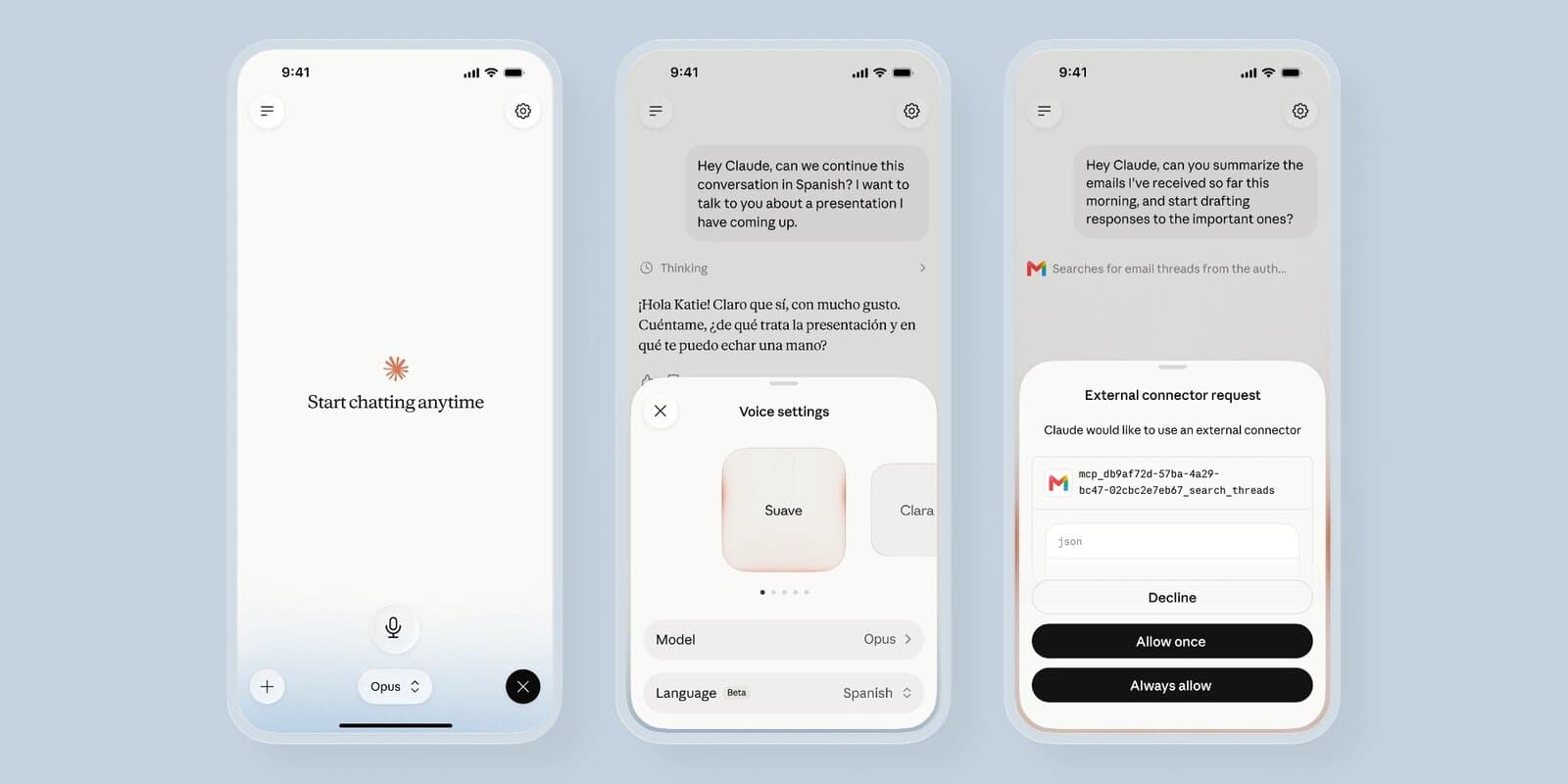
Anthropic moved the same day: Claude's voice gets its expensive brains
This same Wednesday, Anthropic connected Claude's voice mode to Opus and Sonnet after being limited to Haiku, across mobile, desktop and web — with mid-conversation model switching, connector support and eleven languages including Spanish.
Two different bets on the same board: OpenAI treats voice as fast input for delegating; Anthropic treats it as full conversation with its best intelligence.
The challenge: transcription that doesn't send the agent to the wrong folder
Neither company wants deep conversations with your computer — they want delegating to feel as fast as talking to someone beside you.
When the two most important labs push the same idea hours apart, the conclusion writes itself: the next interface for AI work is not a new window. It is the microphone.
The conversation starts here
Sign in with a supporter account to comment. Sign in

Nobody has commented yet. Want to go first?