AI slop is content made to occupy space
Open Instagram and an elderly man is rescuing a puppy from a flood. Next comes a baby speaking like an adult, a perfect voice narrating a fake story and an article repeating what twenty others already said. It all looks like content. Very little deserves your attention.
This is AI slop: low-quality digital material produced at scale with artificial intelligence. The phrase became so representative of the web that Merriam-Webster's editors chose slop as their 2025 Word of the Year. Their examples include strange images, cheap propaganda, carelessly written books, fake news and pages made purely to capture traffic.
Using AI does not automatically turn a work into slop. Someone can generate a starting point, revise it, correct it and add a genuine idea. Slop begins when judgement and intent disappear: there is nothing to say, only a system producing hundreds of pieces to see which one holds us for two more seconds.
The internet already rewarded junk; AI removed the limit
Platforms spent years rewarding exaggerated headlines, videos stretched for more adverts and pages built around an algorithm. AI did not invent that economy. It made it dramatically cheaper.
Building a hundred mediocre sites once required poorly paid writers, time and organisation. One person can now generate thousands of pages in an afternoon. A video farm no longer has to write every script, record every voice and edit every image; much of the process can run automatically.
The incentive is straightforward. When each item costs almost nothing, releasing hundreds can pay off even if none offers much value. Platforms receive more material, accounts gain more chances to enter a recommendation feed and users inherit the job of separating the useful from everything else.
Good work survives, but becomes harder to find
AI slop does not have to replace good work to hurt it. Burial is enough. An artist who spends months on a song competes with thousands of automatically generated tracks. A reporter can investigate for weeks and appear below twenty pages that have repackaged the facts without adding anything.
Music platforms already receive tens of thousands of synthetic songs each day and must decide which to label, recommend or remove as fraud. Our piece on AI-generated music explains why an artist's identity becomes more valuable when producing a song is no longer exceptional.
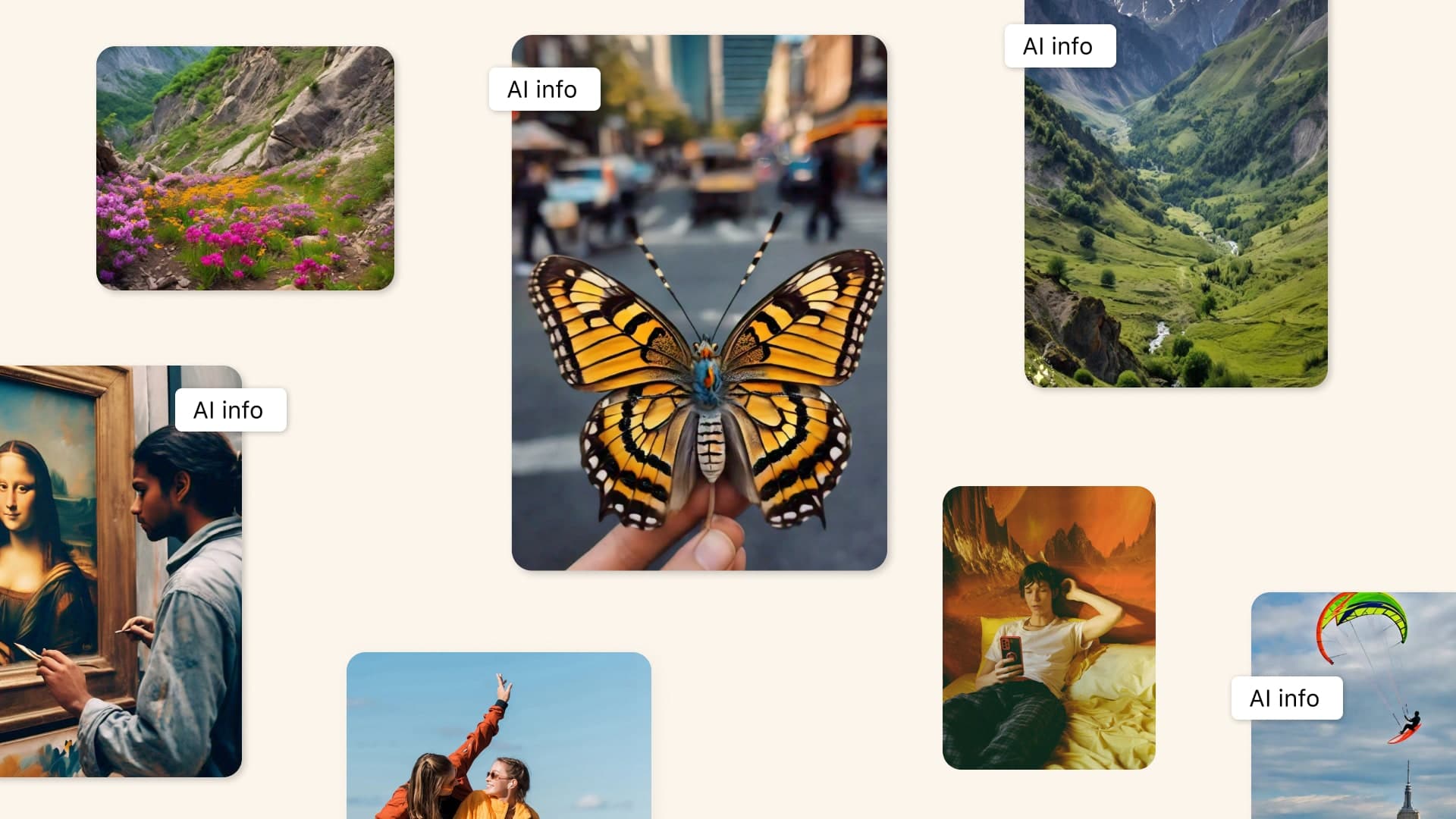
Meta chose to display an AI info label when it detects technical signals or a creator discloses that an image, video or audio clip was made with AI. That tells us what we are seeing, but a label cannot measure whether the work carries judgement or came from a content farm.
Models may end up learning from the same junk
Today's systems were trained on vast quantities of material made mostly by people. As synthetic output spreads online, separating human knowledge, useful artificial data and automated rubbish becomes harder.
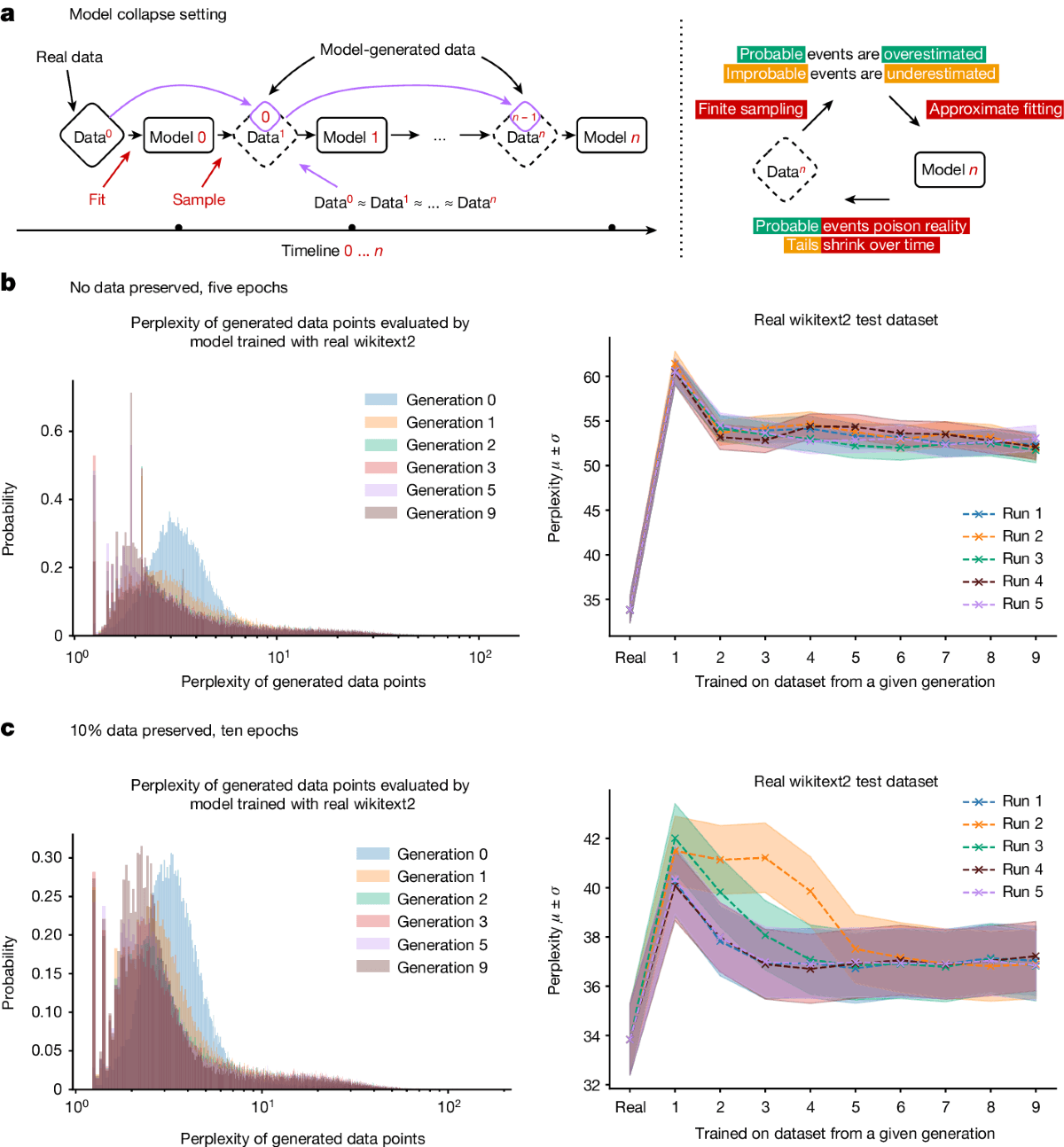
A study published in Nature trained successive model generations on data produced by the previous one. Used indiscriminately, that data caused models to lose rare cases, accumulate errors and represent the original distribution less accurately. The authors called the process model collapse.
This does not mean any synthetic dataset destroys a model. The same work found that retaining some original human data reduced degradation. Artificial data can help when it is selected and mixed carefully; the risk comes from scraping the web as if every published item had equal provenance and quality.
We are training our own attention as well
The effect is not limited to model training. Spending hours among context-free videos, authorless articles and images built for an instant emotional response changes what we expect from culture. We demand immediate comprehension and discard work that asks for a little time.
That creates an uncomfortable loop. The algorithm learns that fast, familiar material retains attention; we become used to consuming it; the platform commissions more. No conspiracy is required—each participant is responding to the incentive in front of them.
The answer is not to ban every work made with AI. It is to label synthetic material, preserve data provenance, reward authorship and demand that platforms stop treating activity as quality. We will follow those changes in our AI, creativity and content hub. If the incentives remain, the internet will keep working, but finding something worth your time will become steadily more tiring.
The conversation starts here
Sign in with a supporter account to comment. Sign in

Nobody has commented yet. Want to go first?