
Chatbots must say they are AI in the first message
The European Commission published its final Article 50 guidelines on July 20, just thirteen days before the rules begin applying on August 2, 2026. They cover European companies as well as providers based elsewhere when their systems are used in the EU.
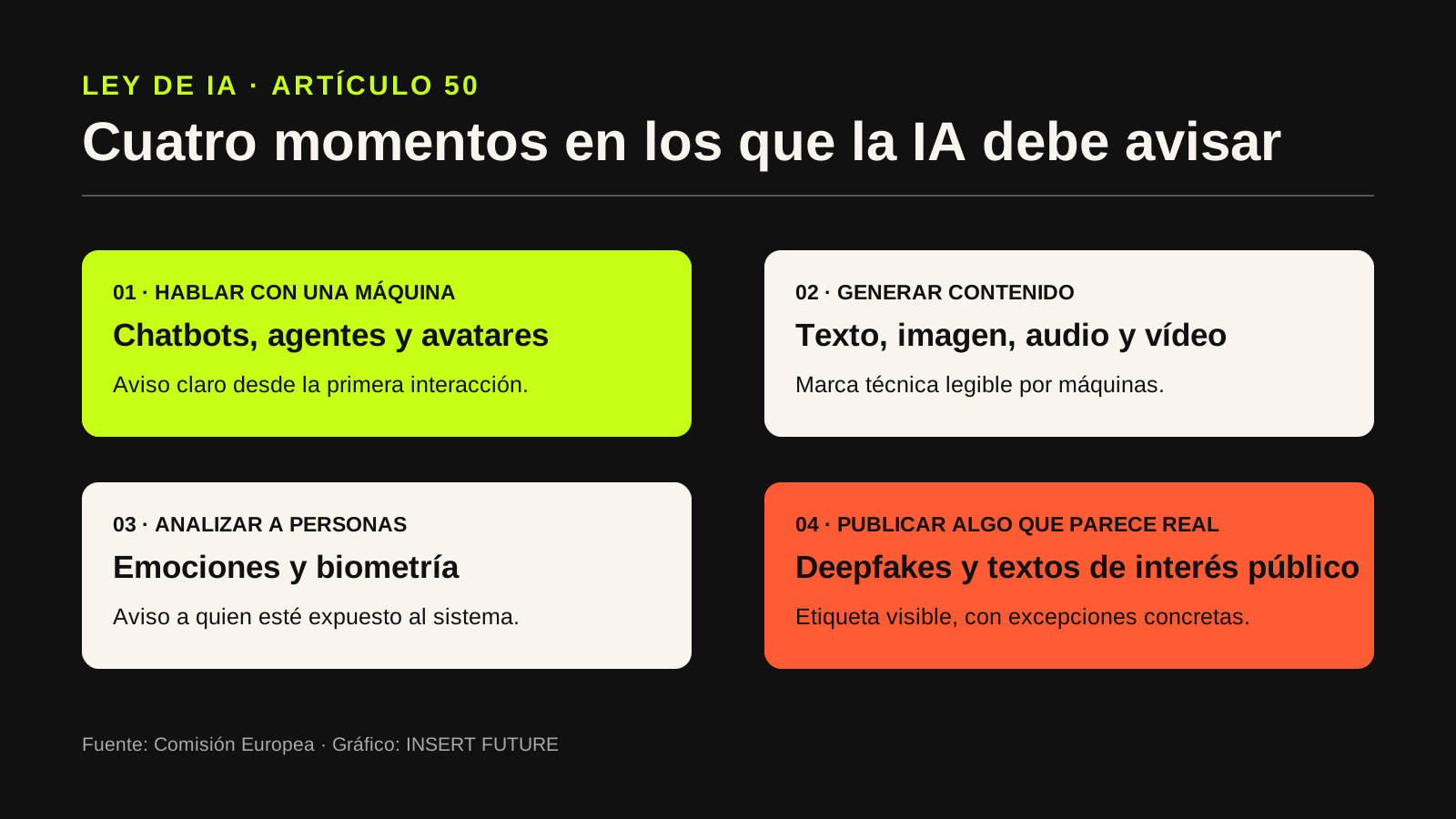
A chatbot, agent or avatar designed to communicate directly with people must disclose that it is AI at the start. It can skip the notice when that fact is obvious, but the Commission gives that exemption little room. A warning buried in the terms of service—or delivered ten messages into a conversation—does not meet the guidance.
People exposed to emotion-recognition or biometric-categorisation systems must also be informed. National authorities will handle most enforcement, with penalties reaching €15 million or 3% of annual worldwide turnover. Spain's AESIA contributed to the European work and will be among the agencies involved, alongside sector regulators where relevant.
Metadata for machines, labels for people
The rules require two different notices. A provider generating text, images, audio or video must add a machine-readable marker to synthetic output. Someone publishing a deepfake must also show a clear label to the person seeing it. The EU's official icons are optional; disclosure is not.
A fake photo of a politician needs a visible warning even when provenance data is embedded in the file. People should not need forensic software to understand what they are looking at. Source code, spell-checking and other assistive edits that do not change the meaning sit outside the marking requirement. Systems already on the market before August 2 have until December 2 to add the technical marker to their output.
Human-reviewed text will not need an AI label
Article 50 also covers AI-generated or manipulated text published to inform the public about matters of public interest. Publishers do not have to label it when a person meaningfully reviews the content and someone takes editorial responsibility.
Running a spell-checker or clicking approve without reading is not enough. The responsible editor must be able to examine the substance, check sources, rewrite it and reject it. A newsroom can use AI as a tool, but it may have to show that someone genuinely reviewed the output before publication.
Personal, non-professional use sits outside this part of the AI Act. A synthetic post can still violate privacy, defamation, copyright or data-protection rules. Once an individual regularly earns money from the activity, the Commission treats it as professional. Small creators who mix hobby accounts, sponsorships and subscriptions will face the hardest boundary cases.
The problem begins when a label vanishes after sharing
Research commissioned by the EU admits that no single marking or detection method works across every context. Metadata can vanish in a screenshot, watermarks can degrade through recompression and detectors make mistakes. The recommendation is to combine cryptographic provenance, invisible watermarks and detection rather than rely on one badge.
The EU Code of Practice is voluntary; the legal duties are not. Signatories get a simpler route to showing compliance. Everyone else must demonstrate that their own system works. Large platforms and small tools now face the same fast-approaching deadline.
The real test begins when a video crosses three social networks and arrives through a messaging app. If the warning disappears on the way or shrinks into an unreadable corner, the label has achieved very little. The guidelines explain what Europe expects; from August 2, we will see how much of that system survives outside the official document.
Where the information comes from
Original announcements, documents and reporting used to prepare this article.
01Comisión Europea — publicación de las directrices finales y fecha de aplicación02Comisión Europea — preguntas y respuestas sobre alcance, excepciones y sanciones03Comisión Europea — directrices finales del artículo 5004Comisión Europea — Código de Buenas Prácticas sobre contenido generado por IA05Comisión Europea — iconos oficiales y condiciones de uso06Oficina de Publicaciones de la UE — estudio técnico sobre marcado y detección07AESIA — aplicación española y Código de Buenas Prácticas08Future of Life Institute — guía independiente sobre el artículo 50The conversation starts here
Sign in with a supporter account to comment. Sign in


Nobody has commented yet. Want to go first?