
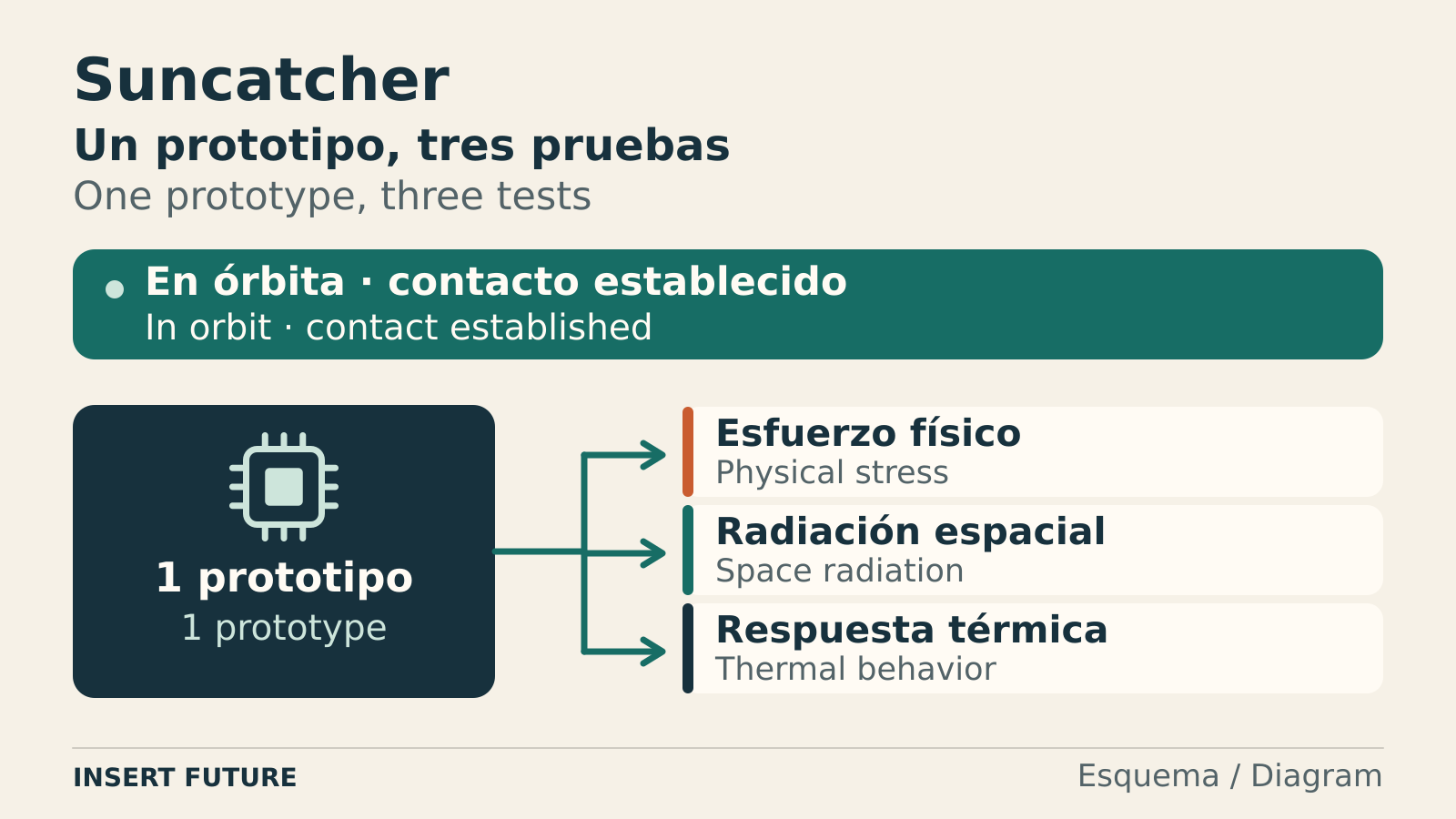
Google says its first Project Suncatcher prototype has reached orbit, with contact established and the satellite operating as expected. Developed in partnership with Planet, it launched on SpaceX’s Transporter-18 rideshare mission on October 1, 2026.
The mission now gives Google a way to test AI hardware in the conditions of space. The team plans to gather data over the coming weeks. Its announcement establishes that the satellite is up and communicating, but does not yet report results from AI computing workloads in orbit.
What the hardware must withstand
Suncatcher carries TPUs, Google’s custom chips for the calculations behind AI. Our guide to the AI chip race explains why cloud companies build their own processors alongside buying NVIDIA hardware. A spacecraft adds stresses those chips would not face in a ground-based server.
Google’s prelaunch briefing described vibration tests to simulate the rocket ride and radiation experiments performed while the chips ran AI workloads. Energetic particles can alter the data in electronic components. The prototype will add observations from the space environment to those laboratory tests.
A vacuum does not remove the heat
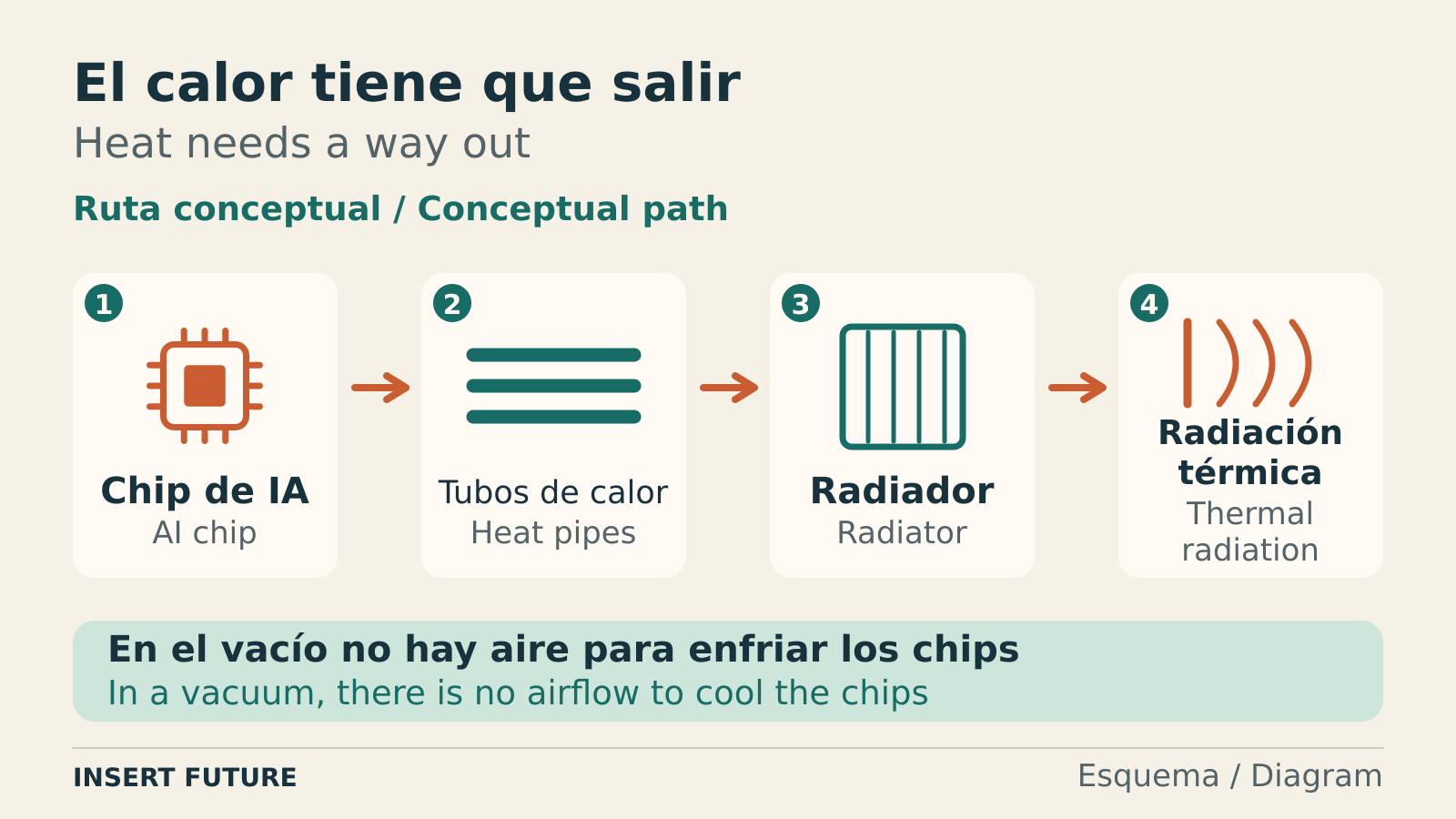
Working chips produce heat, which has to go somewhere before they overheat. With no outside air to carry it away, Google is studying heat pipes that move heat toward radiators, which then emit it as radiation. The team’s Suncatcher research describes this thermal path.
Earth-based liquid-cooled data centers also move heat away from processors, but have other ways to release it into their surroundings. Google has already tried its cooling technology in a chamber that reproduces space’s vacuum and temperatures. The orbital mission will test how it behaves there.
Two linked satellites are a later experiment
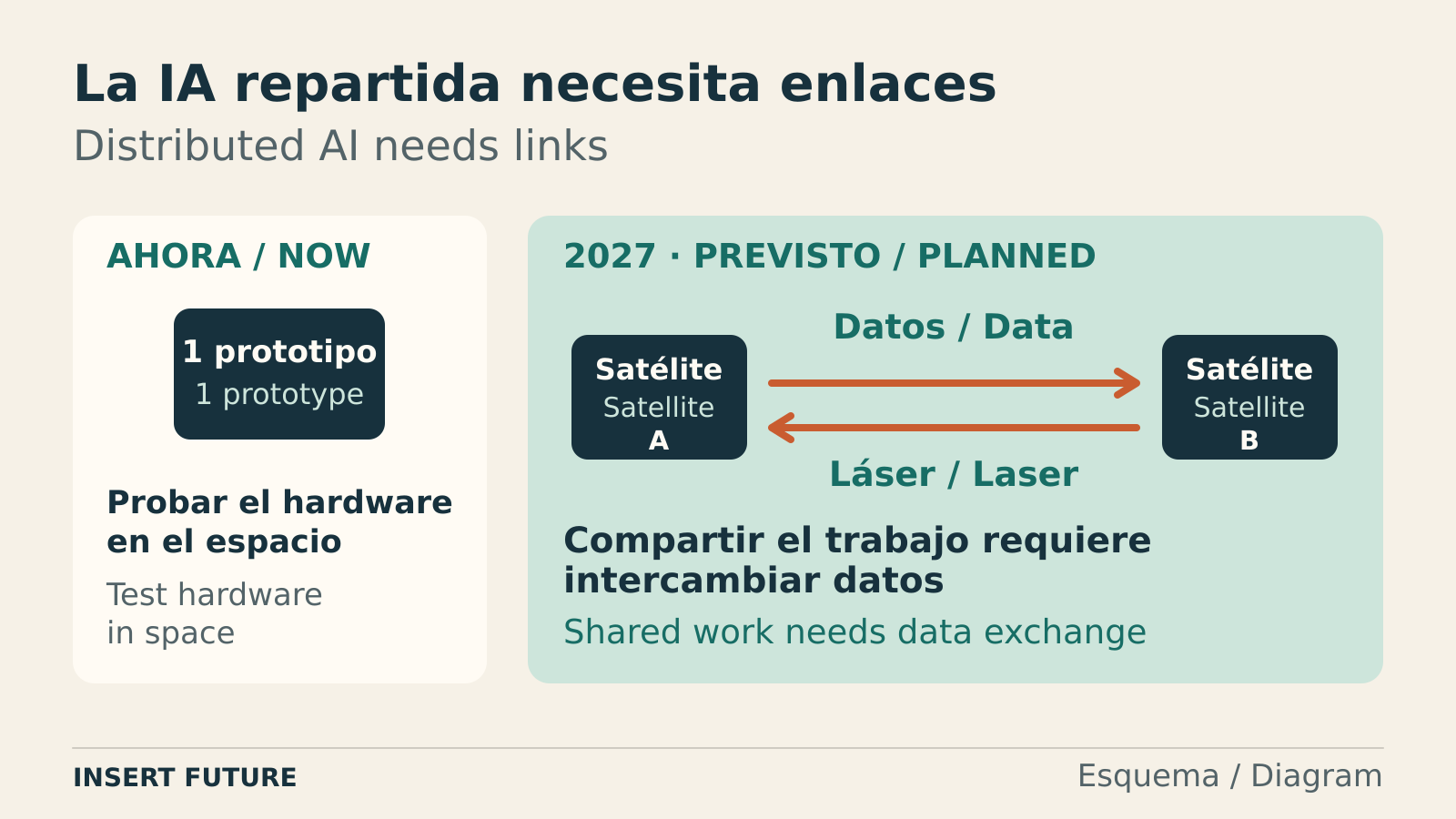
The longer-term design spreads computing across solar-powered satellites. Those machines would need fast connections to work together. Google Research’s proposal uses laser links between spacecraft flying close to one another, allowing them to exchange data rather than operate as isolated computers.
Google still plans a two-satellite test in 2027 to study that connection. The prototype now in orbit comes first, testing how the hardware handles its environment. Reaching orbit does not yet establish that a large network of space-based data centers will work reliably or cost less than computing on Earth.
The conversation starts here
Sign in with a supporter account to comment. Sign in

Nobody has commented yet. Want to go first?