
A deck that wants you to think while everything tries to kill you
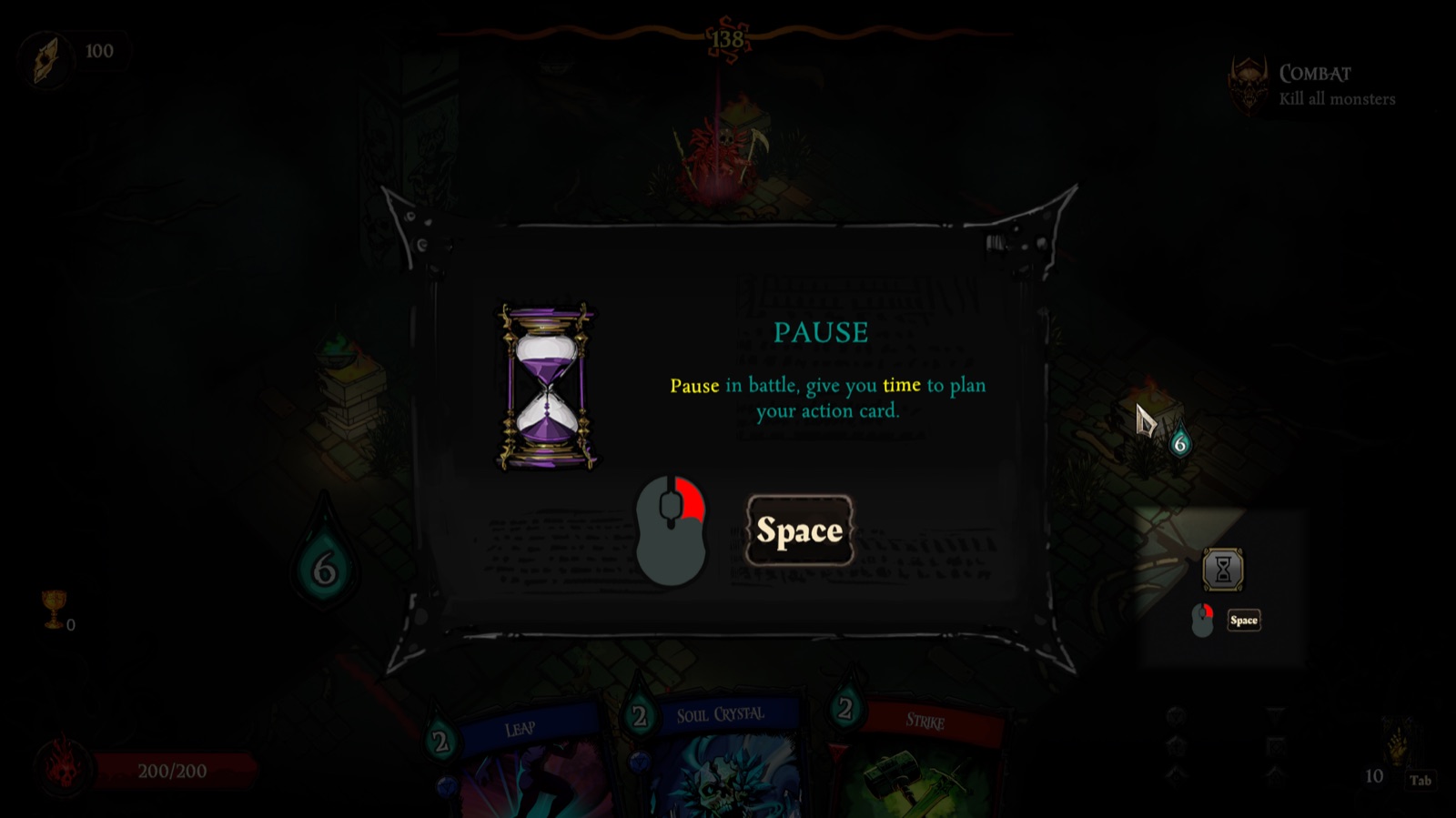
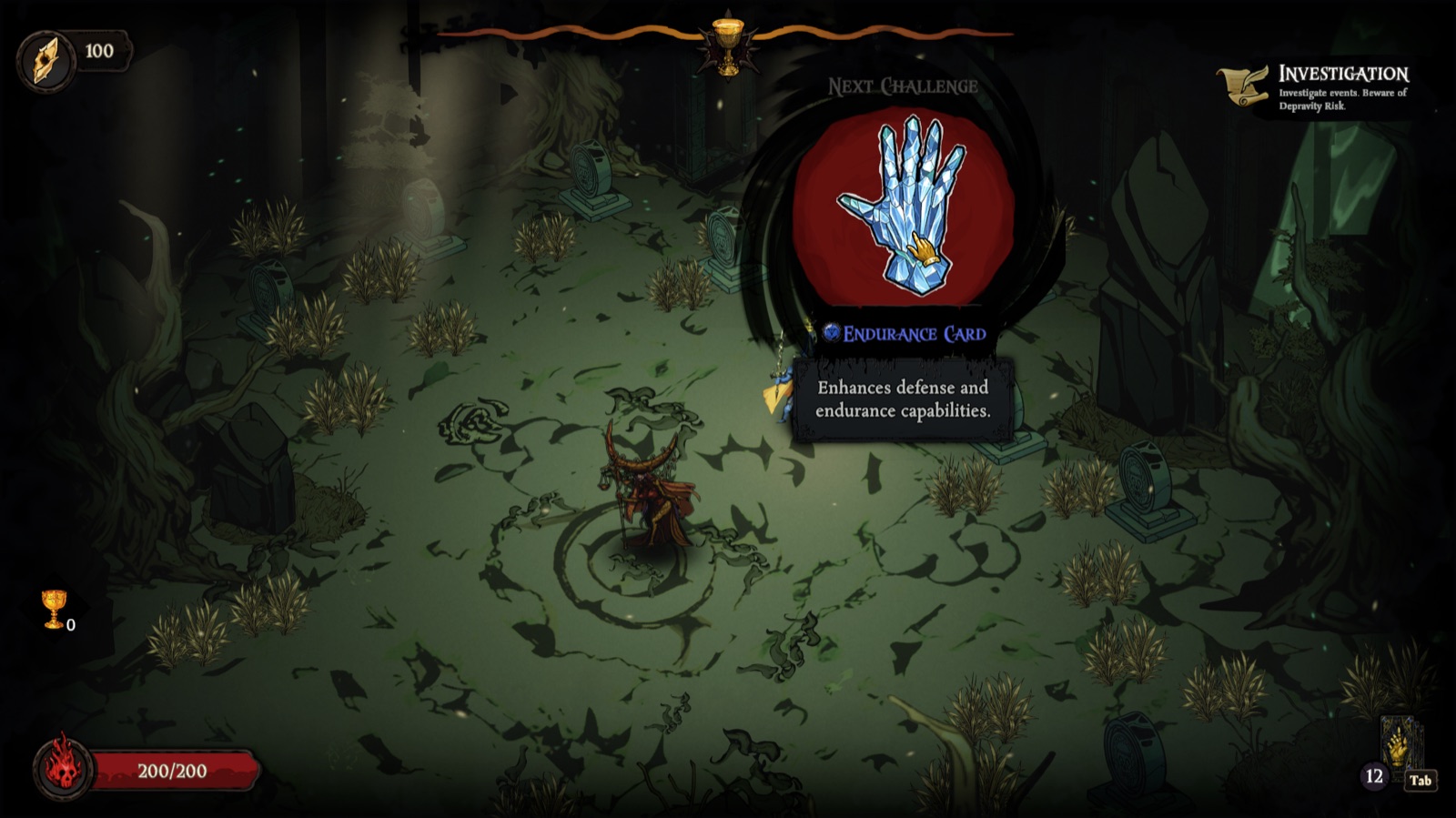
Golden Swirl has an easy idea to pitch and a much harder one to execute. Combat unfolds in real time, but every attack, leap and shield depends on a card. You can stop the action, read your hand, calculate the cost and decide. On paper, pausing combines action-game tension with deckbuilder strategy. In practice, the mixture never quite decides which rhythm it wants.
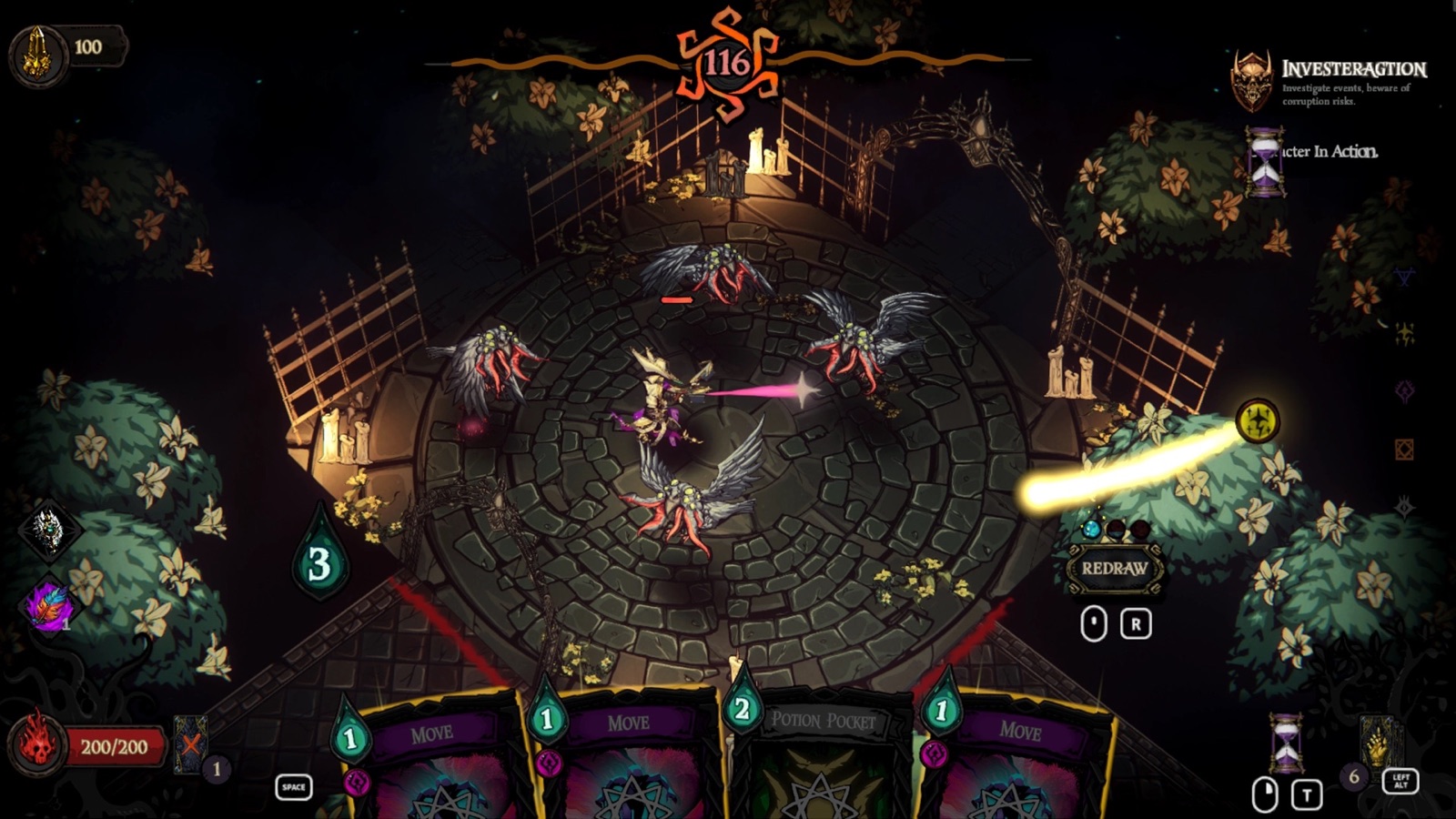
Playing carelessly is the worst approach. Cards have effects, affinities and costs to read, enemies surround the character and the arena punishes a wrong direction. During our PC test with keyboard and mouse, the cursor used to select or drag a card could also register an unwanted character movement. The controls feel clumsy for the first few hours and, although you adapt, a misread command still feels unfair.
Turn-based combat would have suited everything Golden Swirl asks you to read. Here, pausing happens so often that it drains the energy from real-time action. When a decision works, the deck produces satisfying combinations and the arena bursts into colour. When it does not, it feels like reading a manual while somebody hits the table. Baldur's Gate 3 shows how much room a turn can give a complex choice without removing the tension.
Pausing works when it gives us time to read a difficult combination, but fails when we need it to correct a command the game has misunderstood.
Four characters and a campaign that changes shape
The final version has four characters, each with unique relics and card pools, alongside 120 cards, more than 100 relics and a five-act campaign made from procedural dungeons. Finding one powerful card is not enough because you need to understand what that character wants to do and build around it.
Switching characters changes more than appearance. Each one draws from a distinct pool of cards and relics, so a combination that works on one route may not exist on the next. That difference encourages another campaign, although it also means relearning part of the deck.
Snako Production has also listened to its community, as the official Steam update history records several changes to the demo boss that stopped too many players and the arrival of voice acting in June.
The campaign starts repeating itself before its card pool runs dry. Reading familiar options again and stopping for similar encounters weakens the decisions. Its procedural structure sits on the side of the divide covered in our roguelike and roguelite explainer, but the deck's vocabulary grows faster than the situations around it.
Hades in the silhouette and Elden Ring in the tone
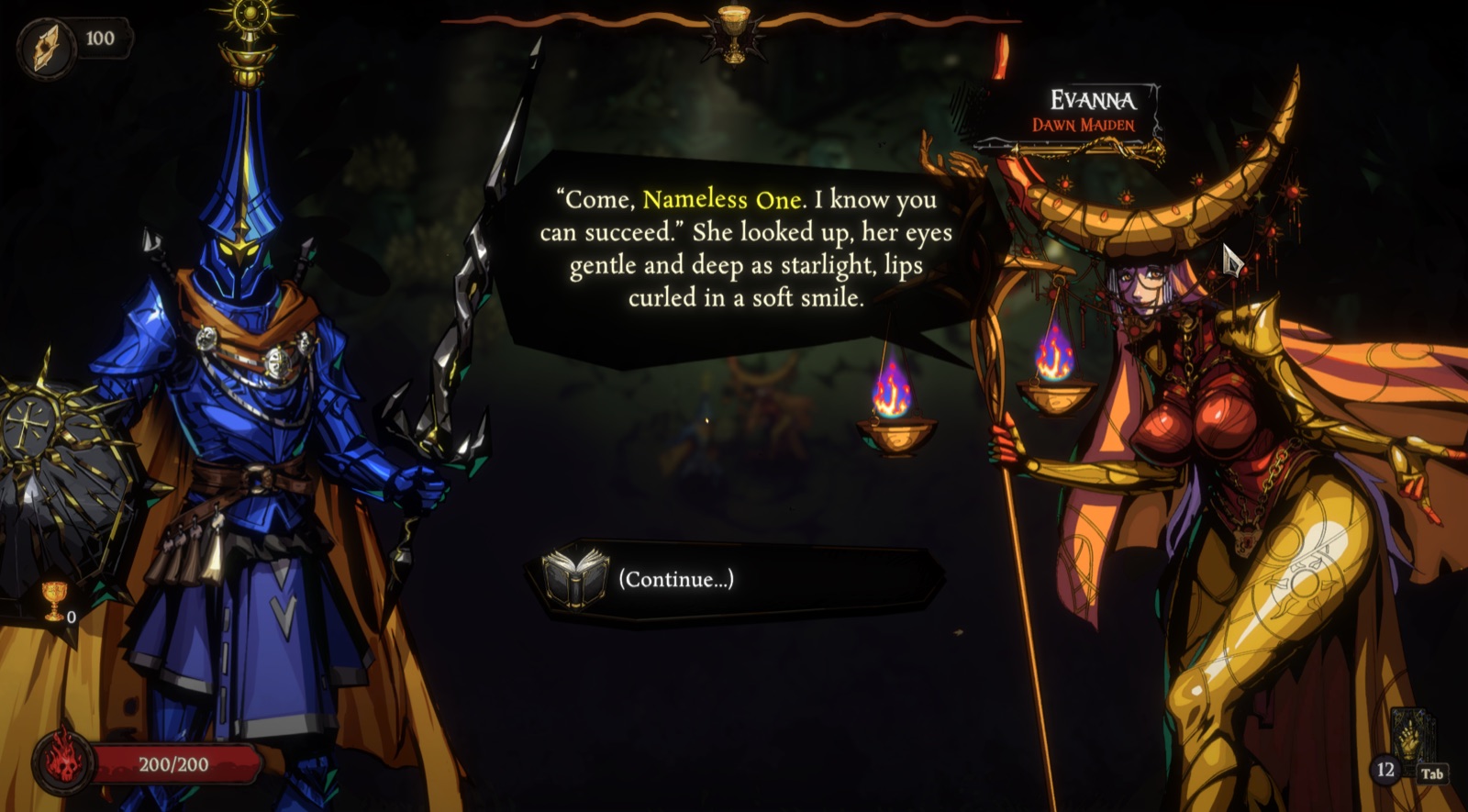
The art immediately recalls Hades, with cut-out portraits, violent colours and character presentation following a very familiar path. It does not copy that game's combat, but the visual inspiration is too obvious to hide. The story looks elsewhere, using ruins, solemn names and a fantasy obsessed with corruption and fate to evoke the gravity of Elden Ring.
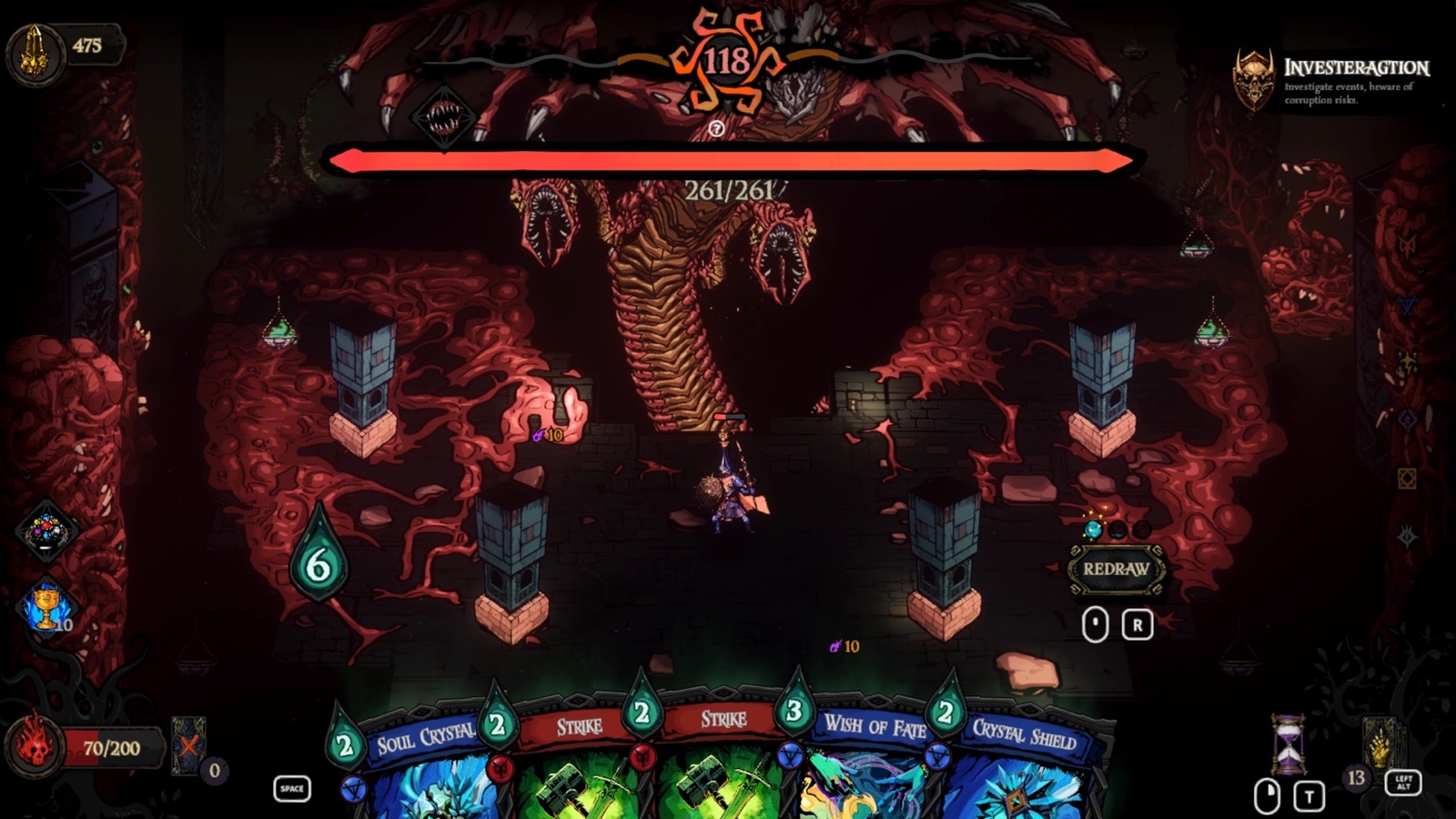
The soundtrack is one of the game's strengths, supporting exploration with quieter themes before growing more intense as an arena fills. Monsters and bosses have personality too, although some designs load the screen so heavily that threat, effect and decoration become hard to separate.
The story asks you to read slowly and accept its vocabulary, so anyone hoping to enter, hit and move on will meet a wall of concepts, while players who enjoy rebuilding a world from fragments will have more patience. We appreciate the intention, but not always the delivery.
Our sessions improved once we stopped chasing speed and treated each arena as a puzzle with reflexes. The controls still failed us, but the cards finally took centre stage.
Golden Swirl verdict
As a deckbuilder, Golden Swirl offers plenty of content, a driving score and enough cards to uncover combinations for hours. As an action game, it falters because cursor, movement and reading get in one another's way too often, while the pause meant to unite both genres ends up showing how uncomfortable they are together.
Our 6.5 score is based on several hours with the final PC version using keyboard and mouse. That sample is enough to judge the conflict between cursor, cards and movement, along with the opening part of its routes, but it does not exhaust all 120 cards or every combination across four characters. Players who love studying every card, forgive awkward controls and enjoy repeating a route may value it more. We would have preferred clear turns, fewer interruptions and the same imagination invested in its decks.
The studio supplied INSERT FUTURE with a key for this review but did not review the text, impose a score or influence our conclusions. For more small games with unusual ideas, visit our Gaming archive.
The conversation starts here
Sign in with a supporter account to comment. Sign in


Nobody has commented yet. Want to go first?