
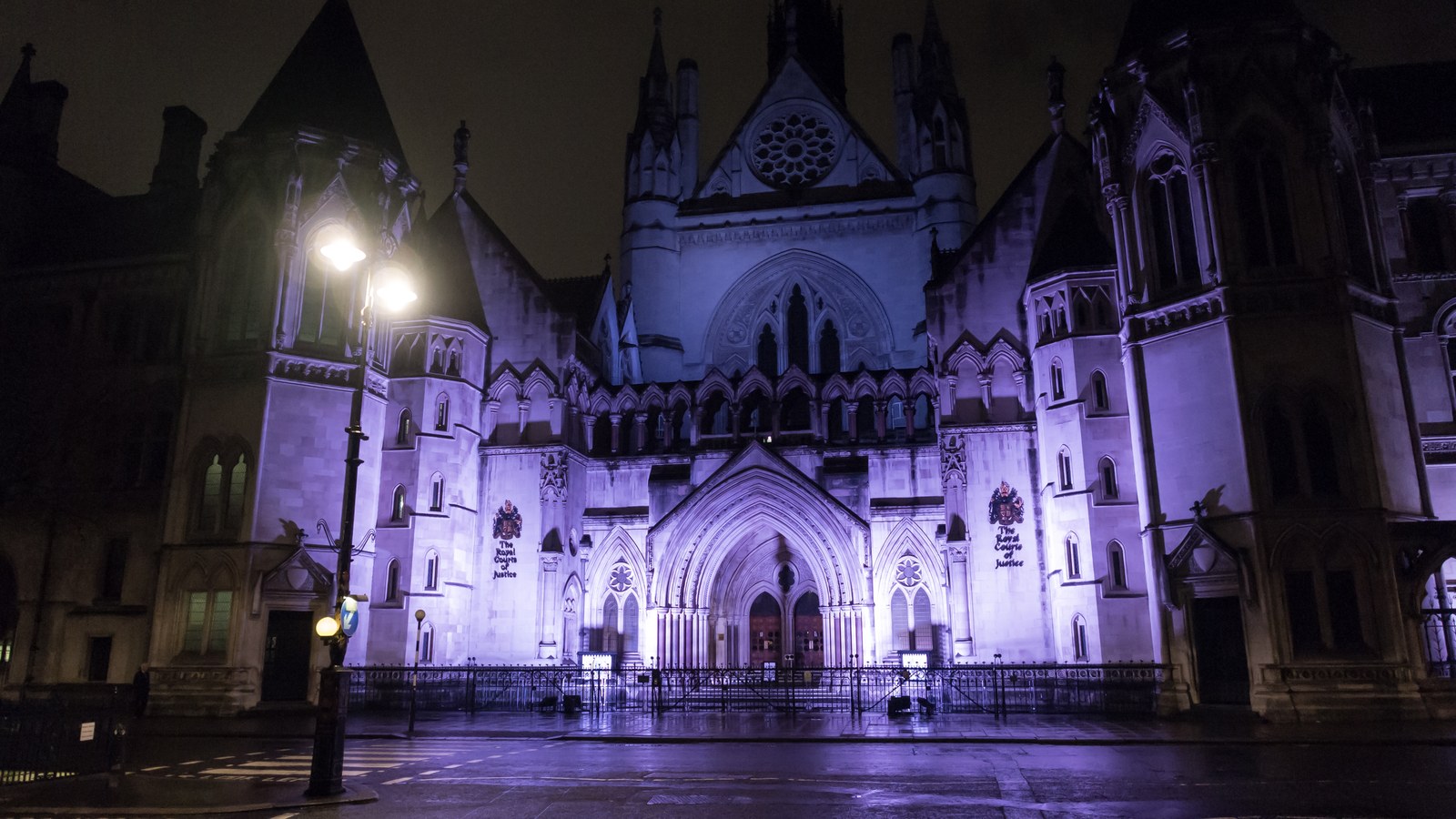
Courts in England and Wales are no longer just catching briefs that cite cases an AI made up. Judges now also have to rule on whether a video or a witness statement was created or doctored with AI, and sometimes they can't tell. That is the picture in an investigation published Nov. 26 by the Bureau of Investigative Journalism, a British nonprofit newsroom, in partnership with The Guardian.
Combing through published judgments, the Bureau counted more than 20 proceedings since late 2023 in which a judge blamed AI for citations to nonexistent cases, and dozens more in which a court had to decide whether crucial evidence was artificial. Barrister Matthew Lee expects many more, because most UK judgments are never published.
A video no one could authenticate
In one High Court case, a father accused of taking his daughter from her mother in Pakistan to Britain said a video the mother claimed to have found on his phone was fake. The roughly eight-and-a-half-minute clip, filmed in his house, showed a man sexually assaulting a girl in her early teens. A forensic expert found jumping timestamps and a few sped-up seconds but no trace of AI, while admitting it couldn't be ruled out. The judge found the father had lied repeatedly, yet wrote that he could not determine whether the video was faked or genuine.
Legal scholars Bobby Chesney and Danielle Citron named this the liar's dividend in 2018. Once anything can be faked, anyone caught on real footage can claim it was fabricated. The U.S. has no technical fix in sight either. OpenAI policy counsel Shira Anderson told a federal judicial committee on Oct. 15 that she did not expect a scientific way to detect AI images going forward.
Witness statements drafted by chatbots
A witness statement is supposed to record what a person saw, in their own words. In April, in a dispute between two brothers over their late father's body, one side admitted a digital assistant had helped draft its statements, and the judge said he would treat them cautiously because he could no longer be sure whose words they were. In October, the Court of Appeal heard a sentencing appeal in which a police officer reportedly used Microsoft Copilot to write a victim impact statement.
Why AI invents rulings that look real
A language model like ChatGPT doesn't look anything up in a database of rulings. It writes one word at a time, picking whatever is most likely to come next based on the text it was trained on, as we explain in how ChatGPT works under the hood. Citations follow a rigid pattern of parties, year, court and case number, so the model can fill in the template with plausible pieces without ever checking that the case exists. When it states that invention as confidently as a fact, it is called a hallucination.
A 2024 Stanford study put more than 200,000 questions about specific cases to GPT-3.5, Llama 2 and PaLM 2, which hallucinated 69% to 88% of the time. Newer models do better, but none guarantees zero errors. That is why tools like OpenAI's Astra for Law search real case-law databases, and OpenAI still tells lawyers to check every citation. Even Britain's Crown Prosecution Service apologized in February for citing made-up case law, and in November it happened again, The Guardian reported.
How U.S. courts have responded
The U.S. got its wake-up call earlier. On June 22, 2023, Judge P. Kevin Castel of the Southern District of New York fined lawyers Steven Schwartz and Peter LoDuca and their firm $5,000 in Mata v. Avianca, after their brief cited six nonexistent opinions produced by ChatGPT. They also had to write to every judge falsely named as the author of a fake ruling, the ABA Journal reported.
Penalties have grown since. Two lawyers for MyPillow CEO Mike Lindell were fined $3,000 each in 2025, and in March 2026 a federal court ordered an Oregon lawyer to pay $109,700 in sanctions and costs, possibly a record, according to NPR. A database kept by Damien Charlotin, a researcher at HEC Paris, had logged more than 1,200 such cases worldwide by April, about 800 of them in U.S. courts.
The conversation starts here
Sign in with a supporter account to comment. Sign in

Nobody has commented yet. Want to go first?