
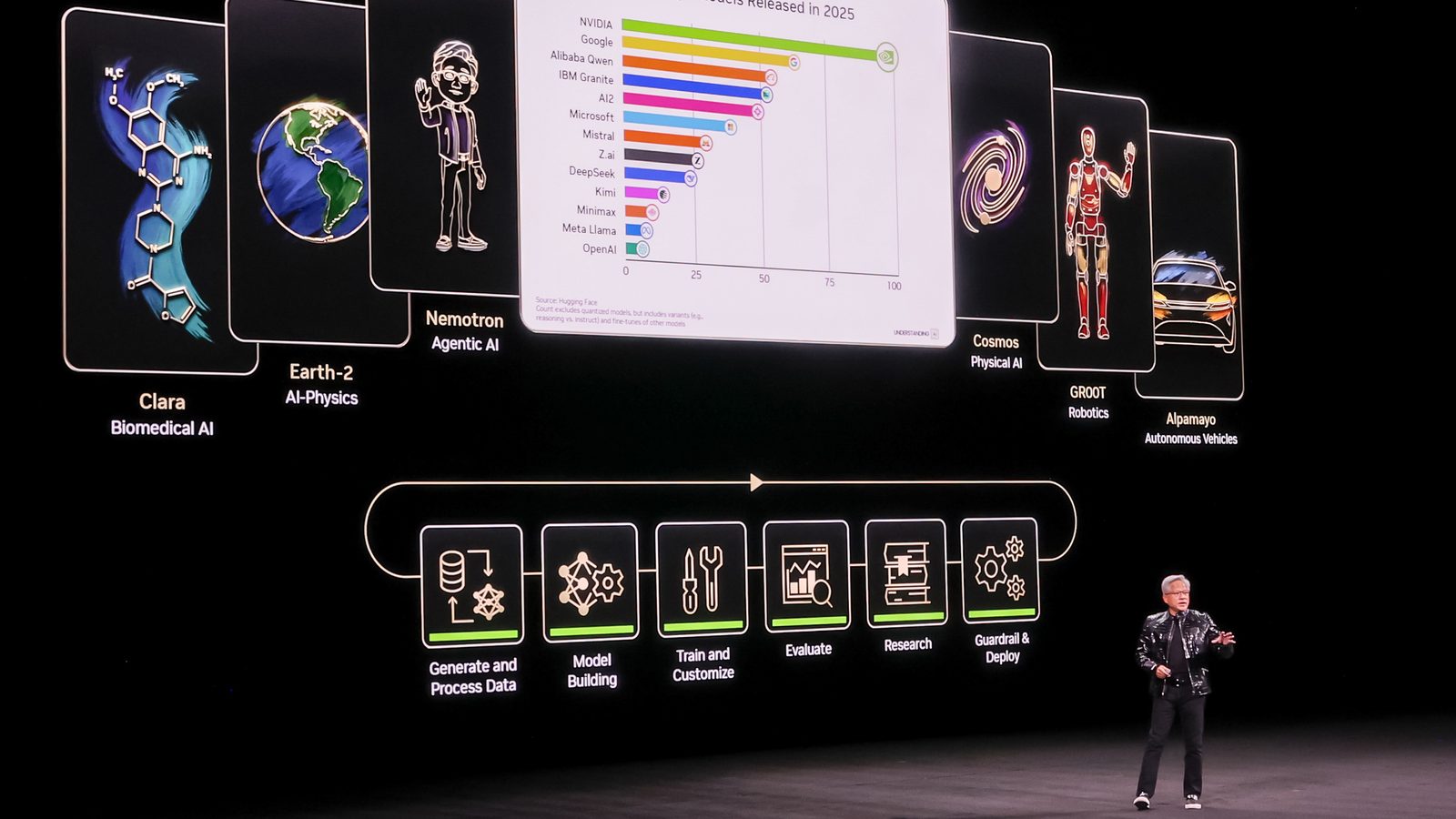
The letter launched with 25 signatures. It now has 35, including OpenAI
Jensen Huang opened his personal X account this week and chose something more substantial than another leather-jacket photograph. NVIDIA's chief executive shared a letter sent to the White House asking the United States not to impose blanket restrictions on open-weight models.
The document launched with 25 signatories. Less than a day later, the version hosted by Microsoft lists 35. NVIDIA, Microsoft, Meta, Mistral, Hugging Face, IBM, Mozilla, Palantir, Perplexity and Y Combinator are there—and OpenAI has now joined them. The list changed while the first wave of coverage was still counting the absences.
They are not asking for an unregulated market. The letter accepts that downloadable models create distinct risks because anyone can modify them. Its argument is that Washington should target concrete abuse rather than placing an entire method of distributing technology under suspicion.
Open weights do not mean seeing the entire recipe
One distinction matters here. An open-weight model lets people download what the system learned during training, run it on their own servers and customize it. That does not necessarily include the full training data, training code or every decision made by its creators. It is more open than a closed API without always qualifying as open-source software in the traditional sense.
For companies, that can mean keeping sensitive information inside their own infrastructure, adapting a model to a specific job and switching providers more easily. The letter also argues that independent researchers can examine weaknesses and that competition stops a few platforms deciding who gets access and at what price.
The signatories have commercial reasons to care. NVIDIA sells the chips used by both open and closed systems. Microsoft offers its own models and those of rivals through Azure. Meta needs Llama to remain relevant. Those incentives do not disprove the argument; they explain why these companies are acting now.
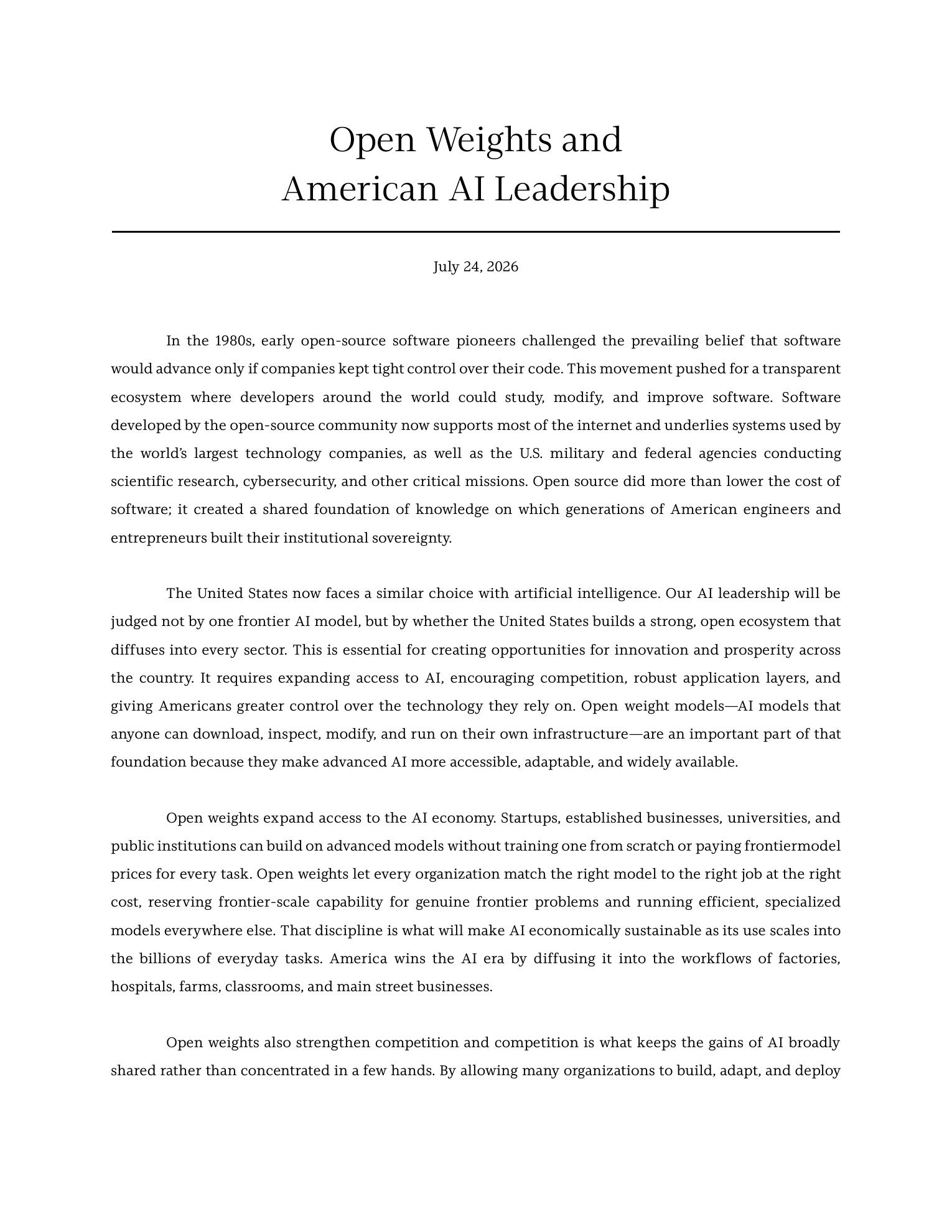
OpenAI has signed the letter's most uncomfortable paragraph
The sharpest turn involves distillation: using one model's outputs to train or evaluate another. The letter calls it a legitimate technique and warns policymakers not to confuse it with unlawful extraction. OpenAI has endorsed that language only days after calling for greater scrutiny of Chinese labs accused of learning from American models.
That is not automatically contradictory. A company can defend the technique while challenging a use it considers abusive. The hard part is drawing the line. Courts and regulators will have to decide where learning ends and appropriation begins.
Anthropic, Google and Amazon remain absent from the official list. That does not prove a coordinated anti-open campaign: Google publishes Gemma, and OpenAI already offered downloadable weights before adding its name. It does show how quickly the alliances are moving. We recently explained why this dispute put Jensen Huang opposite the closed labs.
The fight is not only about the best model, but who collects the toll
Huang is not a disinterested activist. In his Axios interview, he argued that cheaper and more accessible AI increases demand for data centers, servers and chips. Every company running its own model creates another place for NVIDIA to sell hardware.
Microsoft sits in an even more interesting position. It remains closely tied to OpenAI while also making money when Azure hosts models from Meta, Mistral or another competitor. Signing the letter lets it defend an open market without abandoning the closed services it already sells.
My view is that one part of the industry wants AI to resemble the internet: a foundation on which anyone can build. Another makes more money when it resembles an app store, with one owner controlling entry and taking a share of every transaction.
The letter does not decide which model will win. It does make clear who prefers selling the tools and who is more comfortable charging for access.
The conversation starts here
Sign in with a supporter account to comment. Sign in

Nobody has commented yet. Want to go first?