
Yamanaka began with 24 genes. He only needed four
In 2006, Shinya Yamanaka took skin cells from a mouse and did something that had seemed impossible: he returned them to a state resembling an embryonic cell. Their DNA had not changed, but they had forgotten that they belonged to skin. Once again, they could become muscle, neurons, bone or almost any other tissue.
The combination was not a lucky guess. Yamanaka's team assembled 24 genes associated with stem cells and eliminated them one by one. Four were enough: OCT4, SOX2, KLF4 and c-MYC. They are now known as the Yamanaka factors, and the discovery earned him the 2012 Nobel Prize in Physiology or Medicine alongside John Gurdon.
The work broke what had looked like a permanent rule. An adult cell was not condemned to remain what it had become. It still carried the instructions for an earlier version of itself and, given the right combination, could read them again.
What Yamanaka factors actually do
Almost every cell carries the same DNA instruction manual. A neuron and a skin cell behave differently because they read different chapters. Yamanaka factors are proteins that alter which genes remain active and which are silenced. They do not replace the book; they rearrange the markers telling the cell where to open it.
Leave all four running for long enough and a specialised cell loses its identity, becoming an induced pluripotent stem cell, or iPS cell. These can be used to model disease, test drugs and grow patient-matched tissue without relying on embryos. That is already a medical revolution, even if it is not yet rejuvenation.
Rejuvenation appears along the route. Before the cell becomes a blank slate, some signs associated with age begin to recede: gene activity changes, repair improves and certain epigenetic clocks can move backwards. The opportunity is to stop the journey at precisely that point.
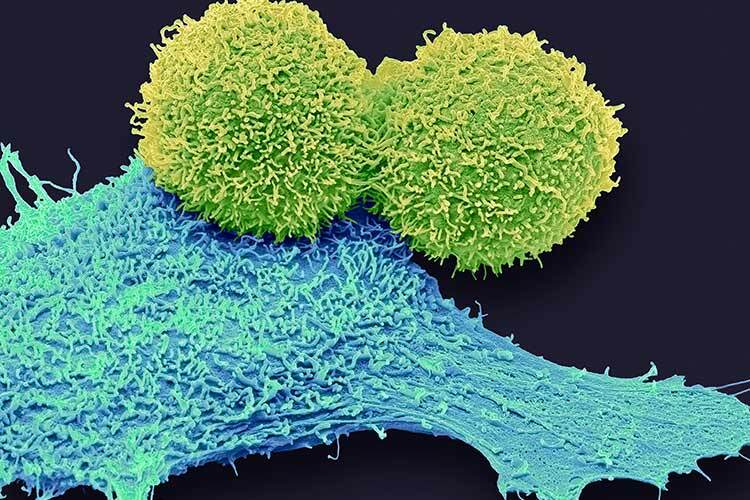
The secret is not rewinding. It is knowing when to stop
Switching on all four factors without control would be a terrible idea. A cell that completely loses its function can form a teratoma, a tumour capable of growing the wrong tissues in the wrong place. c-MYC also encourages cell proliferation and is linked to cancer. The same tool that rejuvenates can also throw the body into disorder.
Researchers therefore pursue partial reprogramming. Instead of returning a cell to the beginning, they activate selected factors briefly or in cycles. In 2016, a study published in Cell31664-6) improved several signs of ageing and extended lifespan in mice with a premature-ageing disease. Other experiments have rejuvenated human cells in culture, improved muscle regeneration and restored vision in old mice.
None of that can yet rejuvenate an entire human body. Every tissue ages differently, and there is no universal switch with a perfect dose. The brain, heart, skin and immune system may each require different methods and schedules. The important discovery is that ageing may involve more than broken parts. Some of it could lie in instructions that can still be corrected.
The first human has entered the experiment
Partial reprogramming left the world of mice on 9 June 2026. That day, a person received ER-100, an experimental therapy that activates three Yamanaka factors inside cells in one eye. It excludes c-MYC and uses doxycycline as a switch, keeping the genes active for eight weeks.
The trial begins with glaucoma and other optic-nerve injuries because researchers can treat one eye, compare it with the other and inspect the tissue without opening the body. Its first job is to establish safety, not prove that a person can become younger. Our full ER-100 analysis explains what was done, what the trial will measure and why this tiny group of cells matters.
If the treatment proves safe and restores some visual function, the next question is unavoidable: can the same idea work in other organs? That is the contest involving companies such as Life Biosciences, Altos Labs and Retro Biosciences. AI will enter it too, helping search for factor combinations, design proteins, analyse millions of cells and compress years of trial and error. That power needs safeguards, as we explored in our coverage of AI, biology and biosecurity, but refusing to investigate would be the easiest and least useful risk of all.
Could they help us reach immortality?
Immortality does not mean becoming indestructible. Accidents, infections and countless other causes could still kill us. The scientifically interesting version would be stopping ageing from placing an expiry date on the body: repairing damage as it appears and keeping organs healthy for far longer.
This is where longevity escape velocity enters the story. The hypothesis says medicine could eventually extend our lives faster than we age. One treatment might give us another ten years; during that decade, a second could add twenty, followed by something better again. We would not need to discover an eternal treatment today. We would only need to survive until the next update.
We have not reached that point. Life expectancy rose spectacularly over the past century through vaccines, antibiotics, sanitation and better medicine, but progress is slowing in the longest-lived countries. Accelerating again will require acting on biological ageing rather than containing one disease at a time. Yamanaka factors are among the most serious routes because they have already proved that cellular age can be altered.
INSERT FUTURE is techno-optimist. We do not believe disease, decline or death from old age deserve to be preserved merely because they have always existed. Artificial intelligence can accelerate discovery, and biotechnology is beginning to show us where to intervene. Neither guarantees that we will live forever, but the question has finally left mythology and entered a laboratory.
Yamanaka factors have not defeated death. They have proved that the biological clock has a reverse gear. That is quite a start.
The conversation starts here
Sign in with a supporter account to comment. Sign in

Nobody has commented yet. Want to go first?