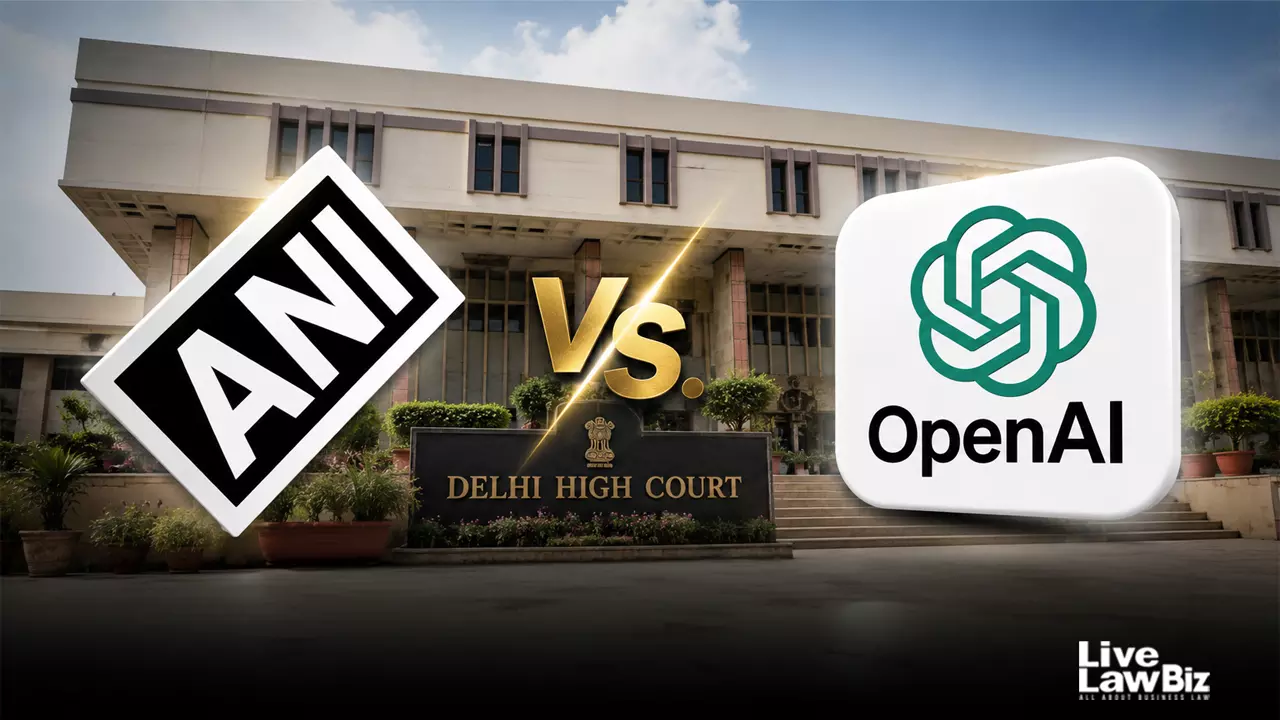
A court has just handed OpenAI the argument the entire industry wanted
News agency ANI asked the Delhi High Court to stop OpenAI using its articles to train and operate ChatGPT. The court refused. Justice Amit Bansal has provisionally found that storing published writing to train a model may fall under India's fair-dealing exception for research.
The ruling goes beyond rejecting an emergency measure. According to LiveLaw's legal summary, treating machine learning differently from human learning would be a regressive view that limits social progress. That is precisely the analogy AI companies have spent years promoting: the model does not keep a newspaper in order to sell it again; it learns patterns from what it reads.
ANI filed the case in 2024, accusing ChatGPT of using its reporting without a license, reproducing passages and attributing fabricated answers to the agency. OpenAI blocked ANI's domain from future training without admitting infringement. It has now won the first important round.
The judge found no substantial copies or evidence that ChatGPT memorized the articles
The decision separates two questions. The first is whether temporarily copying a work to train a model infringes copyright. The second is whether the model's answers reproduce that work. At this stage, Bansal said ANI had demonstrated neither.
The outputs submitted to the court were not substantially similar to the original reports and did not prove that ChatGPT had memorized and regurgitated them. The court reached the same conclusion for answers produced through RAG, the system that retrieves external information before responding.
The full order also preserves Indian jurisdiction even though OpenAI's servers are located in the United States. That matters: a company cannot escape every local claim merely by saying the training happened in a different data center.
This does not turn the internet into a free buffet for AI training
OpenAI has defeated an interim injunction, not won the final trial. The court decided ANI had not made a strong enough case to halt ChatGPT while proceedings continue. A later stage, an appeal or new legislation could change the outcome.
The interpretation also belongs to Indian law. The United States is debating fair use in cases including The New York Times, while Europe applies different rules around text mining and rights reservations. A Delhi ruling does not grant worldwide permission to download every file, especially material obtained through piracy.
Easy headlines tend to erase that distinction. A court may consider training transformative while still punishing the way a library was acquired. Anthropic has already encountered that divide in the United States: learning from books and stockpiling millions of pirated copies are not the same conduct.
Publishers may lose the legal fight and still be right about the economics
The decision leaves every publisher with an uncomfortable question. If a model can read years of reporting without paying and then answer the reader directly, who funds the next story? Copyright decides whether a copy is lawful; it does not guarantee that the ecosystem producing the information remains viable.
OpenAI signs agreements with selected media groups while arguing in court that it does not owe a universal training license. The business logic is clear: paying for useful sources and reliable access is cheaper than recognizing an automatic right across every dataset. Smaller publishers have far less bargaining power.
This ruling may become an important reference in India and ammunition for labs elsewhere, but it does not end the war. It moves the line. As with open models and ownership of their outputs, the argument is no longer only about who built the technology. It is also about who supplied the knowledge and who keeps the money.
The conversation starts here
Sign in with a supporter account to comment. Sign in
Nobody has commented yet. Want to go first?