DLSS 5's problem was never just image quality
NVIDIA introduced DLSS 5 in March as a neural rendering model capable of reconstructing lighting, materials and visual detail in real time. The demo looked impressive, but many viewers noticed something uncomfortable: altered faces, smoothed skin and scenes that appeared to have been reinterpreted by AI.
Improving a shadow is one thing; changing an actor's expression or a studio's intended style is another. NVIDIA said developers would have control, but showed little of it at the time. DLSS 5 appeared powerful without making clear when it would know to stop.
At SIGGRAPH 2026, the company finally showed the missing piece: the controls that decide how far the model can intervene.
Three models instead of one setting for every game
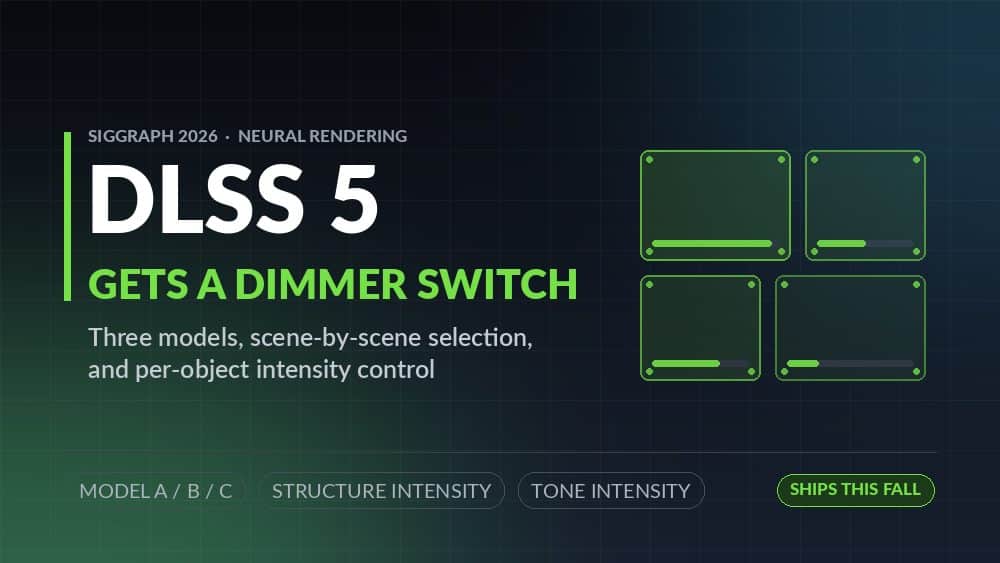
According to the demonstration reported by Hardware Busters, DLSS 5 offers three models with different behaviour. A studio can choose one for the entire game or switch between them by scene. A close-up conversation does not need the same treatment as a rain-soaked street full of reflections.
There are also separate structural and tonal controls. The first determines how much the model can alter shape and detail; the second governs colour, contrast and overall appearance. These are developer tools, not player filters, designed to add richness without abandoning the art team's intended image.
That separation avoids an all-or-nothing choice. DLSS 5 can be subtle during play, stronger in a particular cinematic or disabled where it changes too much.
Object masks are the control DLSS 5 needed most
Developers can mask a face, garment, car or any other element to reduce the model's intensity or stop it from touching that object. If a character already looks right, DLSS 5 can work on the environment without inventing different skin or changing their gaze.
That is more convincing than asking players to trust the AI. The studio sets the limit on a specific part of the scene. It could enhance rain, grime or lighting while the leads retain the exact appearance approved by the art director.
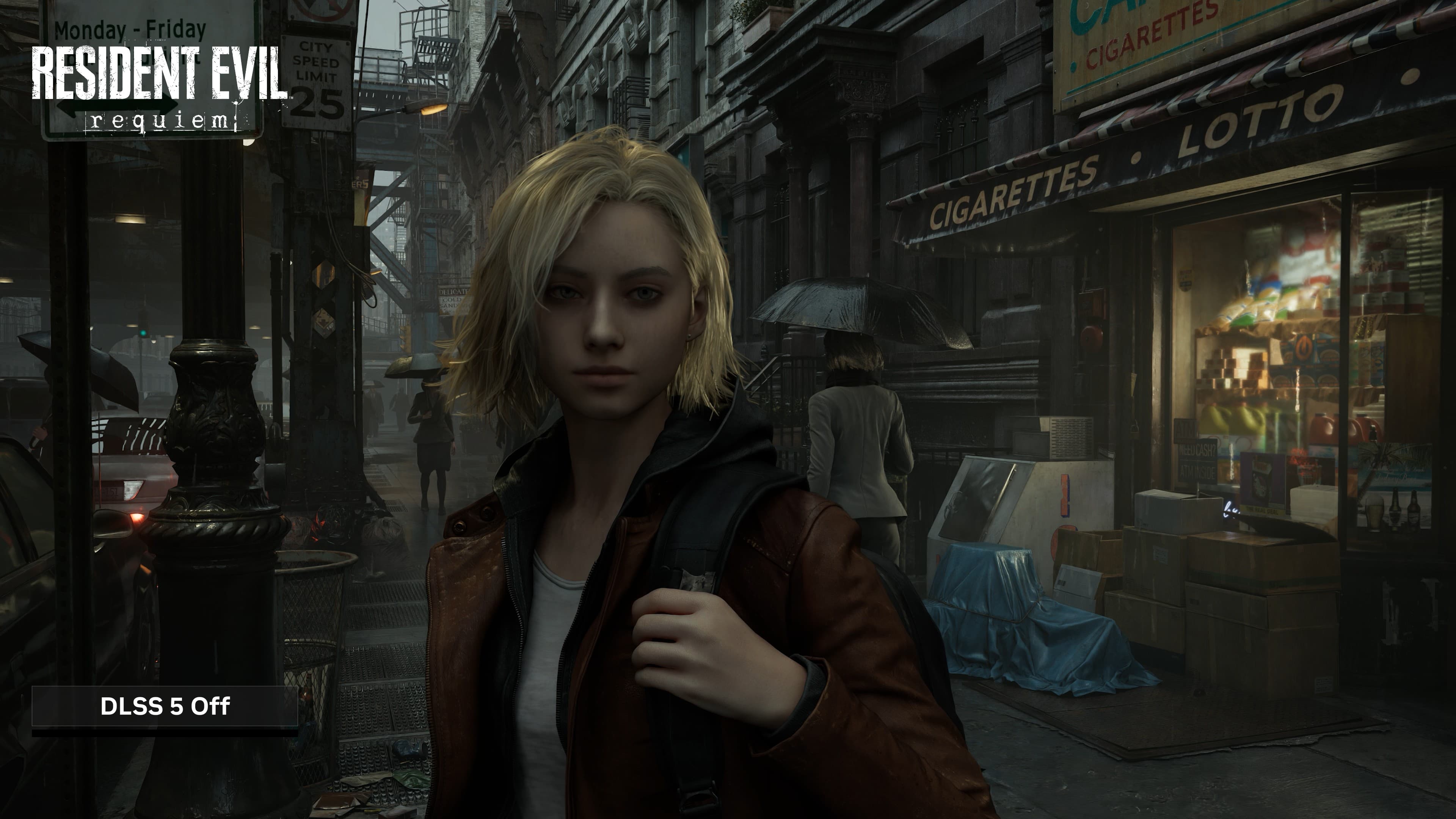
NVIDIA's Resident Evil Requiem example shows why the technology is tempting. It can add a great deal of visual information, but the line between enhancement and transformation depends on those limits.
Now studios have to use those controls well
Controls do not guarantee good implementations. A studio can push the intensity too far, pick the wrong model or fail to protect an important face. DLSS 5 will still depend on the care given to it, just like lighting, upscaling or any other part of the image.
NVIDIA still plans to release it in autumn 2026. A fair verdict needs finished games, uninterrupted comparisons and an off switch. A prepared demo proves the options exist; it cannot show how they behave across hundreds of unpredictable scenes.
Even so, the SIGGRAPH version answers the central criticism from March. DLSS 5 no longer looks like a black box that makes every decision itself. If the controls work as promised, the useful question will not be whether AI changes the image, but which parts are worth enhancing and which should be left alone.
The conversation starts here
Sign in with a supporter account to comment. Sign in
Nobody has commented yet. Want to go first?