
Claude clocks in after the school day ends
Anthropic launched Claude for Teachers on July 14 around a familiar problem: students go home, teachers keep working. The US-only product can draft lessons, differentiate them for several proficiency levels, analyse results and run scheduled tasks. Anthropic's neatest example has Claude review daily exit tickets at 4pm, identify what students understood and revise tomorrow's plan while the teacher drives home.
Verified K-12 educators who sign up by June 30, 2027 get one free year with Pro-level features, Claude Code and Cowork. The offer is for individual adults, not students, and Anthropic says a separate district product is coming. That makes this more than another lesson-plan generator. The company is moving into the largely invisible work around teaching: rubrics, differentiation, family communication and the small clues that reveal whether a class is keeping up.
What is actually different here
Claude connects to the Learning Commons Knowledge Graph, which maps standards in all 50 states to prerequisite skills and instructional research. Anthropic and Learning Commons also released two Apache-licensed agent skills for lesson planning and differentiation, along with evaluation rubrics. Other developers can inspect the method and adapt it to another model.
Curriculum alignment is useful context, not a quality seal. A teacher still has to check the reading level, examples, timing and fit for a particular group. A polished worksheet may be wrong in ways that only the person in the room can see.
The research gives Anthropic a reason to test, not a victory lap
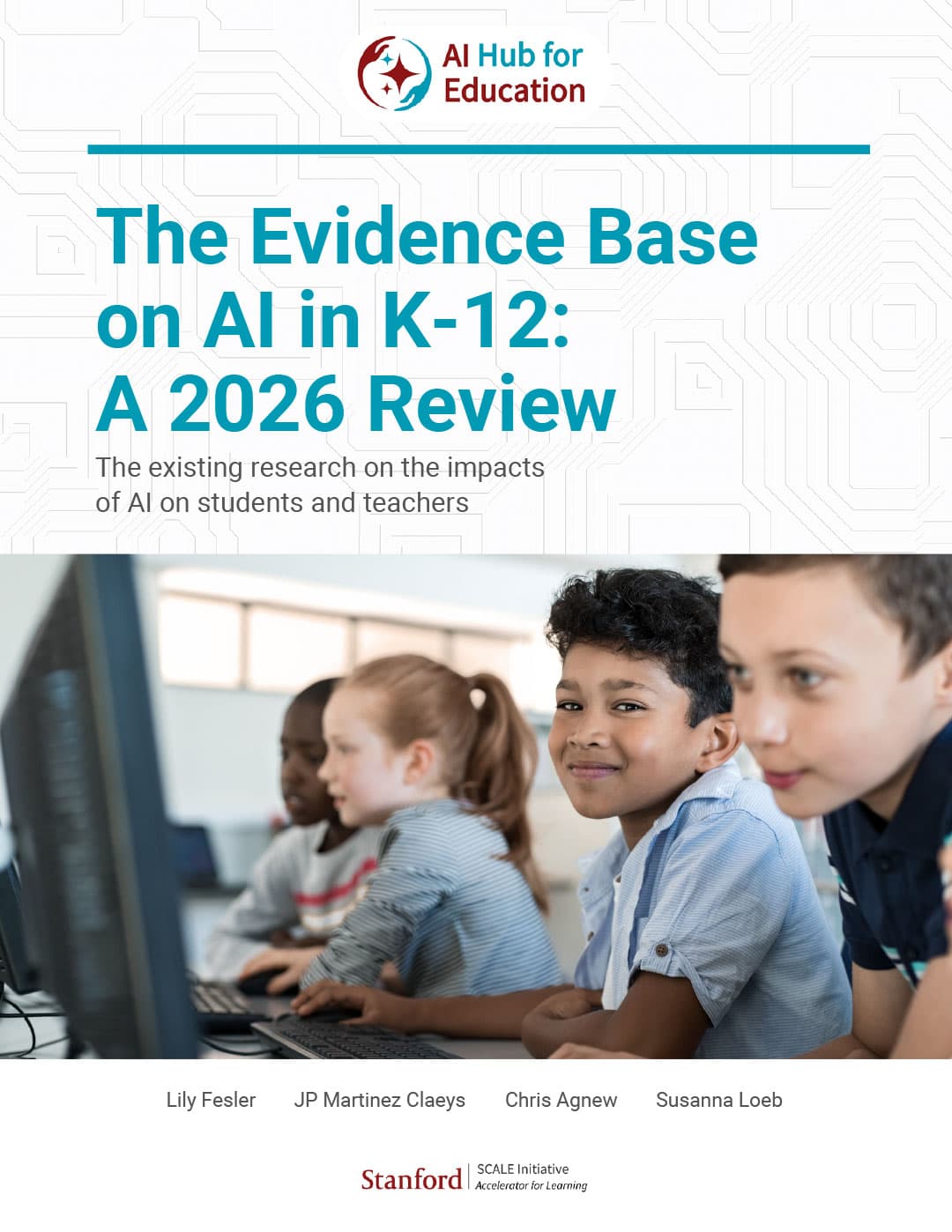
Anthropic points to a Stanford review of AI in K-12 education. Researchers screened more than 800 papers available by October 2025 and found only 20 high-quality causal studies. Early educator-facing studies suggest AI can cut preparation time while maintaining quality and may help teachers ask better questions. The evidence remains thin, short-term and weak on equity, wellbeing and social development.
Claude for Teachers has no published outcome study of its own. A planned pilot with Detroit Public Schools will examine teacher wellbeing and practice, but that is a future evaluation rather than a result. The distinction matters: counting minutes saved on a worksheet is easy; learning whether months of AI-generated material improve understanding is much harder. The same issue appears in our report on GPT-5.6 and delegated work: impressive finish can discourage the very review the output needs.
A classroom folder is not ordinary office data
Anthropic suggests giving Claude rosters, diagnostics, attendance and teacher notes so it can build a picture of each learner. Its teacher-specific data terms say inputs, outputs, conversations and uploads are not used for model training. The company lists encryption, third-party audits and a data-processing agreement designed around FERPA.
Those are meaningful commitments, and they are still vendor claims. FERPA-aligned terms do not make every upload wise. Does a name need to be attached? Can the task use anonymous IDs? Who corrects a false inference about a child? What happens to workflows when the free year ends? A district policy cannot be replaced by one exhausted teacher dragging a folder into a consumer-style interface late at night.
International readers face a second limit: this product and its curriculum mapping are American. In the EU, schools remain responsible for their use of cloud platforms and student data. The European Commission's 2026 guidance addresses ethical and legal use of AI in teaching, while national privacy rules still govern what can be uploaded. US terms are not a GDPR shortcut.
Free to teachers is commercially valuable to Anthropic
ChatGPT, Gemini, Copilot and education specialists all want to become the first tab a teacher opens. Once lesson templates, automations and a year's habits live inside one assistant, switching becomes harder. The free year gives educators something potentially useful and gives Anthropic an unusually direct route into school routines.
Associated Press has documented how Microsoft, OpenAI and Anthropic funded American Federation of Teachers training. Unions gain resources public systems have not supplied; vendors gain access to a large market. Both can be true. The arrangement calls for transparent procurement and independent training, not automatic suspicion or automatic trust.
The test starts after the demo
Low-risk uses make a sensible first step: generate variations on a teacher's own exercise, draft a rubric or convert existing material into an accessible format without identifiable data. Class-level analysis and recurring automations deserve a district agreement, deletion controls and a clear human owner.
Claude could genuinely return an evening to a teacher. That is a serious benefit. It could also produce hundreds of competent, interchangeable lessons and turn classroom relationships into profiles nobody has time to challenge. Over the coming year, watch Detroit's evaluation, reported errors, total review time, the post-promotion price and whether schools retain control of the material and routines they build.
Anthropic has picked a stronger educational use than helping another student generate another summary: support the person designing the lesson. It now has to show that saved time does not come at the expense of professional judgement or children's privacy. The apple-on-a-book launch art is charming. The seat Anthropic wants in the staff room is very real.
Where the information comes from
Original announcements, documents and reporting used to prepare this article.
01Anthropic — anuncio de Claude for Teachers02Anthropic — condiciones y tratamiento de datos para docentes03Anthropic y Learning Commons — habilidades y evaluaciones abiertas04Stanford SCALE — revisión de evidencia sobre IA en K-1205EdSurge — contexto competitivo y piloto de Detroit06Associated Press — las tecnológicas compiten por formar al profesorado07Comisión Europea — orientaciones de IA y datos para docentes08AEPD — guía para centros educativos09EFE — uso y formación en IA en la educación españolaThe conversation starts here
Sign in with a supporter account to comment. Sign in

Nobody has commented yet. Want to go first?